

When old-school men set out to conquer a cinematic mountain, one has always expected epic orchestras, hard-driving percussive adventure and wind-blasting electronic rhythm. While there’s nothing wrong at score summiting because it’s expectedly there, what makes the collaboration between Australian documentarian-turned-narrative director Jennifer Peedom (“Sherpa,” “River,” “Solor”) and Norwegian composer Rebekka Karijord so enthrallingly majestic is that it take a very different route to the peak of Mount Everest (or Chomolungma as called here). That’s because the focus is not on the typical English hero, but instead on Tenzing Norgay (Genden Phuntsok), an indigenous aid (but non-Sherpa) without whom one of humanity’s greatest achievements alongside Edmund Hillary (Tom Hiddleston) would have been impossible. Driven since youth to climb a towering goddess, and overcoming discrimination and condescension by those around him, the insurmountable spirit of this tale’s rightful protagonist informs Peedom’s gorgeous, naturalistic approach and the spiritual power of Karijord’s score.

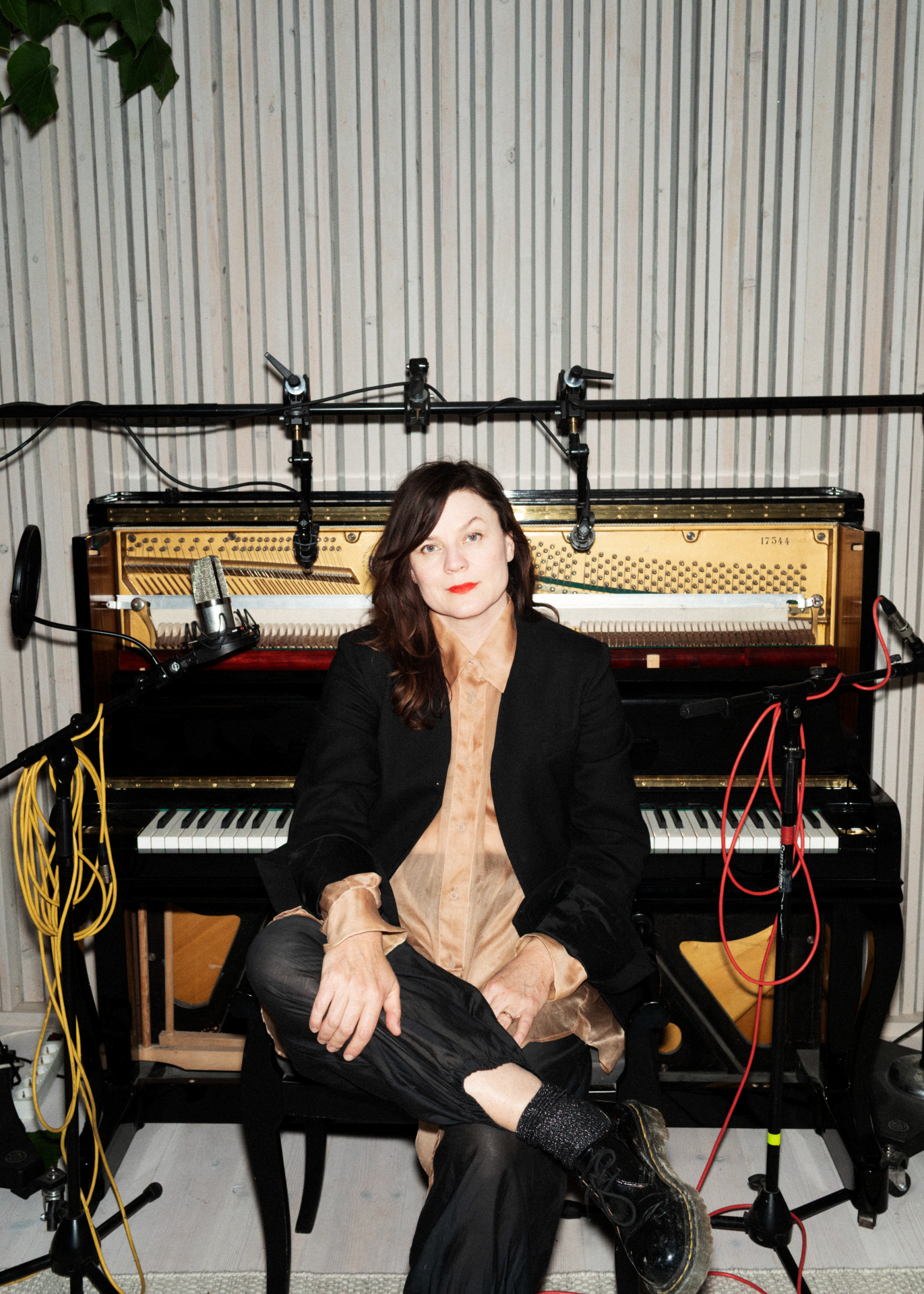
With over forty credits that have steadily reached an international spotlight with the likes of “All the Old Knives,” “My Mercury” and “Prey, Obey, Kill,” Karijord’s musical explorations have created six instrumental albums as well as manufactured her own instruments. But nothing before her has equaled the spotlight, or challenge of “Tenzing.” A score as psychologically interior as it is about the holy, and ghostly nature of the peak he’s inexorably climbing towards for his own spiritual salvation, Tenzing has a strong, strikingly variable theme to accomplish the impossible. Given a lush orchestra and a sky of female voices, Tenzing importantly reflects the ethnic focus of its hero with ancient wind and percussion instruments. Yet given the do-or-die push of the party that Tenzing and the Sherpas truly lead, Krijord brings an immensely moving, meditative nature to what was once impossible. It’s the feeling of multi-cultural bonding with men, rock and ice, yet not lacking the excitement of any mountain movie in making the final push to the top – a peak which Karijord’s soundtrack surveys with astonishing, spiritual power in one of the year’s best films, and scores.

What led you to composing?
I’ve worked in film since I was 12, primarily as an actor, and went on to study both theatre and film, as well as music and composition. I’ve always had a deep love for cinema and a fascination with the way images, stories and sound can come together to create something profound. For a long time, I struggled to choose just one path, but eventually, music won me over. I started taking music lessons when I was around eight, studying viola and piano, and over time, the voice became my main instrument. During my teenage years, I was fortunate enough to land an internship at a music studio, where I learned about sound engineering and working with computers. It opened up an entire universe of freedom and possibilities, and I think that was the first seed of what would later become my work with film scores.
In a way, do you think each scoring assignment is a seemingly impossible mountain to climb at first–yet one you feel compelled to?
Yes. That first day, when the session is completely empty and you’re setting up templates and planning things out, is both the most exciting and the most frightening moment. You ask yourself, “Will something come, or have I completely lost the ability to write music this time?” Every project feels like starting from scratch, but I also really like that. It’s humbling. I find writing music for film to be such a collaborative process, which is very liberating for me. I think it’s easier to quieten your inner critic when you’re collaborating with others. There’s something about that exchange of ideas that allows you to take risks and discover things you might not have found on your own.

“Tenzing” director Jennifer Peedom
What brought you to “Tenzing?”
My music somehow found its way to the production company, I think through several different channels. Someone had heard one of my records, and then my agent, Arbel, sent them some tracks. So, apparently, they were already listening to my music while they were location scouting. I received the script around the time they started shooting and had a really lovely meeting with Jen Peedom. I felt an immediate and very strong connection to both the story and to her.
Both you and Jennifer have a lot of experience in documentaries–with Tenzing being Jennifer’s first narrative feature. What do you think that brings to her cinematic vision and musical tastes?
She has a wonderful eye and a very strong instinct for truth and authenticity, which I think is something you develop through documentary filmmaking. She also has this very rare, calm authority and sense of leadership, which I suspect comes from having worked in challenging locations and circumstances, perhaps often as one of the few women on set. I feel she knows how to create space for her collaborators to come in and contribute, which might also stem from the documentary world. And she’s actually incredibly skilled with music! She’s not overly prescriptive, but she’s very clear about what she wants. It’s been one of my favorite collaborations of my career so far.

Do you think there’s a big difference between documentary and narrative film scoring for you?
Both yes and no. I think the initial stages of scoring are quite similar: finding the voice of the story and the sonic character of the film. But beyond that, I find the processes can differ quite a lot. With documentaries, you’re often sculpting the film around the music, whereas with fiction, I tend to sculpt the music around the images. I also find documentaries can be more laborious, often requiring a lot of functional music. But of course, it varies from project to project. There’s another interesting aspect to documentary filmmaking, which is the responsibility of dealing with reality. Music is such a powerful and emotionally manipulative tool in film, so you have to be very careful when telling sensitive stories about real people. In a way, that consideration was present in “Tenzing” too: a deep respect for the real people behind the story.
Tell us about your collaboration with Jennifer, and what she wanted the score to accomplish?
I think she wanted someone who dared to go all the way emotionally, someone who could embrace both the grandeur and the intimacy the story required, while also incorporating nature itself — the mountain as a musical character.

Sherpas and Asians in mountaineering films are usually given short shrift. With Tenzing putting them heroically front and center, how does that effect your score from the more traditional “white savior” approach the mountaineering genre usually gets?
It was essential that the Nepali and Tibetan musical elements came from a place of genuine respect and collaboration, rather than simply being used as a color or an exotic texture. So it was absolutely crucial that we brought the Nepali sound world and tonal character into the score. I started working with the sound recordist on set, collecting sounds from Tenzing’s world: yak bells, prayer wheels, wind, Buddhist flags, streams, and so on. Together with vintage Tibetan percussion, these sounds became a palette from which I could begin to develop the more tonal elements of the score. We then recorded Thinley Lhamo, who plays Tenzing’s wife, Dawa, and is also a singer in the Tibetan opera tradition. She was incredibly generous and wonderful to work with in the recording sessions. We found this line in the script where Dawa says to Tenzing, “She is calling you home,” referring to the mountain, and I wrote a melody for her around those words.
That idea becomes a kind of mantra throughout the film, connecting to Tenzing’s grief and almost becoming a siren of the summit — an expression of homesickness, longing, and a spiritual connection to nature. I found that very moving, because I think one of our greatest problems today is that we’ve forgotten that nature is our home, that we are one with it. Indigenous peoples have long held a profound understanding of this, and they possess knowledge we desperately need to listen to. The Sherpa people understand the mountains in a way few others can, and that aspect of the film is perhaps one of the most profound and touching things about it for me. Towards the end of the scoring process, we also managed to bring one of my absolute favorite singers on board: Ani Choying Drolma, a Buddhist nun, spiritual leader, and truly incredible singer. She and the flute player Manose Singh both performed on my music and co-wrote some key pieces for the end of the film. That was when I felt everything really fell into place. I’m so grateful for their contribution. It felt as though the whole project had been blessed by their presence, their approval, and their energy.
How was it to put Nepalese/ Asian music and its feeling into the body of the score’s western approach?
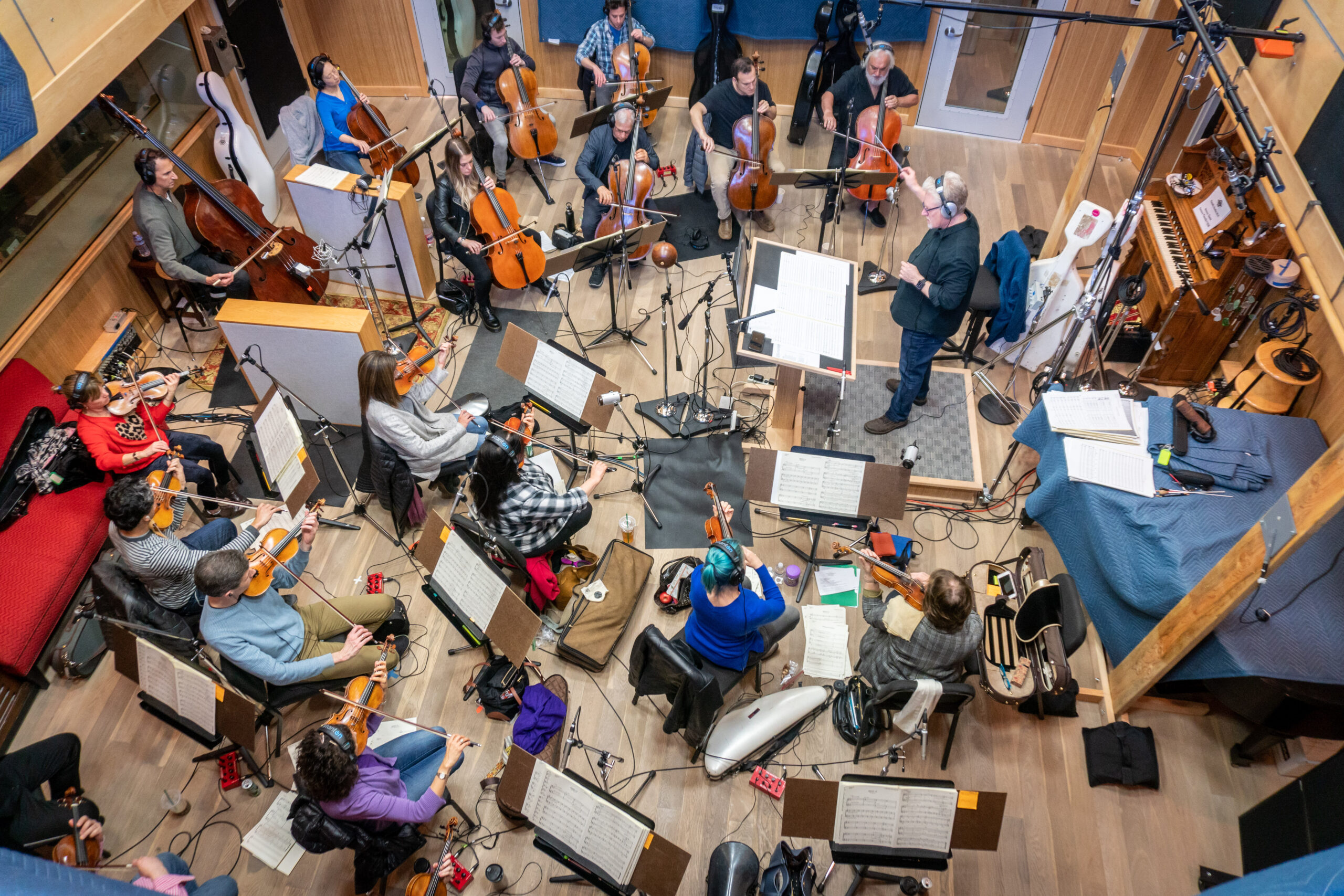
The score needed big cinematic muscles, momentum, and drive, but also a sense of history, destiny, and profound love. That’s where the orchestra became so useful. I was delighted to reunite with the London Contemporary Orchestra, conductor Hugh Brunt, and my orchestrator, Talia Morey, all of whom bring such incredible skill, sensitivity, and musical flexibility to their work. The challenge was to let these different musical worlds coexist and inform one another, while allowing the score to have the scale and emotional sweep the story demanded.

You’ve created an especially powerful theme for Tenzing, which has a lot of impactful variations through the score.
Yes, I think you might be referring to the syncopated theme in pizzicato. I wanted something with drive, but also something humble — tempered and excited, yet slightly off the grid. There’s a cheekiness to it, too, because I see Tenzing as someone who managed to stay true to himself through enormous hardship, and who also had a bit of a rebellious streak. There’s this percussive world moving steadily forward, almost homogeneously, while his melody sails above it, breaking away from the rhythm through syncopation and odd time signatures. I liked the idea of the music carrying that tension between forward momentum and an individual spirit that refuses to be entirely contained by it.
Did you want to give the score’s rhythm a striving quality?
Yes, absolutely. The score needed that drive to propel the thrill of the climb and the mission forward. The orchestra also brings a sense of danger into the music, through percussion, brass, and more unconventional textures, including glissandi in the strings that evoke avalanches, crevasses, ice, falling rocks, and the sheer unpredictability of the mountain.

Thinley Lhasa as Tenzing’s wife Dawa Phuti
How did you want female voices to work in the soundtrack?
Because the story revolves so much around Tenzing’s relationship with Dawa, and the loss of her is so deeply connected to the mountain, I felt the female voice needed to be present in the music. Her voice. It was actually one of the first things Jen and I discussed. We didn’t want to fall into a generic, macho, action-driven mountaineering score. This story is told on a completely different frequency, and the music needed to carry that.
Memory plays a vital part of Tenzing’s narrative structure. How did you want to reflect the past propelling the present in the music?
I must admit, finding that balance was quite tricky. The flashbacks needed to be brief enough to keep the main story moving forward, while what they reveal is absolutely crucial to the story as a whole. The music played a huge part in creating the right emotional tone for those memory sequences. One of the great gifts of the process was being able to connect those themes to the sense of fulfilment at the end of the film, creating a musical arc that I think has a real emotional effect on the audience. It’s almost like an emotional subtext that we’ve established throughout the film, allowing us to experience Tenzing’s joy and fulfillment alongside him. I had such a wonderful process working with editor Simon Njoo and Jen to discover and shape those arcs.
For all of its adventure, “Tenzing” is an almost meditative film and score. Yet how did you want to use orchestra to still give the film a traditional, epic sweep?
To me, an orchestra is an incredibly versatile tool in cinema, and working with an ensemble like the London Contemporary Orchestra allows you to bend and shape that sound in almost any direction you like. You can create something vast and powerful, but also something intimate, fragile, or almost otherworldly. That flexibility was essential to finding the balance between the film’s meditative quality and its epic scale.
How is it to score a film that’s as much about inner, existential emotion as it is about vast spaces in a way that’s unified?
Very satisfying, and a great challenge! There’s so much space for music in this film, and with that comes a huge responsibility: to bridge those two worlds, the internal and the external, the deeply personal and the almost incomprehensible vastness of the landscape. Finding a musical language that could hold both felt like one of the most rewarding aspects of the whole process.
The mountain of Sagarmatha, as the Nepalese call it, is as much as spiritual deity as it is the spirit of Tenzing’s wife. How did you want to musically unite those two souls?
We call the mountain Chomolungma in the film. I think Dawa’s recurring voice is what ties those two worlds together. It’s heavily processed through my various effects chains, placing it in a rather ethereal, almost otherworldly soundscape rather than a naturalistic one. I also created a sample instrument from Thinley’s voice, so her presence runs like a thread throughout the score. In a way, her voice becomes part of the mountain itself, blurring the boundaries between Dawa, nature, memory, and the spiritual world.

A moving aspect here is the completely uncondescending friendship of equals between Edmund Hilary and Tenzing – the feeling of what people of vastly different cultures can accomplish if they work together. How important was getting that emotion across in the score?
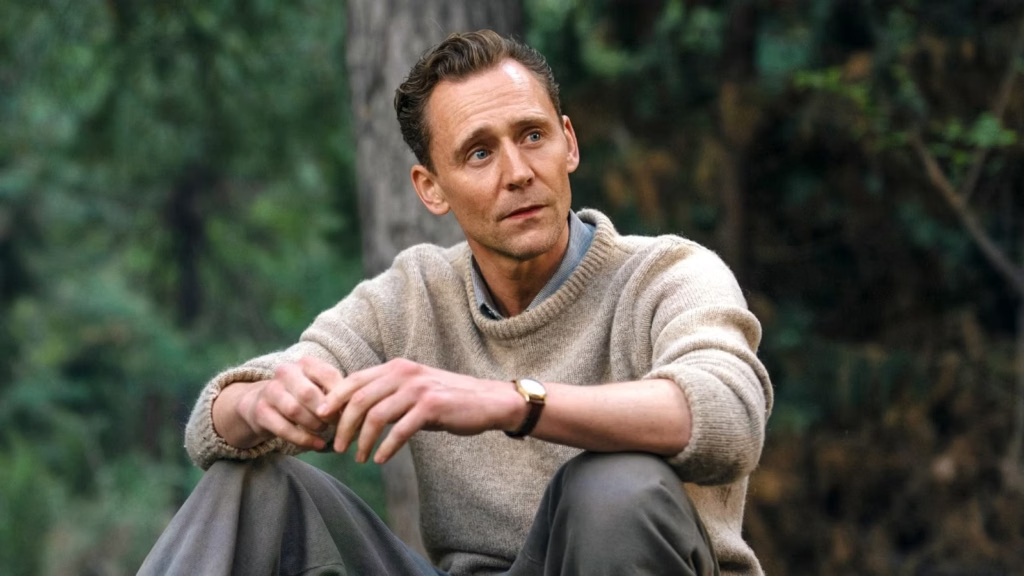
It wasn’t something I approached in an especially explicit or deliberate musical way, partly because the performances by Genden and Tom are so brilliant at conveying that emotion. Their relationship feels so genuine and unforced. But I do think the score, in its own cross-cultural nature, helps bridge their worlds. The different musical influences come together without needing to erase their differences, and perhaps that reflects something of the relationship itself.
Talk about scoring Edmund and Tenzing’s final “assault” on the peak.
I wouldn’t call it an assault, as that’s almost the opposite of how the film tries to portray it. But I know exactly which part you mean! When I received reels five, six, and seven — the film is divided into reels during the scoring process — I realized that there was a very narrative score running almost continuously throughout. It had to carry so many different dynamics and functions. It was incredibly exciting, but also quite daunting to begin writing, and I could definitely feel the altitude rising as they climbed higher! Dynamically, that whole sequence is really exciting. It moves from a full-on thriller sequence during the climb, with percussive breathing in the choir and lots of percussion and brass during the Hillary Step, into the cue “Being Received.” That piece is much more restrained and hopeful, ascending and warm. The melody climbs in unison, moving from the double basses to the cellos, violas, violins, and finally the choir, but never quite arriving at a harmony. They haven’t reached the top yet, so the music doesn’t quite resolve. Then, when they finally reach the summit, there’s this silence. Just breath. And then “Top of the World” begins, and the music finally lands. After all that tension, the climb, and the silence, the resolution feels incredibly liberating. I love how the music holds back from giving you that release until the very last moment.

Does being Norwegian make you particularly apt to score a film like “Tenzing?”
Well, I was born beneath a very high mountain in northern Norway and grew up surrounded by mountains. So I feel deeply connected to them, and I understand that very human, universal desire to climb to a summit. Not necessarily to “conquer” it, but to gain a different perspective on yourself in the world. To understand the world around you, and your own small but significant place within it.
If you like to hike or be out in nature, how do you think that translated to your score?
I live close to nature and work very closely with natural sounds in everything I do, both my records and my film scores. I think that’s something we Scandinavian composers often carry with us: a kind of untamed quality in our music, a sense of wilderness. My studio is by the ocean, near a bird sanctuary and surrounded by some very old oak trees. They’re a wonderful source of inspiration and a grounding force for me, especially when I feel uncentered or stressed. Nature has a way of bringing me back to myself, and I think that finds its way into my music, too.

I believe you’re the first female composer to score a major “mountain” narrative film. What’s it like to plant that flag? And do you hope that takes you to bigger artistic ranges for you, particularly in Hollywood?
Thank you for bringing that up! The last time I checked, only around 4–7% of composers scoring major Hollywood studio films were women. Unfortunately, that number doesn’t tend to increase when the industry becomes more economically cautious, because people become less willing to take risks, break new ground, or give someone a first opportunity. The truth is, I’ve never really thought about my gender when working in film, but most of my experience has been on a very independent, arthouse level. Now that I’m working on bigger projects, I’m much more aware of how few women there are in these spaces. So much comes down to getting that first chance to prove you can handle it, and Jen really broke a glass ceiling for me with “Tenzing.” I feel ready to take on bigger projects, but I also love the variety of moving between studio films, arthouse projects in Europe and Scandinavia, and my own records. I wouldn’t want to lose that freedom and diversity. Ultimately, the personal relationship you have with the music in that moment in the studio, when you’re trying to find the right theme and the right tone, doesn’t change that much between a big and a small project. That initial moment is always equally vulnerable and beautiful.
Watch “Tenzing” on Apple TV + HERE, with Rebekka Karijord’s soundtrack on Milan Records HERE. Visit Rebekka’s website HERE
Special thanks to Noah Velez and White Bear PR
Leave a Reply