

(Photo by Nyima Chatelain)
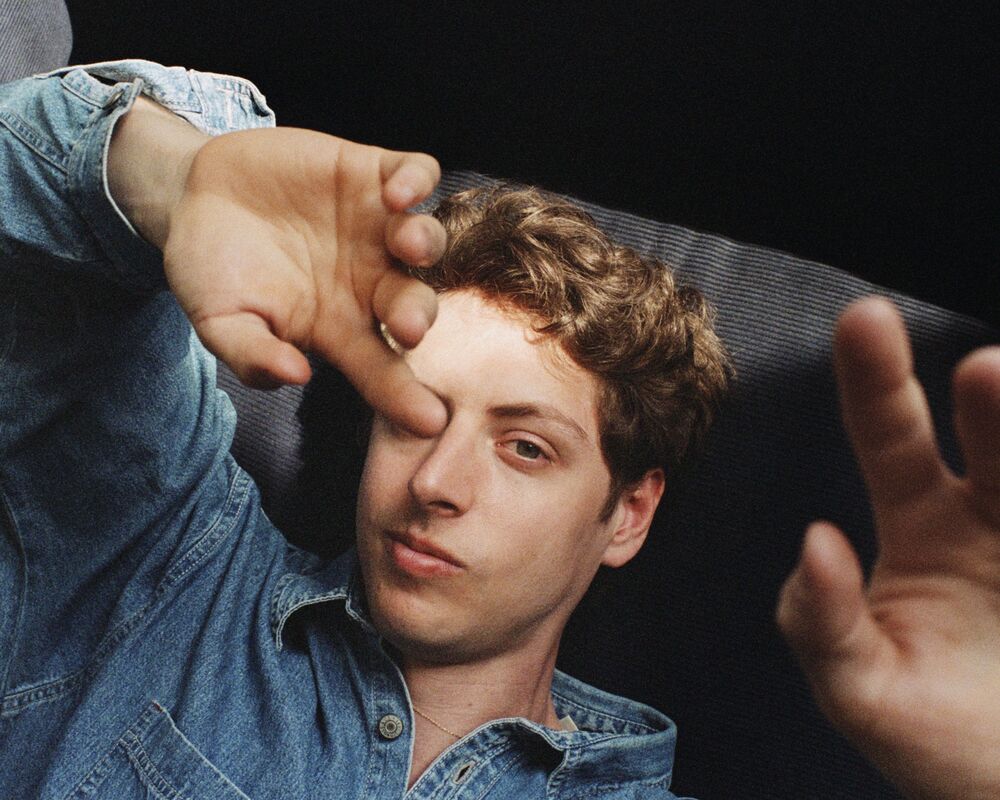
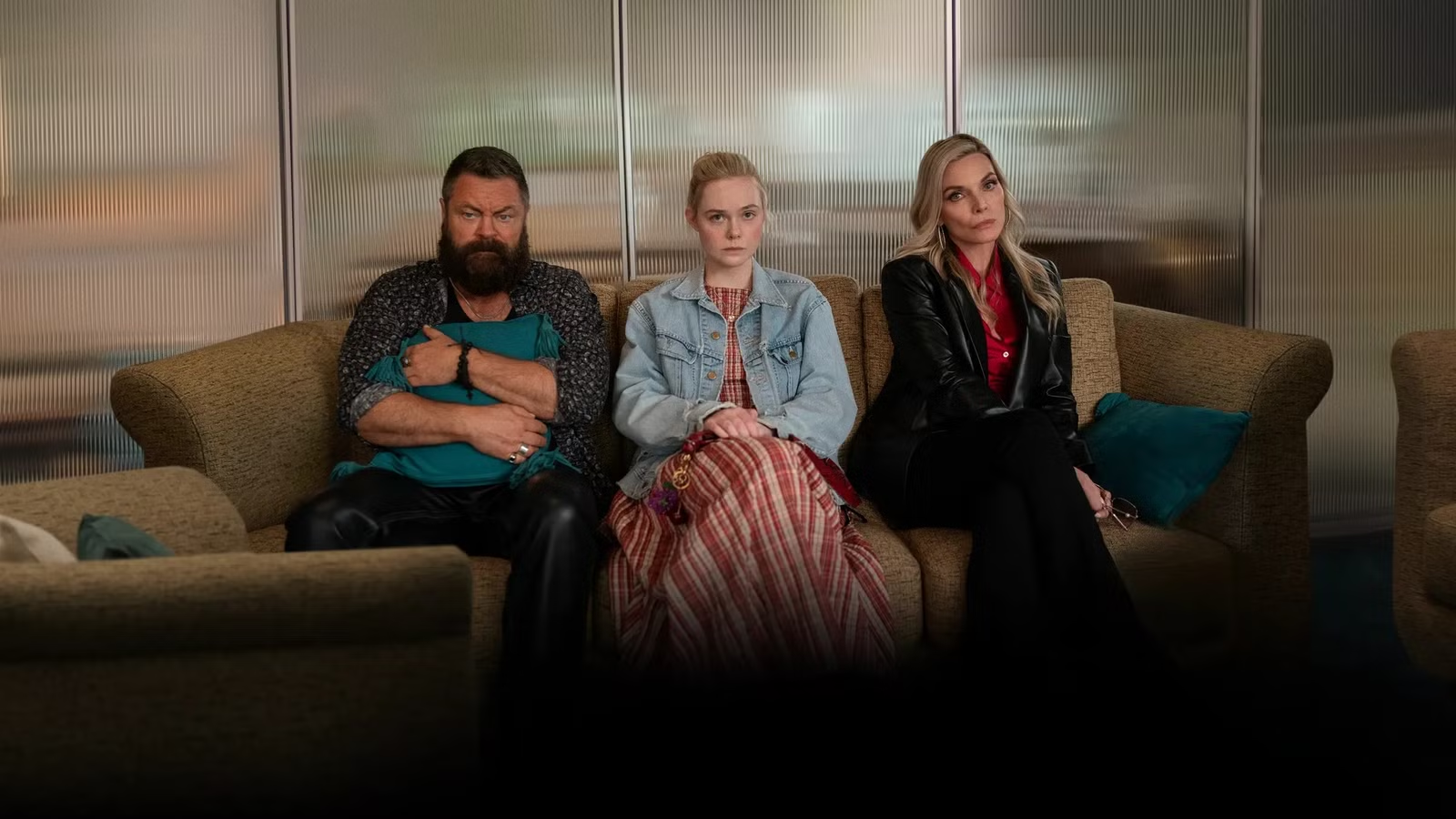
From trendy young investment bankers in England to a brainy, baby momma young woman who finds her sexy space alien voice on OnlyFans, DJ spin to composer Nathan Micay has his pulse on exactly the kind of hip, alt. music that’s made for a social media generation viewers – no more so than in Apple TV +’s “Margo’s Got Money Troubles.” Capturing a smart, firecracker spirit who finds diaper bucks and a sense of liberation in her incarnation as “Hungry Ghost,” the Canadian musician by way of Berlin captures beyond creative vibes that are at once ethereal, bouncily percussive and most of all melodically heartfelt for a young writer (Elle Fanning) who’s academic career gets seriously sidetracked when she has a fling with a married prof, then decides to keep the adorable results. That’s to the consternation of her one-time bad girl gone straight mom Shyanne (Michelle Pfeiffer) and recovering addict wrester Jinx (Nick Offerman), who ends up being an unlikely nanny and roommate for a bit.

Capturing the kinky intergalactic by way of apartment studio vibes of Margo’s “Hungry Ghost” persona (complete with ersatz Theremin) as she throws herself into a sex worker universe that lands hard on the real life that she naively thinks will work out, “Margo’s Got Money Troubles” (based on Rufi Thorpe’s books) is a family dramedy sitcom as only a warped, wacky internet universe by way of Apple streaming can deliver it. Now given a second season, there’s no end to the value of a mesmerizing, fun voice-topped thematic soundtrack to match the delightful and unexpectedly affecting show and its eccentric characters, music whose playfully offbeat and rhythmic roots stem from the Micay’s club roots to his own expansion into a scoring galaxy, and in particular his beautifully surreal vibe for the persona of a sexy green alien persona grounded by economic needs as only the composer’s imagination can pay them off.

(Photo by Nyima Chatelain)
What led you to DJ’ing, and then composing?
I fell into DJ’ing somewhat by accident. I was very into niche pockets of dance music while I was a student in university. I loved the original iteration of dubstep around 2007-2008 and then later followed that into what was called ‘post-dubstep’. Stuff like early James Blake, Mount Kimbie, Jacques Greene. So around 2011 I thought I could give it a try and within about 8 months my amateur little songs were being playing BBC Radio1 and I had offers to DJ around Europe and the UK. So I had to learn to DJ and did was lucky enough to tour the world many times over for about a decade.
Once I found my footing more as a producer, I just seemed to naturally gravitate towards more cinematic styles of music. I’d always been very into film scores but also found them super intimidating. Around 2016 a friend of mine hired me to score some very low budget Canadian indie films. I did three and really enjoyed the process and getting to make music for another person’s vision. I was really into being able to explore beyond a dance music sound palette.
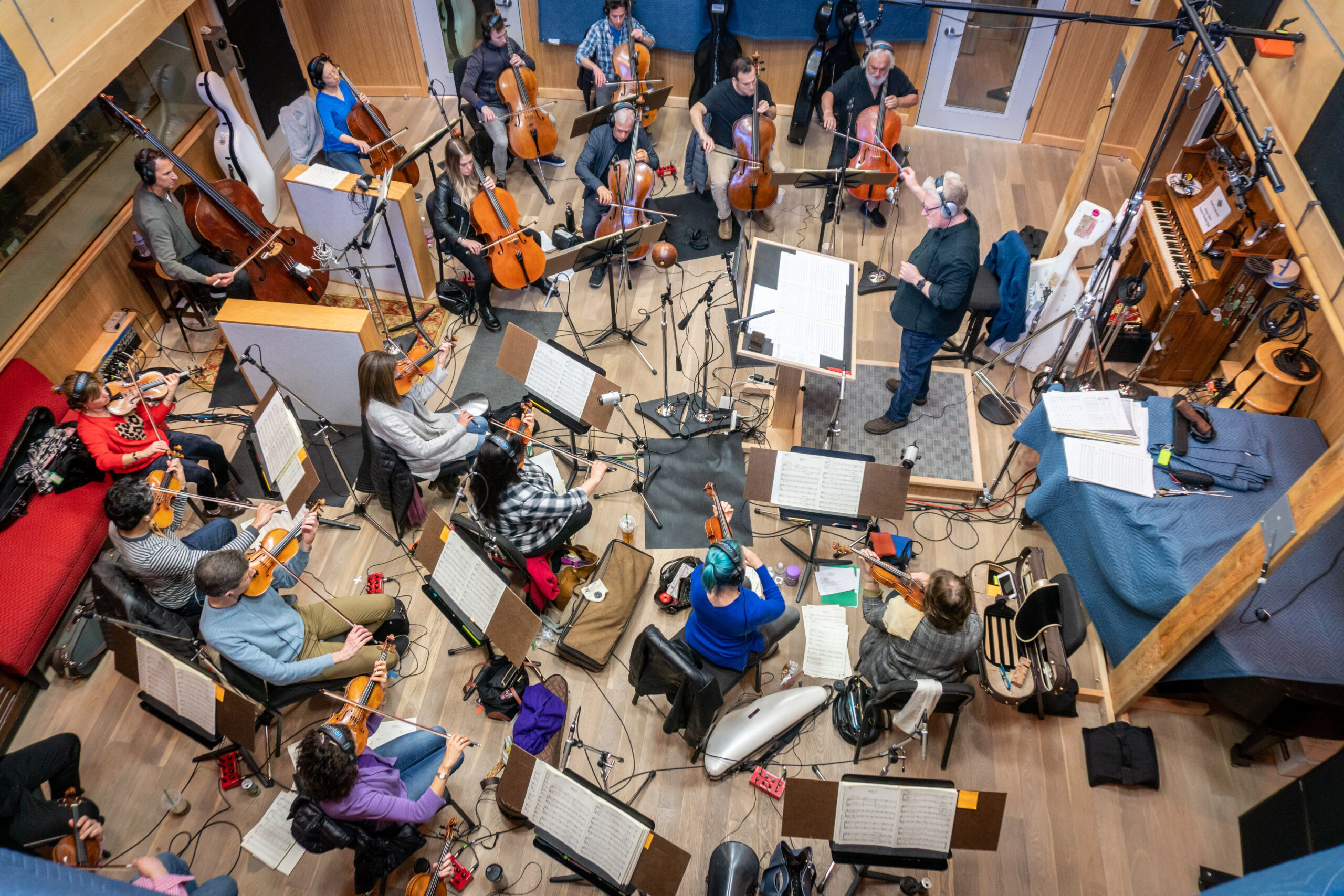
Then in 2019 I released my debut album ‘Blue Spring’, which is a very cinematic concept album. It comes with an original manga the label and I made. It was heard by the team behind the HBO series “Industry,” which was then in development. I got a call in February 2020 to come to London. Did an audition and got hired. I’ve been lucky enough to do about 70 episodes of TV and a few films since then and it just seems to grow year on year and project by project. It’s been very exciting and I feel very lucky (and tired lol).
As a Canadian, what was your biggest adjustment in moving to, and working internationally from Berlin?
Well, the language of course. Deutsche ist sehr schwer! I was also very young and broke when I moved here. I was only 24 when I first DJ’d at Berghain/Panorama Bar here, which was the main reason for the move. So I really had to find my bearings in all respects: a place to live, friends etc…music didn’t pay the bill consistently for a couple years so I also had a few odd jobs and even started a business as a personal fitness trainer for DJ’s and their managers and agents. That’s an entire other story but that kept me afloat for a couple years. I also don’t drink or do drugs so it was an adjustment to be in this extremely hedonistic place and even more so in clubs all the time. I loved many aspects of it and it was a pretty unique way to spend my 20’s but it also made me realize I prefer to just stay home and write music. So the goal of becoming a full time composer really grew as I got to DJ more.

(Photo by Nyima Chatelain)
Given Berlin’s place in the development of electronic music by composers like Tangerine Dream, did you find that inspiring?
At the time of moving here, no not really. My mind was much more focused on things around dance music. I was totally fascinated by the istory of Berghain and the surrounding labels and institutions like Hardwax, Ostgut Ton (rip) etc.. But yes as time went on I began todiscover other styles of electronic music here. By age 27 I was listening to a lot of music like Neu!, Tangerine Dream and got really into more prog-inspired music of the 70’s and 80’s. I think it’s a pretty obvious influence on my solo work looking back. Berlin is a funny place in so many ways. You can find endless amounts of artists here in all styles and genres but it still does sometimes feel like the dance music blackhole has a gravity that pulls you in and it took me a long time to move away from it.
How would you describe your sound, and what makes it particularly ideal for playing young characters trying to find themselves?
Mickey and Konrad, the creators of Industry, have described my sound as “music to make grown men cry”. I’d say it’s more just unintentionally naive and emotive. No matter how hard I try, I can’t seem to ever fully not make something very emotive. Scoring has been a great exercise for me over the last seven or so years. Obviously certain scenes call for certain styles or sounds. So if I have to do a cue that is comical and 25 seconds, that’s a specific brief but I will still probably add a tone of melancholia to it.
I like to take things as far as possible in terms of capturing an emotion or leaving a lasting melody. I’m definitely not as excited by things like underscore. Even then I try to add melody and texture in any way I can. I hink I can identify with a lot of the younger characters (and older, frankly) that seem to be in the projects I work on simply because I had this experience of moving to Berlin and really trying to find myself and my place in the city, the dance music industry and it’s been a similar journey now as a composer in this totally other thing of composing. I’m 35 now and still feel like that sometimes and I really appreciate that in shows like “Industry” or “Margo’s Got Money Troubles” that even the older characters still have that same feeling. Everyone is just trying to figure it out. I literally am doing that as I write music and try and find the soundworld or voice of a series. Hopefully that is reflected back.

How difficult was it making the jump from a techno-trance sound to the symphonic approach of “Industry?”
Musically not so difficult actually. I work very fast and the score of season 1 of “Industry” felt like a natural continuation of the music I was making on my solo albums, particularly “Blue Spring.” I also finally got to use my background as a viola player and that felt great. I’d written an album a couple years earlier called “The World I’m Going to Hell For” and that was really an attempt at trying to explore that side of my musicality. So I felt ready. What I was less prepared for was the sheer level of workload and voices giving feedback etc.. but I was very very lucky to have music editor Daniel Elms and music supervisor Oliver White guiding me through those early days and I’ve passed that on to a number of dance music friends over the last few years who have had opportunities in scoring. It’s a totally different workflow. I feel more than comfortable and fluent in it now but of course it’s an adjustment! It was also a new thing to write music with a purpose and for something bigger than your next 12’’ record or album. Now I was writing music for a full series with briefs, notes, timelines. I loved it, frankly.

How did “Margo” come your way? Had you been familiar with the book before it?
I was not actually. I was approached by A24, Apple and the team and we just really hit it off. I sent them some music and one of the sketches was this kinda raw guitar/pedal Steele thing and they said, “This is it?”. So I went with that and the score included a lot of those elements in the end. I’ve now read the book and loved it. My mom really loved the book, haha! She thought OnlyFans was a fictional thing within the book and was shocked to learn it’s a real thing in the world. That was a fun conversation.
What was your interaction with producer David Kelly like, especially given his iconic pedigree in TV dramedies?
Great. He has a real vision and many great stories as well. There was as certain sense of gravitas each time we spoke. His colleague Matt Tinker was also particularly nice and helpful throughout the process.

Tell us about creating a sound for Margo, and getting across her intelligence as a writer? You’ve come up with a particularly beautiful and dream-like theme for her that also has a bit of a downbeat quality.
The sound of Margo was a careful dance of trying to find optimism, uncertainty, and a quiet sadness. She has so many amazing qualities and is so assertive but also has doubts with every move. There is a lot of percussion and that is there to try and represent the never-ending tinkering and moving of her brain. Always analyzing, always calculating. But she also is a very emotive person and so there’s this dance between the percussion and piano chords. Sometimes the piano is quiet and steady, sometimes more chaotic. On top of all of that I really wanted to capture her doubts with odd little vocal flourishes here and there. There’s so many bizarre little “Ooo’s” and “Aahhs.”
What do you think that Elle Fanning brought to the character that inspired your approach?
She was so whimsical and quirky. I tried to really capture that. Also the vulnerability and capacity for both anger and forgiveness. Forgiveness is for me the main theme of the series.

Tell us about playing Margo’s baby Bodhi.
The theme for Margo’s baby is by far the simplest part of the score. It’s four chords on a pedal Steele. It’s simple and stripped back because her baby Bodhi hasn’t yet had the chance to build his own life yet. So I wanted to try and have the most naive and simple sounds possible that made sense in the pallet of the series. They’re the same chords that I use for Margo too but with her there are more elements and variations. For the baby, it’s just simple as can be. We first hear it when Margo gets her ultrasound in episode 1.
Margo has no end of quirky characters. How did you want the music to capture that eccentricity, yet also get across a sense of reality that drives her to OnlyFans?
One of the things I said in my initial pitch to the Margo team was that I felt this was a family tale rooted in some kind of “Americana,” which was funny to say given I’m Canadian. But it was a cross-country story, especially with Jinx. So I used a lot of instruments that are very rooted in Americana. Very real. Very tangible. Pedal Steel, guitars, a bit of viola. I wanted this to help make Margo’s real life feel very rooted and relatable. Once the only fans stuff starts, everything becomes more digital, quick, whimsical. That juxtaposition I think really helps sell the two sides of her life. Margo vs Hungry Ghost. Even once the OnlyFans part of her life turns on its head and she gets doxed, I tried to make it as otherworldly as possible and even incorporate certain sub genres from TikTok. I don’t have TikTok so that took some research!
How did you want to play Margo’s relationship with her parents, who definitely have their own set of problems?
More or less the same answer as above. Keep things very real and grounded. Jinx has two themes: “I’m here / Shadowheart” and “Can Jinx Stay.” They’re both very rooted in real instruments and have a certain happiness to them but also a sadness. That was important to get across for the Margo/Jinx relationship. There’s a lot of pain, abandonment and hurt there. But also the opportunity for forgiveness and trying again. That same principle applies to Margo’s mom Shayanne. She’s having her own internal battle as well with herself; does she love the man she is marrying in Kenny? Is she over Jinx? Is she re-living the trauma of having a child again through her daughter? There’s a real cyclical nature to Margo’s experience and her parents. I wanted to tie them all together somehow. They have individual themes for the characters and relationships but they all in the end still fall under the main “Margo Theme,” and I found a way to ties all the various elements together in the final episode.
What did you think about OnlyFans before you got the gig, and how do you think scoring the series affected your opinion of it?
OnlyFans seems to be everywhere at the moment. It was in “Industry” season 4 with the character of Sweetpea. So I was familiar with itthrough that. It also comes up from time to time on the Economist daily podcast, which I listen to religiously. I didn’t really have much opinion of it going in. It’s a platform people use. Working on the series helped humanize it for me I suppose. It’s there and power to anyone that wants to use it as a content creator or consumer. I was glad it was there for Margo in her time of need and she found empowerment in it.

For all of Margo’s enjoyment in OnlyFans, the show doesn’t disparage her parents from disapproving of her pay-for-play on it, which particularly proves devastating when it comes from her mother. Tell us about musically getting across their point in a way that doesn’t villainize them, even as Margo defends her choices.
There wasn’t really much musical language for that part of the story actually. The score was really used more for the scenes of acceptance and understanding. But again, with Margo’s parents it was all about rooting them in the more practical and real parts of life. Margo is off on an adventure and her Hungry Ghost music reflects that. When there are any scenes with her parents, it is back to raw and organic instrumentation. Kind, quiet, hopeful, sad. She is reflecting all of her parents’ own fears on their perceived guilt and failures back at them. They’re so desperate for her to succeed in a way that they understand. It takes Shayanne longer to get there in the series. In the book she never gets there. She’s a much less forgiving character in the book.
There’s an undeniable sense of sexiness and fun to Margo. How did you want to get her sensuality across, while also capturing of how she calculates “donations” by keeping things creative.
There absolutely is but I wanted to lean more into the fun and discovery of it. Margo is finding empowerment in her journey on only fans, but it’s also a real sense of exploration into a totally new world and sub-culture. So we talked a lot about the idea of it feeling like a video game, with each donation her achieving a new level or something like that. So the music had a hint of video game feel to it. I brought in some help for the percussion and playful feel of the Margo OnlyFans cues in Benjamin Smith Leverock Esser. He’s a crazy talented composer/ producer here in Berlin. My agent introduced us. He was able to bring this franticness to the music that was such a plus. Especially in episodes 3 and 4 when Margo first discovers and uses OnlyFans, he did some absolutely wild stuff with vocals and percussion. Every little bit of cash that comes in, some crazy cool cut in the drums. Every new message, a vocal flourish. Every momentary set back on her endorphin high online, speeding up the drum for an instant, or tuning them down for two notes. It was really fun.
How important was it to balance the humor with the show’s poignancy, especially given the music’s melodic, alt. approach?
I think very important! For all the humor and wholesomeness of the series, there’s quite a bit of darkness. Jinx’s struggles and overdose, Shayyane’s decision to marry this man she doesn’t really love just for security and Margo more or less being abandoned by the father of her child. These are serious topics and the music needed to reflect that. My favorite piece of the entire score is the cue when Jinx is rushed to the ER following his overdose. It’s still very melodic, I’ll never not be melodic, but it’s haunting and distant. Same for his actual overdose. For Jinx I tried to always have this little layer of electric guitar to go with his motorcycle, bandana wearing character. But when he is found on the floor like that, I just really let it rip with the distortion. I wanted to really capture the intensity and tragedy of his character. I tried to continue in that theme when he tries to make amends to Suzy and Margo. The show is a real dance of emotions. These people have tough lives and have to make tough choices, yet they’re able to find levity with each other amidst their collective and repective situations.

What gear went into Margo?
Very little. I have a Mac Studio, two Mac Studio monitors and a lot of sample libraries. I have a cheap Sennheiser mic and used that to record anything I needed. People are generally shocked when they see my set up. I think because of “Industry” people expect me to have some giant studio with synths and stuff but it’s just me in my living room.

How song-like did you want Margo’s music to be particularly in how you used vocal sampling?
Very song-like! I try to make all my score work feel song like, after all that’s how it sticks with you. I am aiming for hooks, catchy melodies or patterns.
The guitar gives Margo a curious, fun “western” sound at points. Was that a way of getting across Los Angeles?
Not so much LA but more this sense of cross-country Americana! I wasn’t sure about the western feel of things until I had a better picture of Margo’s parents actually. Once I better understood their characters and their back stories, the western part of things felt supernatural and right. So I played around a bit and it just worked!
Though Margo is very much set in our world, do you think the scoring makes the show surreal as such given the upside-down nature of OnlyFans and the “content” creators?
Yes, absolutely. Our goal here was to make the gamification of everything feel as vivid as possible. Not only is OnlyFans somewhat surreal, but it’s ultimately just another example of the internet turning everything into aggregator. Everything is reduced to numbers, statistics and small out of context clips or pictures. For a deep thinker like Margo, she’s so taken aback by it all at first, but soon comes to realize with her ability to create narrative and write…there is money to be made here.
The first cue showing OnlyFans is this real mix of apprehensive, curiosity, anxiety and ultimately opportunity. In the next episode we open with that same cue but with an added ‘fairytale’ feeling. I know I’ve experienced that endorphin rush from social media, it’s how they designed it after all and we wanted to capture the surrealism of that as well. We’re all just in a game designed by others, so long as we play it anyway…

Did the kinky sci-fi and lo-fi nature of Margo’s “Hungry Ghost” videos influence your score from the start?
No not really! I didn’t become aware of those until quite late in the process. My helper Ben did a really cool piece for one of them but by that point we were over halfway finished the entire seas
“Margo” will thankfully be back for a second season. What do you hope lies ahead for Margo and your scoring for her? And how do you think the series opens you up for more opportunities?
Well if it gets me in a Nashville studio working on country western music, that’d be awesome but hard to say! I hope it gives me moreopportunities to explore the quirkier side of scoring. Until now I’ve mostly worked on more grandiose or cinematic styles of composing, which I love too.

(Photo by Nyima Chatelain)
How do you think “Margo’s Got Money Troubles” stands out as a series, especially with what your scoring brings to it?
As a series, it’s definitely one of the more unique portrayals of family I’ve seen recently. It’s a really cool look at the generational gaps and also similarities in the modern family. It’s also a really interesting look at therealities of being a young person in the internet age and the options available now. I really enjoyed seeing Margo navigate her situation and the way her father came to understand it and support it through the lens of his own wrestling career. I think the score definitely is pretty unique and I’m proud of it. It takes a lot of big swings through a very subtle lens. I’d like to think it brings a lot of heart to such an interesting story with such great characters and frankly amazing actors behind them.
Watch “Margo’s Got Money Troubles” on Apple TV + HERE, and buy Nathan Micay’s soundtrack on Milan Records HERE.
Special thanks to Jamie Bertel at Sony Music