

In Netflix’s hit “Apex,” strong and silent Sasha (Charlize Theron) has a Norwegian mountain to climb and an Australian jungle to make it through alive – both with the metaphor of survivor’s guilt and the very real peril of being pursued for ritualistic dinner by the razor-toothed maniac Ben (Taron Egerton). But among the real perils the actors climb, dash and swim the rapids of in the bite your nails off intensity in this film from Icelandic director Baltasar Kormákur (“Two Guns”), a big, towering presence comes from the score by Kormákur’s fellow countryman and frequent composing collaborator Högni Egilsson.

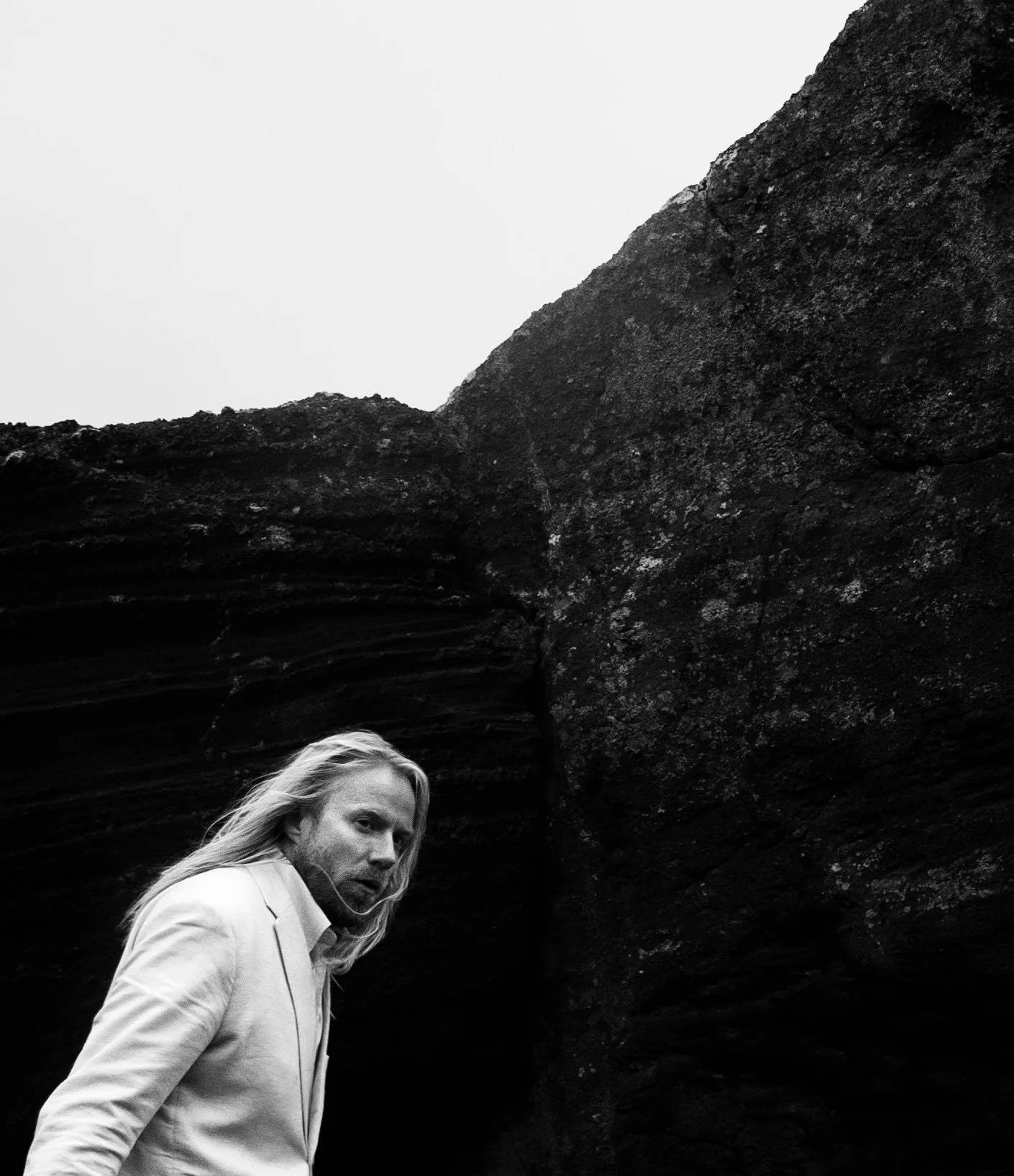
As another notable composer to hail from an island of gorgeous desolation filled with towering mountains and waterfalls, the Icelander impressed internationally with his electronic group GusGus. Eligsson’s talents in writing for dance, theater, film and his own solo albums have shown an ability to scale muscular symphonic walls, particularly in his Netflix volcano adventure with Baltasar that took on the volcanic menace of “Katla.” Now their newest venture on the streamer makes way bigger leaps for “Apex’s” most dangerous game. It’s epically percussive scoring full of pounding brass and strings. It’s an immersive approach that turns what would normally be a scenic Australian park into a raging forest primeval full of death at every turn as Sasha tries to outwit and outlast a maniac who views himself as a force of tribal nature. Yet what makes “Apex” more than a battle for survival is the emotion and heart that Egilsson gives to Sasha’s character, particularly when words are at a premium compared to gasps for air and screams of falling. For a thriller score in the slam-bang “Cliffhanger” tradition as mixed with a good dose of human Predator, it’s both a love and fear of nature that makes Egilsson’s score anything but monolithic.

Tell us about your path to music and making the transition from rock artist to composer.
I started very young studying composition alongside playing in bands and writing songs, so for me those worlds never felt completely separate. Early on I became fascinated by how different musical elements, melody, harmony, rhythm, sound color, density and silence could function almost like emotional levers inside a narrative. I loved the idea that by shifting one parameter slightly, the psychological feeling of a piece could completely change. That’s what all genres of music have in common.
How did you first meet with “Apex’”s director Baltasar, and how do you think your collaboration has evolved?
Baltasar and I first worked together years ago, and over time we’ve developed a strong shorthand creatively. He gives a lot of freedom but also has very sharp instincts about emotion, pacing, and atmosphere. On “Apex” we pushed things further sonically than before. One of our very first conversations about the film wasn’t really about “thriller music” at all, but more about the deeper symbolic forces underneath the story. We spoke about Sasha’s journey as a kind of redemption story, but also about the collision between two primal archaic forces. Ben almost represents a pre-ethical, pre-language world — a force born from wilderness itself. Baltasar described him almost like the Greek god Pan, something seductive, terrifying, instinctual, and outside modern morality. Sasha, on the other hand, comes from the world of society, structure, and human consequence. That idea became very important musically. I think the score is constantly moving between those two worlds, the human (the melodic/harmonic) and the primal textural and sonorous), civilization and wilderness and trying to blur the boundary between them.

How did your electronic rock and original symphonic work figure into “Apex?”
The score really grew out of the collision between those worlds. My background in electronic and rock music helped shape the propulsion, pulse, and physical energy of the film, while my work in contemporary concert music heavily informed the orchestration and harmonic language. I didn’t want the score to feel like a traditional action soundtrack, but more like a living psychological and environmental space.
Tell me about the instrumentation of “Apex”
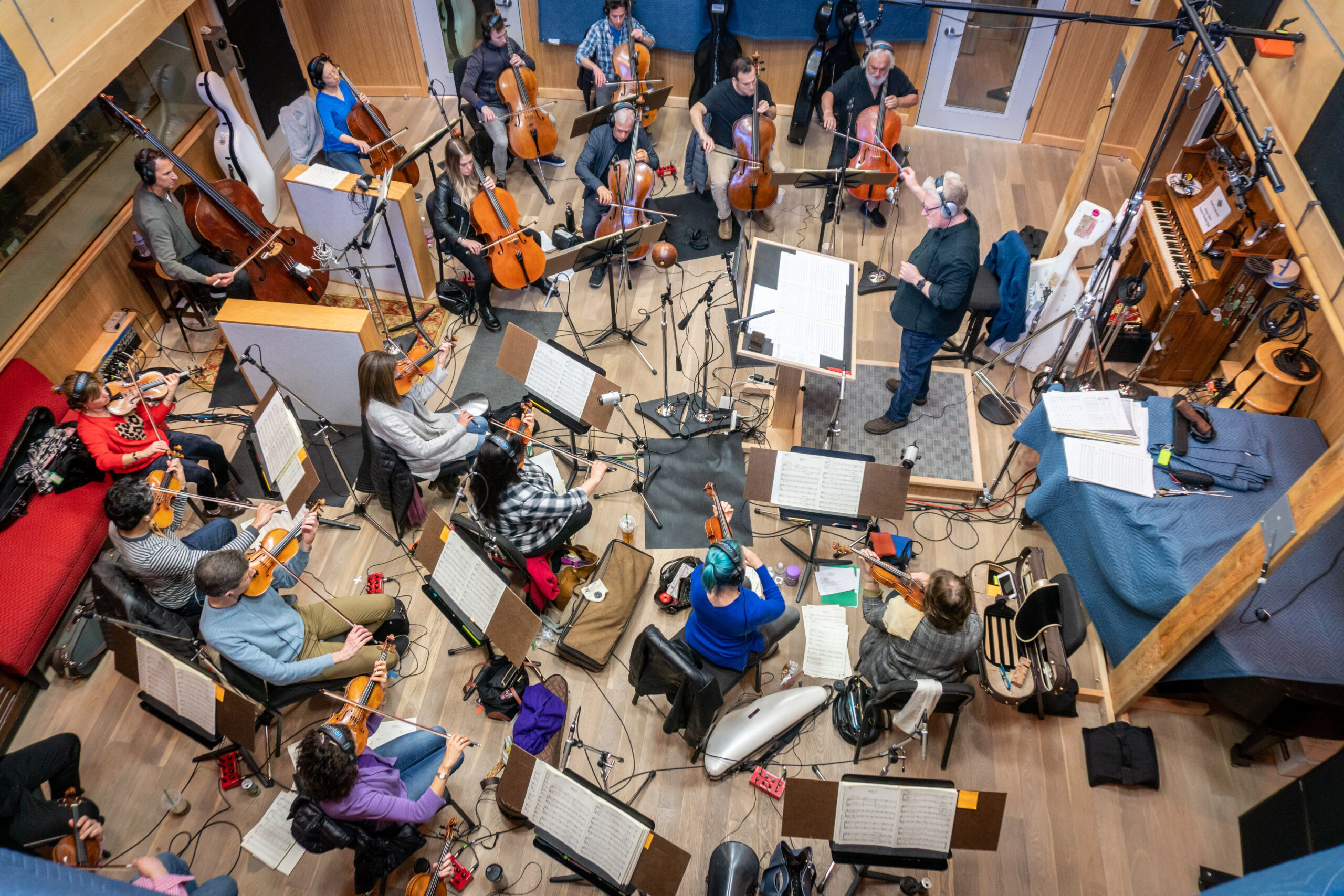
From early on, I became fascinated by the sound world of the Australian wilderness, especially the strange, almost abrasive screeching of certain birds. I wanted the orchestra to sometimes feel like an extension of that ecosystem itself. That led me toward more contemporary orchestral techniques, bows on cymbals, strings playing on unusual parts of the instrument, dense harmonic clusters, unstable sonorities, and textures that hover somewhere between beauty and noise. At the same time, the electronic side of my background helped me think about repetition, texture, and momentum in a very physical way. So the score sits somewhere between those two worlds — part symphonic, part tactile and electronic, where the orchestra often behaves less like a traditional cinematic orchestra and more like a strange breathing organism inside the wilderness.
How did you want the music to ratchet up the intensity without making this an outright serial killer score?
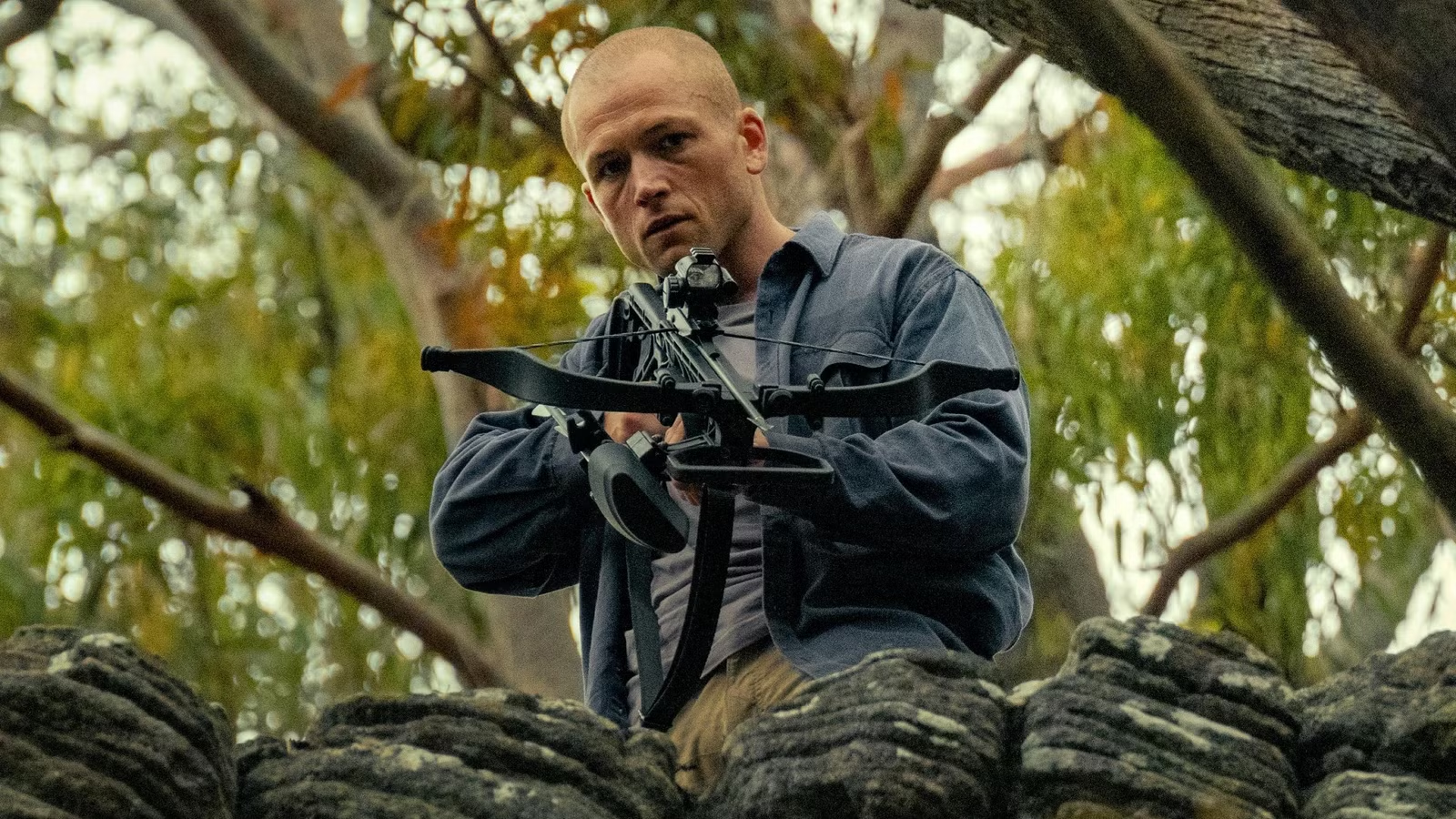
That balance was very important to me. I was interested in the idea of polarity within the musical world of the film. The opening theme is actually quite innocent and majestic — almost romantic in a way — and I wanted the emotional world at the beginning to feel open, luminous, and full of possibility. But once Sasha enters the wilderness, the music transitions quite abruptly into a more mysterious and psychologically unstable plane. The harmonic language becomes denser, the rhythms more physical and brutal, and the orchestra starts behaving in a much more primal way. Even then, I didn’t want the score to simply scream at the audience like a traditional serial killer score. There’s brutality in the film, but also melancholy, silence, beauty, and moments of strange empathy. Sometimes the quieter and more suspended moments can feel more unsettling than the aggressive ones. I wanted the score to constantly move between attraction and danger, beauty and violence.
Given that Charlize’s character is the strong, silent type, did that make scoring her emotion even more important?
Yes, very much. Sasha carries a lot internally, so the music often had to express what she wouldn’t say out loud. I wanted there to be fragility and grief underneath the survival aspect of the story. I tried to make the score speak closely to her psychology and subjective experience — whether that was the murky unease of the hunters and the creeping feeling of being watched, or the almost transcendent quality of the final climb. I was always looking for those emotional angles beneath the literal action and trying to shape the music from there. At the same time, I wanted some unpredictability in the score, moments where the music slightly contradicts what the surface of the story is telling you. Sometimes instead of simply amplifying fear, the music becomes reflective, mournful, and strange. I think that tension makes the emotional world more human and psychologically complex.
How did you want “Apex” to feel like the landscape Sasha is trying to survive?
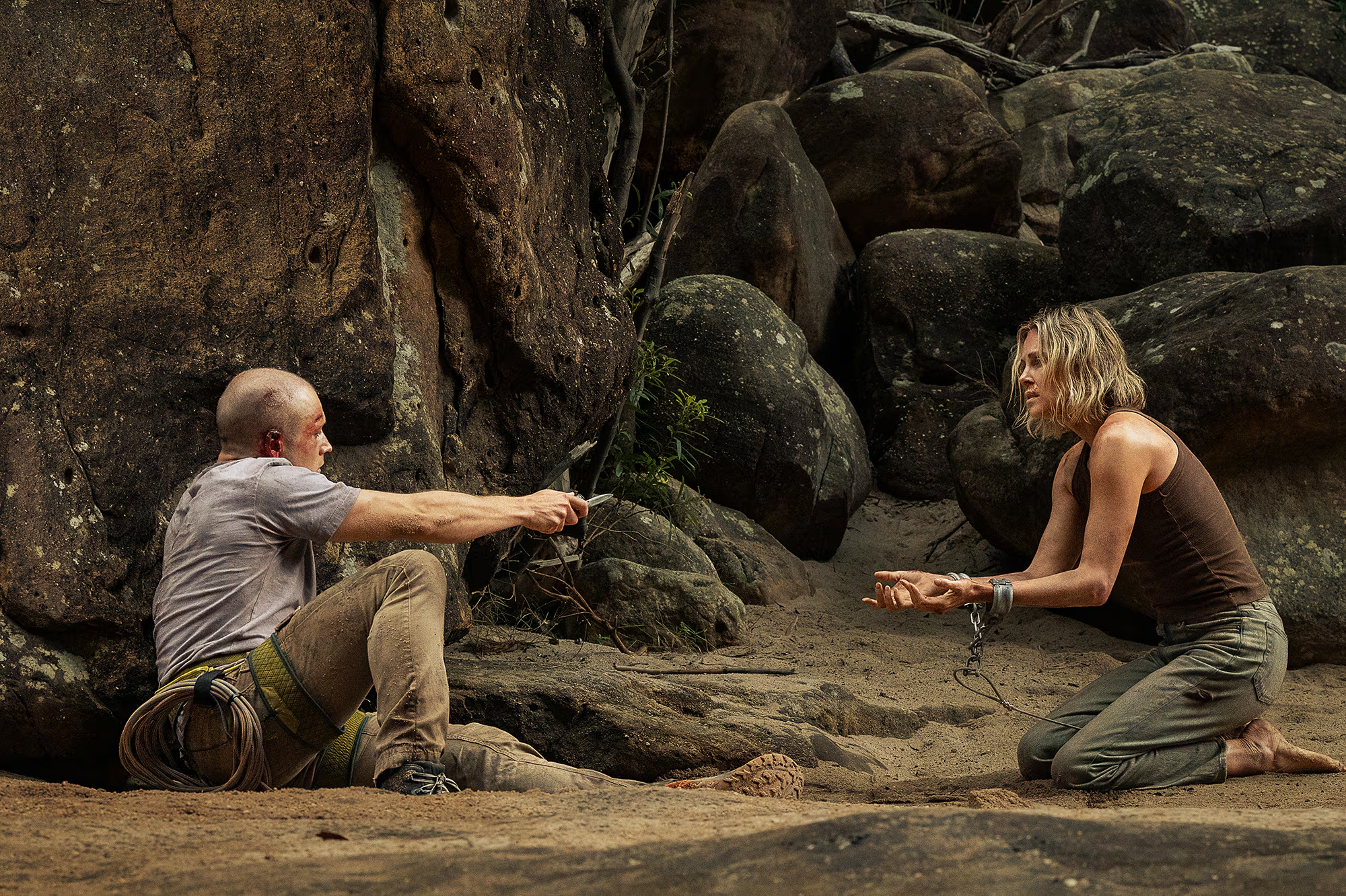
I wanted the score to feel physical and elemental, almost like the environment itself was breathing. We used a lot of deep percussion, unusual vocal textures, and extended orchestral techniques. Sometimes the voices almost function like distant animal calls or wind moving through the landscape rather than traditional choir writing. Early on I became fascinated by the sound of Australian birds. Coming from Europe and Iceland, their screeching and calls felt incredibly alien and almost surreal to me. I found myself trying to orchestrate those sounds inside the orchestra, using strings, brass, percussion, and voices to imitate the strange tension and unpredictability of those textures. And because the film is so immersed in nature, I knew quite instinctively that I wanted the score to be symphonic. There was something about the scale of the landscape and the primal emotional world of the film that felt right for a large orchestral language, even if that orchestra was often being pushed into unusual territory. I myself is a lover of the classical avant-garde so I could really go to town with that.
What’s up ahead for you?
I’m continuing to move between film and concert music, which is something I really value creatively. I’m also developing larger orchestral works alongside film projects and exploring ways those worlds can speak to each other more directly.

When a movie puts you through a lot like “Apex,” is it important for the score to give you a sense of relief and beauty at the end?
I think so. After intense experiences, there needs to be some sense of emotional release or reflection. I wanted the ending to carry a sense of exhaustion, but also a strange kind of transcendence. I also felt the story needed to end with a certain sense of completeness in a more classic emotional way. So in the final beach scene I allowed the score to open up slightly and introduce a small sense of glory or release – not triumph exactly, but the feeling that Sasha has passed through something immense and survived it, in and outside her mind.
Watch “Apex” on Netflix HERE and buy Högni Egilsson’s soundtrack on Netflix Music HERE. Visit Högni’s website HERE
Special thanks to Sarah Roche at White Bear PR