
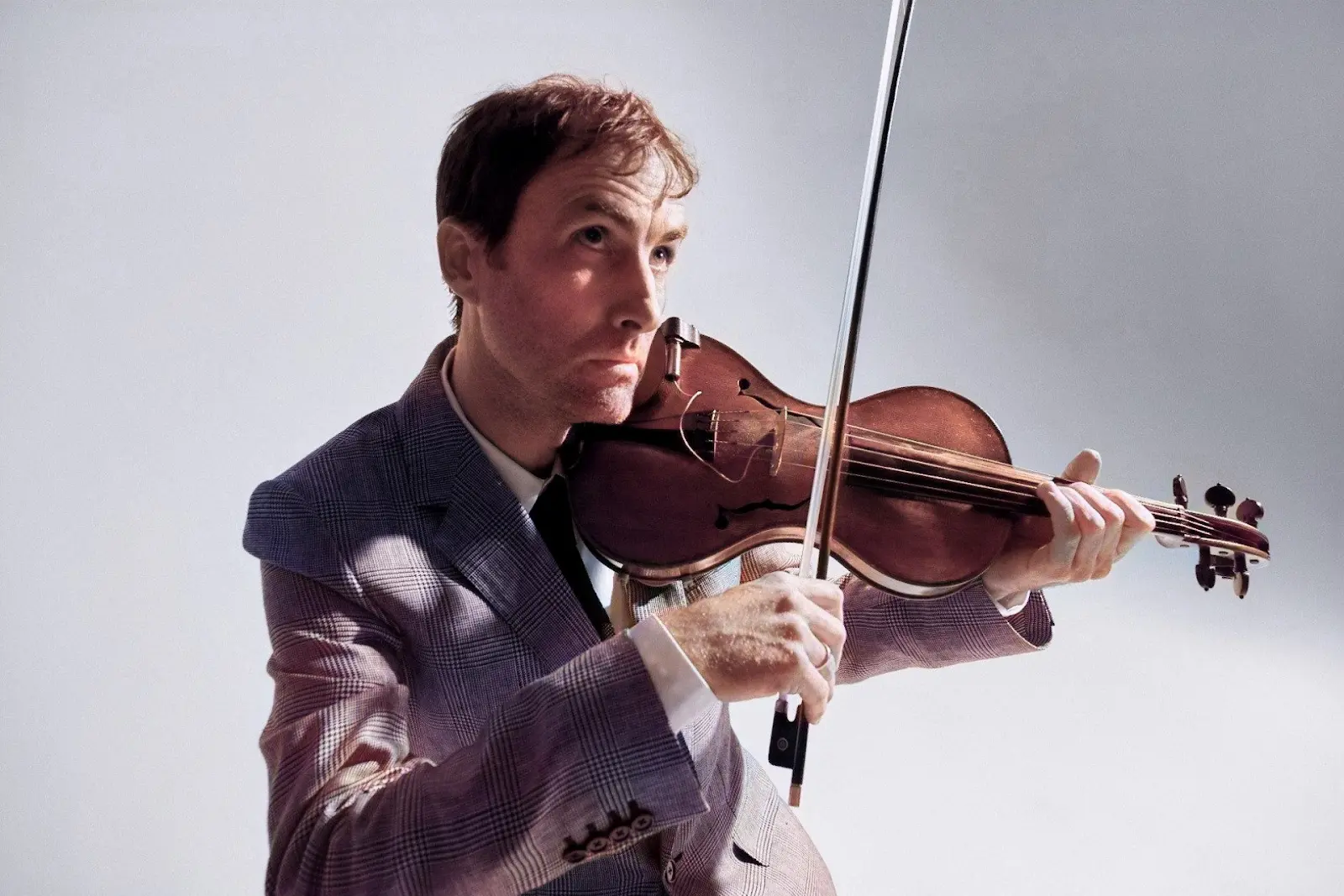

Andrew Bird (Photo by David Black)
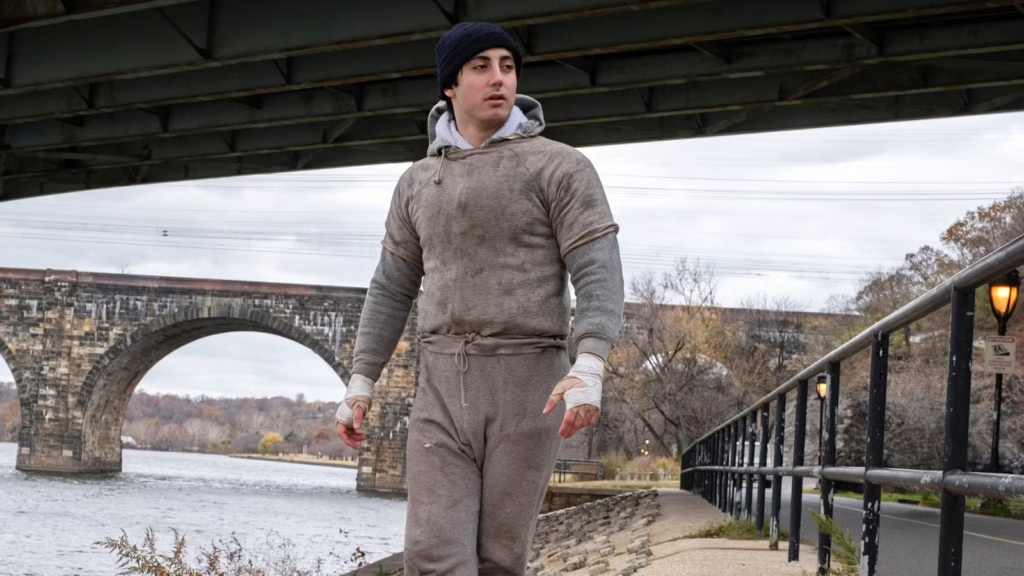
When fans of “Rocky” think about the iconic film that a struggling writer and wannabe star Sylvester Stallone ran to hell and back to make happen, the two things that appear in the mind’s eye and ear is his sweating, headbanded character running through the streets of Philadelphia – followed by Bill Conti’s exhilarating song “Gonna Fly Now.” For Peter Farrelly’s winning biopic, and film-opic “I Play Rocky,” the music the embodies Stallone’s struggle has got to be established long before a frame of impossibly cheap film rolled. And that bell powerfully rings in the score by “Breaking Bad’s” David Porter and songs by Andrew Bird. A raw, streetwise contrast to Conti’s gladiatorial symphonic and urban funk score, the music of “I Play Rocky” sings with emotional determination, the tunes imbuing Stallone (brilliantly played by Anthony Ippolito) with the ultimate, never say die indie spirit that turned him from character actor into an Oscar winning Hollywood superstar.

An Illinois native who grew up on the south side of Chicago, Bird had a youthful penchant for imitating those titular animal cries and creating equally striking musical sounds on the violin. Mixing a variety of styles on his solo albums and his group Andrew Bird’s Bowl of Fire, the artist’s eclectic songs received not only Grammy nominated attention but also became a favorite of music supervisors in such films and shows as “The Promotion,” “One Tree Hill,” “Funny People” and “MacGruber” before stepping center stage alongside “The Muppets.” Beyond his off-kilter talents impressing as an actor on “Fargo’s” TV adaptation and composing duties on “Baskets,” “Burden” and “Poolman,” Bird’s song placements have continued unabated for “The Bear” and “Ted Lasso” ultimately netting him an Emmy and a recent Grammy nomination alongside Gavin Bivrick for “The Pitt’s” “Need Someone” – a show that he also co-scores with Bivrick. Now drawing on older cuts and fresh songs, Bird’s Greek chorus for Stallone in “I Play Rocky” runs exhilaratingly, and soulfully straight up to underdog heaven

(Photo by David Black)
Tell us about your path to songwriting and composing?
I studied the Violin from an early age and had a penchant for improvisation and exploring other genres besides classical. When I was studying music at Northwestern, I thought my future might involve film scoring rather than the classical track. I spent as much time in the film library as I did in the practice room, but then I started a band and was writing my own songs and went on the road and forgot about that for a bit. Writing a three-and-a-half-minute pop song that developed some idea or character and finding threads between songs within the format of an album is kind of like making a movie in a way. Then there’s the artwork and the videos too, so it’s basically world building as they say.

You could say your big Hollywood break was getting songs and score into “The Muppet Movie.” Were you a fan of the characters, and what was that experience like?
I wrote a bunch of songs on spec for “The Muppet Movie” as did others, just because we were such huge fans. We didn’t really know that there was already a songwriter on the project from day one, but it was all good. I just repurposed some of those songs for my own album at the time. Then, James Bobin asked me to write and perform the whistling for that climactic scene, and it was a total delight to keep revising it until we got the comedy of it just right.
Another big mark in your scoring was for the cult TV series “Baskets.” Tell us about that.
I wrote the music for the pilot and created a music library for the series, but I wasn’t on staff as the composer. My song “Saints Preservus” was intended as the theme before I discovered that they weren’t doing a title theme. It’s a brilliant show and fun to work with Zach Galifianakis

You also impressed as funeral homeowner Thurman Smutny in the season four of “Fargo.” What was that experience like, and what drew you to acting?
Noah Hawley saw me play a show in Austin, Texas, and cast me in the role on the spot. You’d think that being a performer, being on stage prepares you for acting, but it’s really quite a different thing. It’s still a mysterious art, but I’d like to do some more of it.

“The Pitt” has become all the rage. What was it like writing the Emmy-winning and now Grammy-nominated “Need Someone” for Gavin Bivrik?
Gavin called me cold, and I wasn’t familiar with the show. All I got was the scene out of context and Gavin’s template for end credits of just bass and drum tracks. I wrote the lyrics and melody and tried to tie in what various characters had endured, while driving home that universal human desire to not die alone. When I get a brief like that to write a song, it’s actually so much easier to be focused than when I’m writing my own songs. I really love the challenge of it.
By this time, you’ve seen a lot of your songs getting used in movies and shows like “Funny People,” “MacGruber” and “The Bear.” What do you think attracts music supervisors to your work?
I’d like to think it’s because we take risks to make idiosyncratic recordings that are a bit different and melodies that are kind of cinematic. Most of my songs are recorded to tape and are live performances which makes it hard to get individual isolated tracks, but the upside is it just doesn’t sound like 95% of current music.

How did you become a part of “I Play Rocky?”
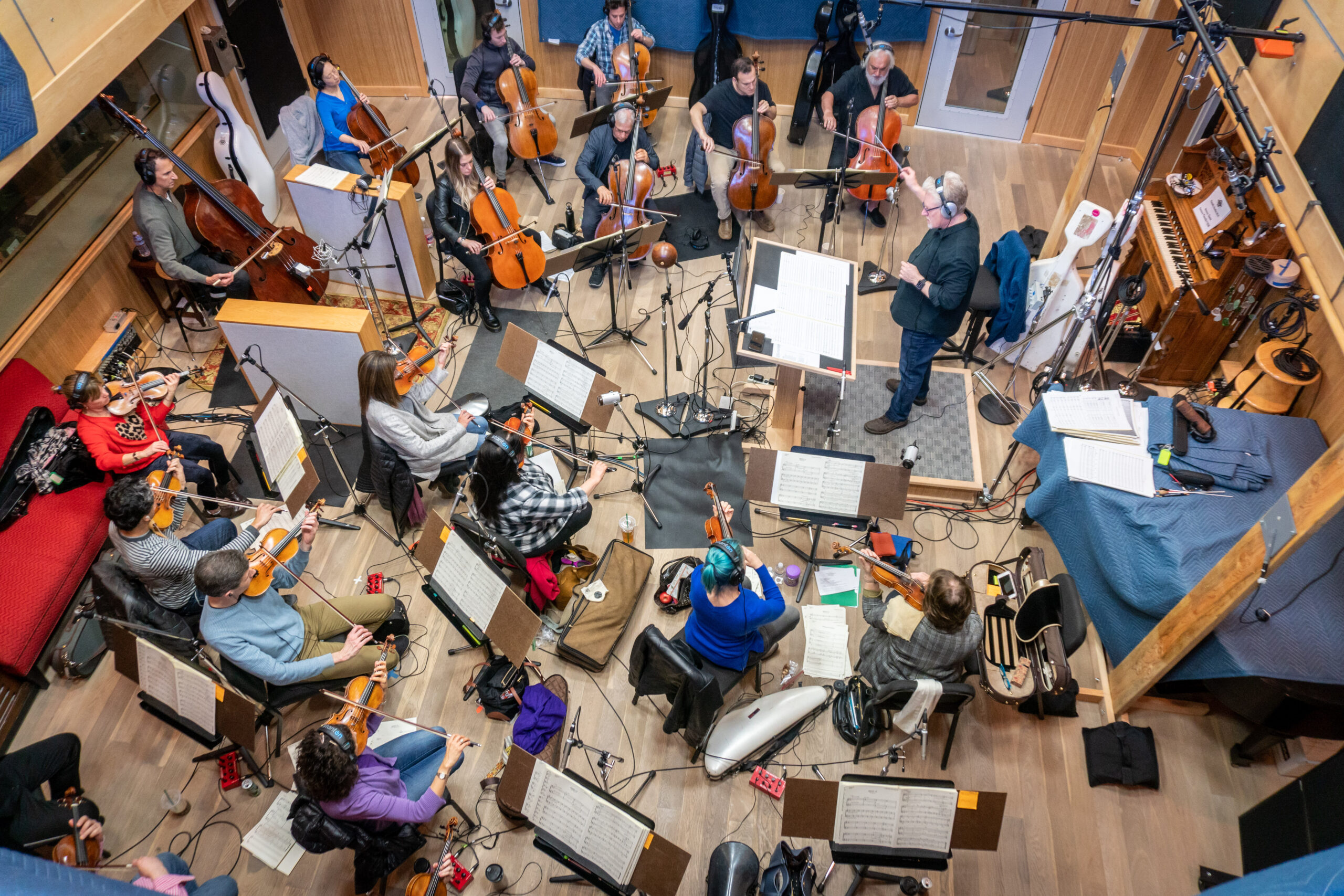
The music supervisor Tom Wolfe and director Peter Farrelly reached out about scoring the film with songs. They were temping in a lot of my songs from My Finest Work Yet, and I sent Tom rough mixes of my next album yet to be released. All those songs were recorded live in one room, so you get this bleed between microphones that makes the drums and vocals sound unique, almost impossible to recreate. Songs like “Proxy War” and “Bloodless” happen to evoke mid-70’s Philadelphia and have a soul/jazz flavor to them that worked really well with the picture.
Before even starting this, what did the Rocky films and their score / soundtracks mean to you as a viewer, and as a musician?
The film represents a transitional moment between the bleak gritty movies of the 70’s to the inspirational crowd pleasers of the 80’s, and the music is this extremely successful crossover between classical composition and groove-based soul and rock. It probably owes a debt to scores like “Shaft.”

Could you identify with Sylvester Stallone’s artistic struggle, not to mention his career one?
I think my “Rocky” moment was in making “The Mysterious Production of Eggs,” which took four years and many failed attempts. I had to isolate myself and rebuild my musical vocabulary to make something more honestly me. I was wracked with self-doubt but pushed through.
What was your collaboration like with director Peter Farrely? And did you have any interaction with composer David Porter?
Peter and I met and talked about his love for song-based scores like Harold and Maude and The Graduate, and how I hold those up as the ultimate challenge to write original songs as score. We also talked about our experiences with Jonathan Richman (Something About Mary). It didn’t end up being that, but it’s a “whatever works” scenario. I’d still like to do a project where the songs are part of the project from the start.
Which are the new songs here?
“Magical Thinking” and “How Long Have You Been Standing There,” which will be on a forthcoming album. Though these versions are from an earlier attempt at recording and won’t be the same performances as on the album, so in a sense they’re exclusive to the film.
Given that “Rocky” was the definition of an independent film at the time, do you think the indie quality of your songs are a good fit?
Yes. They are scrappy recordings and have a tinge of inspirational gospel/soul which fits with the perseverance of Stallone. But as I said, our approach in the studio is unconventional by modern standards.

The one tune that directly incorporates one of Bill Conti’s themes is “Magical Thinking.” How did you want that to work out?
I think “Proxy War” is most similar to Bill’s work, with its strings blended with a French horn melody over a gospel/jazz groove. It’s orchestrated, but the rhythm is gritty so there’s a bit of high/low contrast.
On the other hand, how do you think the contrast of your songs when it comes to the music we associate for Rocky works for the soundtrack, especially in making it current?
It could’ve been the obvious classic rock go-to’s for needle-drop “we’re kicking-ass” montages, like what you’d hear when The Rolling Stones were in a soundtrack.

Both you and Sylvester Stallone are renaissance men when it comes to the many artistic hats you wear. Is having all of those interests important to your art?
Whenever something starts to feel like muscle memory or something you’re known for, it’s time to shake it up and exercise different creative muscles. It’s always got to be a reaction to your environment.
What’s ahead for you?
Playing with orchestras at the moment. I co-composed the score for Netflix’s new “Pride & Prejudice” series, which comes out in December. Then, I’m setting up the next album.

Bill Conti and Andrew Bird (Photo by Jana Davidoff at Rhapsody PR)
“Rocky” has one of the most iconic songs ever written for a film. Now having put your voice onto its biopic / making of, what do you think it takes for a tune to really stand out in a movie’s soundtrack, as well as to move in perfect synergy with the score?
The era of films having an instantly recognizable theme, as with John Williams, Bill Conti, or Morricone, has been replaced by the needle drop. You’ll still hear it in streaming series title themes like “Succession” or “Game of Thrones.” The theme has to be incredibly catchy of course, but there are more subtle details like the sound of a tambourine that can be subconsciously impactful.
If you got the chance to write songs for another movie in the vein of “I Play Rocky,” what star or film would you like it to be for?
Some kind of off-beat coming of age non-conformist epic like “Harold and Maude” would do.

See “I Play Rocky” in theaters, with Andrew Bird’s song soundtrack available on Loma Vista Recordings HERE
Special thanks to Alix Becq-Weinstein and Jana Davidoff at Rhapsody PR
Leave a Reply