

Thanks to The Duffer Brothers’ enormously successful “Stranger Things,” everything 80’s is new again with a series that captured the charm of any number of Amblin’ and attendant pictures – if with an effectively dark prog-rock soundtrack for those demon-busting Goonies that threw back to the soundtracks of John Carpenter and Tangerine Dream. Now with the Duffer-produced “The Boroughs,” the score is resolutely old school a la John Williams, Alan Silvestri and James Newton Howard for a dream team of veteran actors busting critters. They’re given a giant burst of rejuvination from John Paesano, a composer with no shortage of fantastical work like Netflix’s “Daredevil,” “Invincible” a videograme slinging “Spider-Man,” and a spot-on Jerry Goldsmith homage in “Kingdom of the Planet of the Apes,” Here he gives these unlikely old heroes a majestically thrilling orchestral sound to take on the perhaps not-so bad creatures that are sucking what’s left of the life out of people in a too-good-to-be-true retro retirement city.
However, here, the retro is the wonderment of OG symphonic scoring as Paesano skillfully taps into the OG Amblin’ orchestral feels with the precision of the show’s spider-things. But beyond seeing if the composers he’s wonderfully riffing on still have some brain fluid left, Paesano’s “Boroughs” goes beyond nostalgia to be its own sumptuously thrilling Mother of all 80’s 1oo-piece soundtrack goodness, as channeled through the composer’s skills that feel positively child-like in their sense of wonder. If alien energy once made a bunch of codgers young again, the effect of “The Boroughs” does the same trick for both characters and audience. What’s now considered by many to be old school has never played better in every respect than in “The Boroughs.”

Were you a fan of “Stranger Things,” and what do you think makes “The Boroughs” fit into their brand?
Absolutely. I was a fan of the Duffer Brothers from the beginning. I grew up in the Midwest in the 80s, so “Stranger Things” resonated with me immediately and personally. The era, the atmosphere, the way the music was woven into the storytelling all felt genuinely lived-in rather than manufactured. I think “The Boroughs” fits naturally into that brand because of that same commitment to emotional authenticity. “Stranger Things” built its identity on the idea that music isn’t just a backdrop but a narrative force that shapes how the audience feels and connects to the story. That was central to how I approached the score for “The Boroughs.” The result is something that shares that same sensibility, atmospheric, character-driven, and rooted in a real sense of place and time.
Whereas “Stranger Things” goes for a prog-rock alt. style, “The Boroughs” is resolutely symphonic, and melodic. Was that always the intended approach here?
Yes, absolutely. From the very first conversation about the project, the symphonic and melodic direction was never in question for me. While I have enormous respect for what Kyle Dixon and Michael Stein created for “Stranger Things,’ that synth-driven prog-rock palette is very specific to their vision and the world the Duffer Brothers built. For “The Boroughs,” my instinct as a composer pointed somewhere entirely different. I grew up on John Williams, Alan Silvestri, Jerry Goldsmith, John Barry and James Horner. Film is actually what got me into music in the first place. I always think of myself as a movie and story lover before a music lover. Those scores from the 70s, 80s and 90s felt like magic to me. You could close your eyes, listen, and be completely transported back into the film. What I loved about them was how shamelessly emotional they were. They were shaped by dialogue, they weren’t afraid to comment on action and conversation with musical gestures, and they wore their heart completely on their sleeve. There was a boldness to them that I find absolutely thrilling.
Scoring has evolved and modernized beautifully, and there are so many incredible styles and approaches being explored today. But my heart has always lived in symphonic writing, in melody, in music that tells the story alongside the drama rather than simply underneath it. When “The Boroughs” came to me through my agent, I jumped on it as fast as I possibly could. It was exactly what I had been waiting for.

How was it working with “The Boroughs” showrunners.
Honestly it was one of the first times in my career where I truly felt trusted. Trusted that I wasn’t going to blow up their project. Hollywood is funny that way. When you are doing a score like this, where the music is so upfront and almost functions as another character in the story, the stakes feel very high. I have always believed that great music will never completely rescue a troubled project, but bad music can degrade a good one much more easily. That is just my opinion, and it is all very subjective, but it speaks to how much weight I put on getting it right. I think the trust came from the fact that this is genuinely what I was built for. If this had been a different kind of show requiring a completely different approach, maybe there would have been more guardedness on their end. But Will and Jeff were just incredible. If anything, I was harder on myself than anyone else. I felt like I was giving more notes than anybody. And from the producers, from Netflix, from the Duffers, it was essentially just keep doing your thing. That is a surreal and wonderful place to be as a composer.
It also becomes really obvious when you walk into a room and it just is not right. You can almost feel it immediately. When I was younger I used to push through that feeling and try hard to conform to what I thought a project needed, even when I knew deep down I was not the right fit. The last few years I have taken a completely different approach. If your heart is not truly in it, it is not fair to yourself and it is not fair to the project. Hollywood has always been so credit and award driven when it comes to staffing films and shows, and I understand why. But when you get to a certain level everyone is talented. The job stops being about whether you can write the music. We all can. It becomes about who you want to be in the trenches with, figuring out this massive puzzle of what is actually going to serve the story you are trying to tell together. That is a true collaboration, at least the way I approach it. So, when I finally got in the room with Will and Jeff and felt that immediate alignment, that shared language and inspiration, I was genuinely excited in a way that does not always happen. It all just felt right. And that feeling carried through every note of the score.

What’s the importance of a main theme to you, and what did you want to immediately get across with “The Boroughs” opening credits?
Main titles are always tricky. You have a very short window to orient the audience, set the tone, and make a promise about the kind of story they are about to experience. Get it wrong and you have already lost them before the first scene begins. For “The Boroughs” I actually built the score around two distinct musical ideas working in tandem. The first is what I call the Boroughs motor, a four-note pattern that represents the world of the Boroughs itself. It functions more as a device than a traditional theme, something that could run alongside and support the Leitmotif work I was doing with the characters. Just as the story unfolds within the Boroughs, the character themes unfold against this motor. It is woven throughout the entire soundtrack and gives the score a sense of place and continuity.
The main title opens with that motor somewhat fragmented, tentative, almost searching, slowly finding its footing as the cue progresses. Then we introduce the monster theme on solo violin, which immediately brings in a sense of mystery, intrigue and the unknown. There is something about a solo violin in that context that feels both beautiful and unsettling at the same time. From there the theme is taken over by the horns, big and threatening, and then it transforms into something almost magical and full of hope using that very same musical material. That was entirely intentional. I wanted the audience to sit with a question from the very first note. Is this monster good or bad? What kind of story is this really? By showing different emotional faces of the same theme right there in the opening credits, I was giving the audience a guide to what is coming, letting them know there is far more than meets the eye with this story.
Tell us about “The Boroughs’” other themes.
The monster theme was something I was very deliberate about from the beginning. The mystery surrounding these creatures is not one dimensional, and I needed a melody that could live comfortably in completely different emotional spaces. The same theme that feels big and threatening when played by the horns can feel magical and full of wonder in another context. That flexibility was essential to the storytelling.
Then there is Sam’s theme, which you can hear in the track “Bye Bye Butterfly.” That one came from a very specific internal place. Sam is a man caught between three lives simultaneously. The life he had with his wife Lilly, the life he is living without her, and the possibility of a life where he could somehow have both, with all of those memories still intact. What I love about how that cue is constructed is that the melody itself belongs to Lilly, to Sam’s life with her when she was alive. But as the cue builds and grows, the Boroughs motor and its DNA begin to emerge underneath it, representing this new chapter of Sam’s life in the Boroughs pressing in around him. The two worlds are literally sharing the same musical space, which felt like exactly the right way to tell that part of his story.

And then there is what Will and Jeff refer to as the Grey Rebellion, a call to adventure. You hear it for the first time at around 2:18 in the track “Knock Knock” the moment Sam finds a key that unlocks one of the first clues in the mystery. From there it evolves and takes on different forms as the show progresses, reaching its final growth in the track “Its Her Choice.” One of the real challenges of episodic work is that your themes need to function very efficiently. Will and Jeff needed something that could get in and out of a scene quickly and tell the audience in just a few notes exactly what the characters are feeling. That is actually one of the things I loved so much about those great scores from the past. They were nimble. They could do enormous emotional work in very little time. Technically you have to stay pretty nimble with your themes to pull that off, and that was always front of mind for me throughout this score.

With “Kingdom of the Planet of the Apes,” you paid tribute to Jerry Goldsmith. In “The Boroughs,” you give wonderful homages to John Williams and Jerry Goldsmith, yet as done through your own voice. What do you think makes those composers melodically distinct, and how did you go capturing that style to merge them into a stylistic whole?
It is funny, I was a film score geek growing up and honestly still am. I learned to write music from film scores. As I mentioned earlier, film is why I got into music in the first place, why I picked up an instrument, why I studied composition. It was always pointed toward storytelling music, for better or worse. So in a weird way most of my scores would probably naturally default to sounding like this. The difference is that ninety percent of the time directors or studios will rightfully push back and ask if we can modernize it a little, make it feel less traditional, and I completely understand that. I have spent a lot of my career consciously working to evolve and contemporize my sound. But on “The Boroughs” nobody was policing me in that direction. If anything, I was policing myself out of habit, constantly second guessing whether I was pushing too far into my instincts. And then I would get the same note back every time. “Just keep going.” So, I finally let myself go wild. My heart lives in this space and this project gave me full permission to live there.

In terms of what makes those composers melodically distinct from each other, that is something I have spent a lifetime studying. A lot of the great symphonic writers of the 70s, 80s and 90s were themselves shaped by earlier masters, whether it was Waxman, Herrmann, or classical composers like Bartók, Wagner, Tchaikovsky. My lineage runs through Williams, Goldsmith, Horner, James Newton Howard, Silvestri. You absorb all of it and it becomes the vocabulary you write from naturally. But here is what I think people sometimes miss when they talk about those scores. It is not just about the notes on the page. The notes are almost the easier half of the battle. What made those scores truly great was how they functioned with the story. The application is where the bread is buttered. How you spot a sequence, when to pull back, when to push in. Whether you are too tight to picture or too loose. Whether you are leading the audience too much or not enough. Whether the scene even needs music at all. Those considerations were handled so masterfully in that era in a way that I find just as inspiring as the melodies themselves. Capturing that side of it, that intelligence of application, was just as important to me on “The Boroughs” as getting the sound right.
Part of that application is training the audience in the language of your score early on. If you are minimal and grounded in the first act and then suddenly hit the audience with a giant bombastic fantastical theme in reel three, they will feel assaulted by it. Confused. But if you teach them the language correctly from the very beginning they will accept almost anything you throw at them, no matter how bold or sweeping it gets. I always think about Williams and Spielberg in that context. Imagine if John had held back the Indiana Jones theme until deep into the film, keeping the score pulled back and hidden underneath everything until that moment. By the time it finally arrived the audience would feel blindsided rather than thrilled. The reason it works so perfectly is because Williams establishes that language immediately and earns every note that follows. I see this play out constantly with temp tracks. A director will temp a scene with a big orchestral score and feel like it is not working with their film. But the reason it feels wrong is almost never the music itself. It is that the score has not been built and shaped correctly from the beginning. You cannot parachute that kind of musical language into the middle of a film and expect it to land. It has to be earned from the very first frame. That was always in the back of my mind on “The Boroughs.”

On that note, there are more than a few moments where “The Boroughs” gave me the 80’s Amblin’ chills when it came to the magic of the unknown and the thrill of a group banding together. How important were those movies, and their scores to you back in the day?
Everything. They were everything to me. And honestly they still are. For me the whole goal with “The Boroughs” was capturing that inner child that lives in all of us. If the show felt too grounded, too self-consciously adult, that would have been a failure in my mind. I wanted the audience to feel something close to what it feels like to be thirteen years old and completely lost in a story.
What Spielberg did so brilliantly, and what John did alongside him, was make films that were truly universal across every age. His younger leaning material felt sophisticated and emotionally substantial enough for the most discerning film critic. And somehow his adult material always finds a way to pull in a twelve-year old and make them feel something profound. I think the reason it works both ways is that emotion has no age requirement. When you find the human truth at the center of a story it does not matter whether you are nine or ninety. You feel it. And at the heart of every single one of those projects, without exception, there was always a sense of adventure and a deep sense of humanity. They were warm. It was never about being cool or hip or cutting edge. It was always about finding ways to connect with an audience on the deepest possible level. Those two things together, adventure and warmth, are an unstoppable combination. That was always the north star for me on this score.

“Empire of the Sun” is actually what got me into scoring. I was nine years old when I saw it. Think about that for a second. It is a story about a young boy torn from everything he knows, on the brink of WW2, his life in a work camp, but somehow I could completely follow the story as a nine-year old. And yet for me it was magical, adventurous, and deeply moving all at once. I walked out of that theater asking myself how they did that. That question has basically guided my entire life and career. And then there was the moment I saw my father get emotional watching “E.T.” A grown man, moved to tears by a rubber alien. That is what it is all about for me. That is the whole game. Always searching for the adventure, always searching for that common thread that every single person in the audience can grab onto regardless of who they are. Those filmmakers and composers of that era were never chasing cool. They were chasing connection. They pursued that so vigorously and so fearlessly, and I wanted every note of “The Boroughs” to carry that same spirit.

I was struck by how great the recording of “The Boroughs” sounds, let alone the mix you got in the series. How did you achieve that?
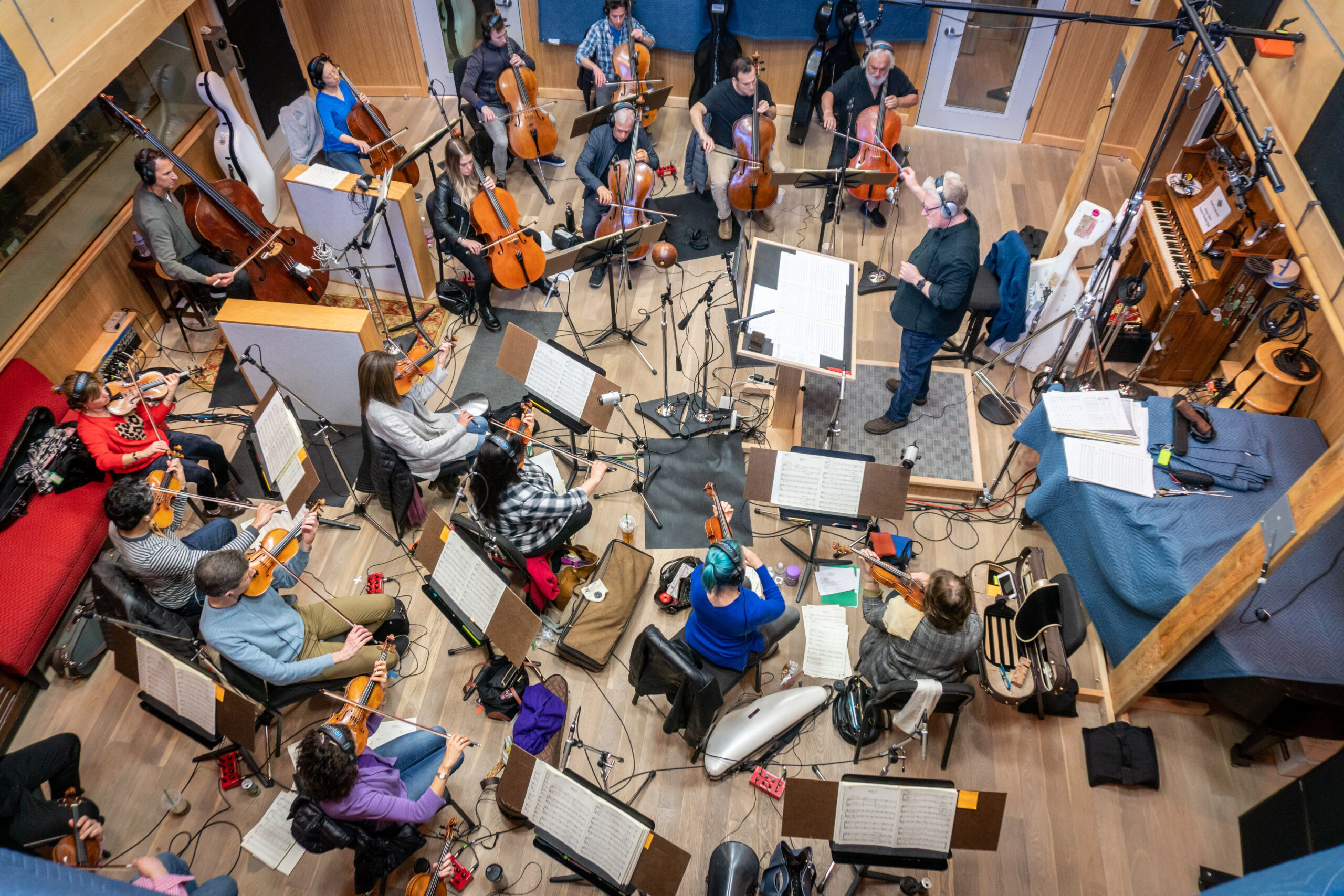
Thank you, that means a lot because the production process was just as intentional as the compositional one. I felt strongly that if we were going to honor that era of scoring musically, we needed to honor how those scores were actually made as well. Everything is live. No overdubs, no string patches hidden underneath the orchestra, no layering in sections separately. We wanted to hear the instruments breathe together as a unit, as a performance. We were also very deliberate about the size of the orchestra. Bigger is not always better. There is something that happens when an orchestra is the right size for the room and the material, where you can actually hear the individual voices and the space between them. That air, that human imperfection, is where the warmth lives.
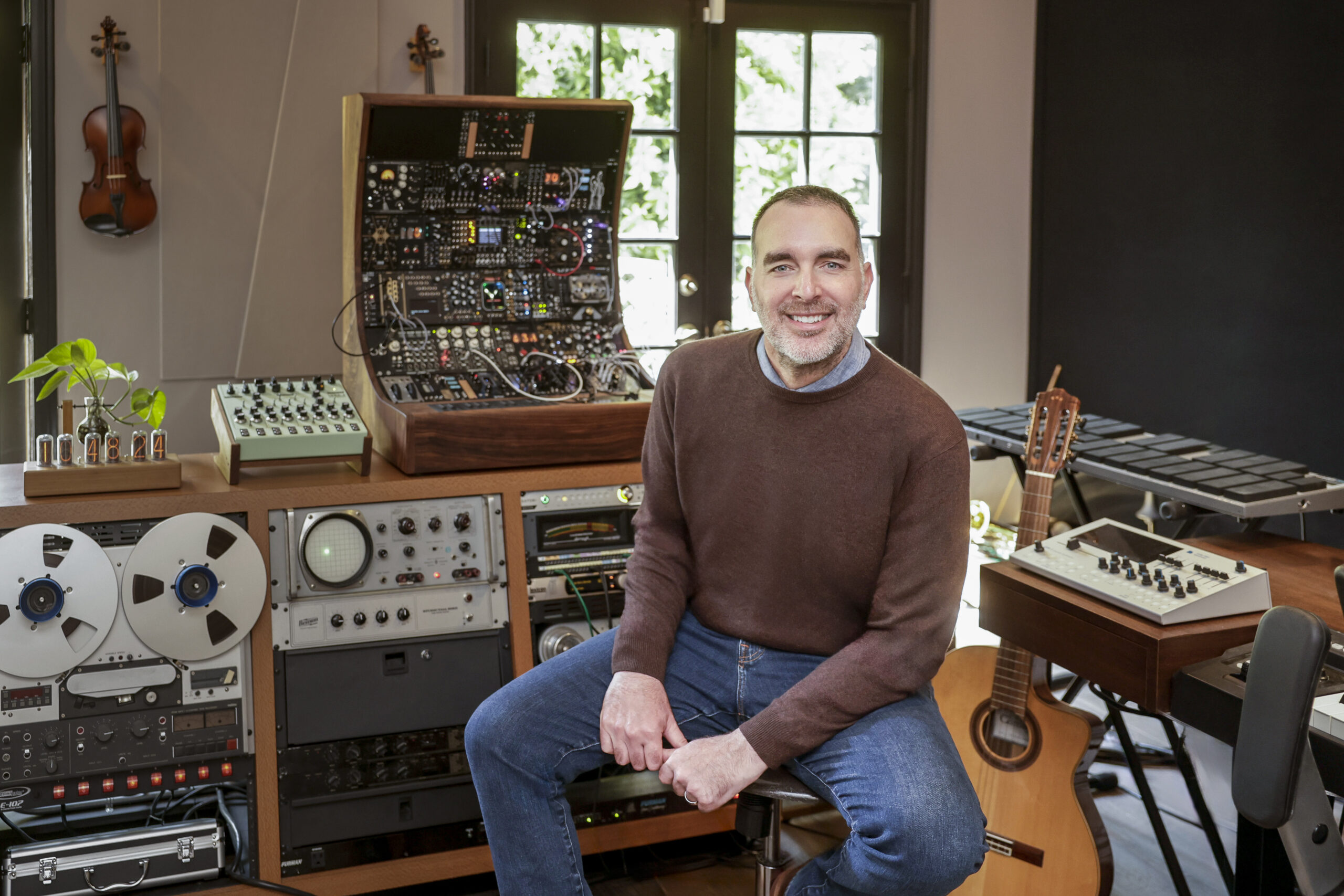
But honestly the production choice I am most proud of goes deeper than the recording itself. I really tried to untether myself from the technology that defines modern scoring. Most of the material was conceived away from picture. I would drop in a couple of markers, get a general sense of the shape and emotional arc of a scene, and then turn the picture off and just try to tell a story with the music. Composers in that era did not have sequencers. They were not sitting in front of a timeline in a DAW with the picture constantly running in front of them as they created. That changes how you write in ways that are hard to fully articulate but very easy to hear in the results. I always think about something like “Back to the Future.” Would that score be what it is if Alan had needed to get mockups approved by the studio before ever touching the orchestra? Would his ideas have been the same if he had written every note locked to picture on a timeline? Maybe. But for me writing away from picture and away from the sequencer yields something different, something freer and more instinctive. We tapped into that on “The Boroughs” and I think you can hear it.

The showrunners have talked about this as being the first part of a trilogy. If we see more “Boroughs,” where do you hope the story, and your music goes for them?
Honestly the possibilities feel endless, and that is a direct reflection of how gifted Will and Jeff are as storytellers. They are so detail oriented, so dialed in, and they work so beautifully with Matt and Ross. When you are around a creative machine that is synchronized and that passionate makes the whole process inspiring. The work is still hard, but in my experience when a project becomes truly difficult it is rarely ever about the music. It is usually some other bullshit getting in the way. When it is just about the work and the story, it never feels like a burden.
Musically I have so much I still want to explore with these themes, they all have so much room left to grow and evolve across two more chapters. But if I am being really honest the thing I am most excited about is the monster theme. I feel like we have barely scratched the surface with that idea. We established in this first chapter that the theme can live in completely different emotional spaces, threatening in one moment and magical in the next. But I feel like we are just getting started with where that theme can go and what it can reveal about these creatures as the story deepens. That is the thread I am most eager to pull on. But at the end of the day, it has never really been just about the music for me. It is about the process of being in the trenches with people you genuinely care about, working through something hard together. This work is too difficult and too all-consuming to do without that side of it. With this group I have that in every room, every session, every conversation. That is what makes me want to come back for all three

“The Boroughs” is old school in all the best ways. What do you think the show will teach younger audiences about senior citizens, let alone the power of thematic orchestral music when it seems that approach is on the way out?
I think the show reminds us of something we all know deep down but sometimes forget. We are all kids. We are always kids. Getting old is just a phase of being a kid. As for orchestral music being on the way out, I am hoping it’s not. But I will say that as a symphonically minded composer who has come up in this generation of film music, it can be a tricky road to navigate. Without a giant trophy case behind you, getting producers, studios, and even filmmakers to commit to pure symphonic work is daunting. The score review process is just part of the gig, every department deals with some version of it, especially on franchise material, and I completely understand why it exists. But there is an inherent challenge with the kind of scoring I am talking about in this interview. A score like this is not a collection of singles or hit songs. It almost needs to be reviewed in its entirety to be judged. It is a living organism that is built, shaped and trained from the very first frame. Hearing ten pieces of it out of context and expecting that to tell you whether the score is working or not is a little like reading random pages from a novel and expecting to understand the full story. You really need to hear it in its entirety, functioning alongside the picture it was built for, to truly understand how it operates.

That is where it gets complicated. A symphonic score that is shapely and dynamic, that pulls back in one moment and swells in another, can very easily feel like it is not working if you are only hearing fragments of it without the full context around it. I am not blaming anyone for that. The filmmaking process today is very different from what it once was. It is heavily influenced by reviews, test screenings, and a lot of voices weighing in at every stage. That is just the reality of the business now. And I think people sometimes assume that composers just get handed a film and are left alone to do whatever they want. That is rarely the case for most of us. Ninety percent of composers are navigating some version of this on every single project. We just have to keep figuring out ways to fight that battle and win it, because the results when you do are right there on the screen for everyone to hear. And the audience responds. I would always tell Jeff and Will, there is so little pure symphonic work out there right now that it actually feels hipper to me than anything else. My own kids love “Star Wars,” they love anything pre-2000. “Back to the Future” is one of their favorite films. At my house when it rains there is a tradition of putting on “The Goonies,” not sure how they started that, but it stuck.

These kids are not seeking out those films for nostalgic reasons, they have no nostalgia for that era. They just respond to them. Humans playing music together is woven into the fabric of all of it. There is wonderful work being done with hybrid scores and I grew up loving that world too. I’ve done lots of hybrid material. But the orchestra is timeless. It is so deeply ingrained in the history of filmmaking and in the most successful films ever made. My hope is that “The Boroughs” gives people the courage to keep chasing it.

Watch “The Boroughs” on Netflix HERE, and buy John Paesano’s score on Netflix Music HERE. Visit John Paesano’s website HERE
Special thanks to Jeff Sanderson at Chasen and Company