


Dogs have been Hollywood’s best friend since the days of the silents, but few have echoed as soulfully as Odin in “Heart of the Beast.” As portrayed by the real life rescue German shepherd Uber (with stunt work from his three sons), it’s a performance for the ages – faithful, heartbreaking, savage when needed and steadfast to match his wounded warrior trainer James (Brad Pitt at his steely best). Off for a bonding experience in the great Alaskan outdoors, James’ no man’s land vacation becomes a struggle for survival when he seizes up with a heart attack in the plane he’s piloting – sending both him and Odin into a trek for their lives between rapids, wolves and nightmares of the past that have twisted both males’ bodies and minds while making them an inseparable band of bothers.
“Heart of the Beast” is the latest buddy under fire movie from filmmaker David Ayer (“Harsh Times,” “Suicide Squad” and “Fury), carrying the weight of themes dealing with bonding and machismo, all stripped to their primal qualities. Caught between lyricism and visceral action, one of “Heart of the Beast’s” most striking qualities is its gorgeous often ethereal score by composer Jared Michael Fry. Having risen from Hans Zimmer’s Bleeding Fingers to compose for the likes of Benjamin Wallfisch (“The Invisible Man”) and Steve Jablonsky (“Borderlands”), Fry joined Ayer’s company to provide hard-ass rhythmic scores for Jason Statham on “The Beekeeper” (alongside David Sardy) and “Working Man.”
Yet none of the effective scores prepares you for the sweeping, mystical emotion the Fry brings to “Heart of the Beast.” Having earned a News & Documentary Emmy nomination for Outstanding Music and Sound for his work on PBS’s “Super Cats: A NATURE Miniseries,” Fry embodies a canine with as much power, yet hearing a whole new spiritual side to his animalistic talents. Capturing the indigenous world music spirit of the land through voice and percussion alongside a mystical combination of electronics and orchestra, his score for “Heart of the Beast” isn’t so much an untamed place as it is a state of mind. As the most gorgeously ethereal nature score since Mark Isham had Charles Martin Smith’s naturalist run naked with Alaska’s apex predators in “Never Cry Wolf,” Fry’s score tenderly puts character and graceful power into Odin without trying to make him human, as much as it does put a war forged determination into Pitt’s character without turning his struggle with Odin into a patriotic war score. The result is a tremendously effecting film and soundtrack that revels in the bold new territory that Ayer and Fry landed themselves, paying tribute to the incredibly man-animal film journeys of yore, while exploring a whole new otherworldly environment.
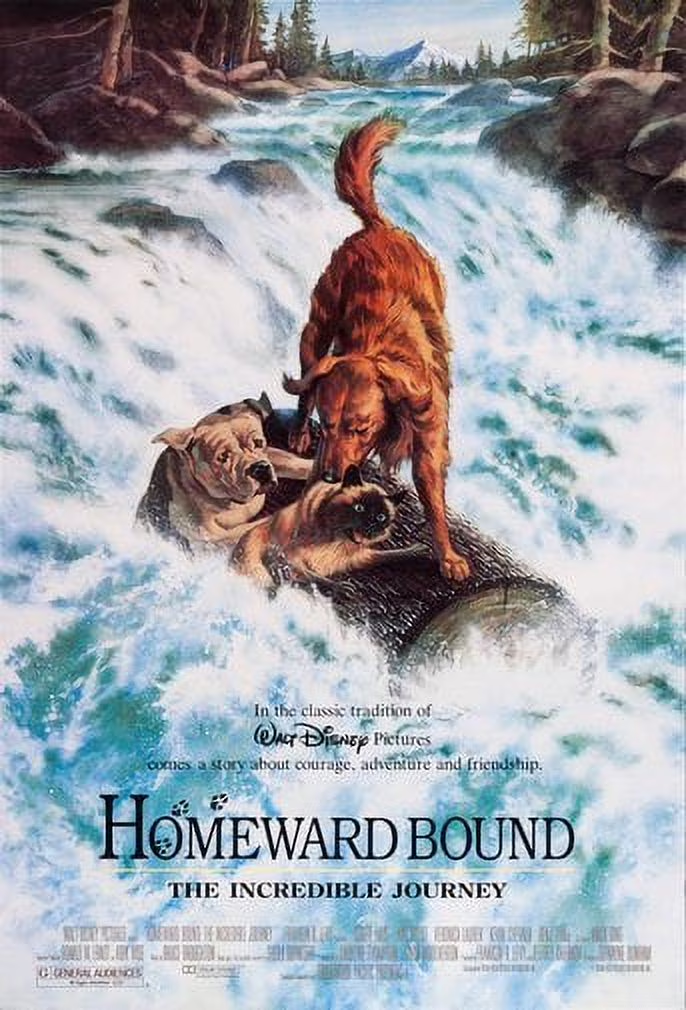
As a kid, were you affected by animal pictures? And did you realize what role music played in that?
I loved “Homeward Bound? growing up. My family owned it on VHS. It was perhaps one of my most watched movies as a kid. I was certainly aware of music in film, and learning music at a young age was a big part of the home life, but I never once thought too deeply about its role in film.
Tell us about your composing journey that led you to work at Hans Zimmers’ company? And would you describe it as musical boot camp?
After graduating Berklee, my wife and I knew we’d be moving to LA to try and make this film scoring “thing” work out. I had heard about Remote Control, but I really had no connection to anything in Los Angeles when I first got there. In my search for various musical internships with composers I bumped into a Berklee classmate who told me they had an “in” with Henry Jackman’s team at Remote Control. The rest is history I guess. Boot Camp. Absolutely. I’m definitely better for it and very grateful for the opportunities that came my way. Most of all the friendships that were formed and continue to this day.
You did numerous additional composing for composers like Benjamin Wallfisch and Steve Jablonsky. How was it fitting into their skins as such, and how do you think that made you stronger as a singular composer?
As an additional writer, I’ve never gotten too lost in the chase to “fit” in someone else’s skin per se. That’s probably both good and bad. I’ve always taken liberty with the role as an additional to simply be myself and offer a musical voice and perspective that’s unique, as well as very complementary to what the composer has already established. Just like any role or position one holds in life, I’ve learned and grown from them all. I’m grateful for each challenge and every moment I’ve been pushed and stretched to get better at what I do. In all my roles as an additional writer I was serving the composer who hired me. I’m still serving. I think that’s the biggest takeaway.

What brought you into David Ayer’s orbit with “The Beekeeper?” And when it came to playing a Jason Statham action hero for this and David’s “A Working Man,” what do you think distinguished his physical and charismatic chops. And how did you want the music to reflect that?
Bryan Lawson, David Ayer’s longtime music editor, had temped some of my music from previous projects into the film. Seeing and hearing how well, it was working is what gave me the opportunity to co-compose the film with David Sardy. Jason Statham/action hero – it doesn’t get any better than that. Truthfully, it’s still all about David’s vision for the film and story, and staying true to that, musically.

For me “Heart of the Beast” is David’s best film, and his most different even though it has the “buddy” and military themes of his past pictures. Did that strike both of you in taking on this project?
It started with Cameron Alexander’s script. Anyone who read it was deeply moved. The buddy and military themes served the characters and story beautifully. The fact that it might call back thematically to some of David’s previous pictures I think just shows how prepared he was and the perfect director to take on this story.
How do you think that David’s military background figures into his directing, and taste in music?
It has absolutely shaped who he is as a person, and therefore comes across in everything he does. I think too, there’s an honesty and excellence in the execution of his work. So many people know that about him, and I believe it’s a bit of a responsibility he takes on with honor. Musical taste-wise, he’s a sucker for some good 90s rock. Haha. I can dig it. But cinematically, his taste is very broad, which is great for me. I really feel like every film we do together is a new blank page of discovery in musicality and tone. That’s exciting.

As smart as dogs are (particularly Odin) they’re not Stanislavsky-inspired actors. In that regard, how much did you want the music to “act” for Odin?
Not at all actually. The score for “Heart of The Beast” is living in that space beneath the surface – their love, the journey, and connection to nature.
Was Odin ultimately being found by Amber the inspiration for the Native American-centric “world music” approach of the score – particularly as we see the drums in her trunk signifying that she’s likely a musician?
Is there a drum in her truck? I hadn’t noticed that. But no. The story is a very spiritual journey – the landscape is a character – tones of ancient past and the rawness and connectedness of the wilderness… In composing that side of the story, it was just so natural to bring in the Alaskan Inuit culture which is pregnant with many of these themes already.

What indigenous instruments went into the score?
Vocals would be the primary focus there. The amazing Alaskan Inuit group, Pamyua, really brought that to life. I took many liberties with “world” instrumentation, but indigenous percussion like the frame drum certainly played a large role.
How did you want to balance an organic symphonic approach with a more surreal sampled one?
The goal was to make everything feel connected and blend together with everything working together to tell this story as one unified musical experience.
How do you think previous scores you’d done for nature documentaries like “Alaskan Bush People” and “Big Cats” came into play here?
That’s all completely different honestly. “Alaskan Bush People” – that was library music writing, formulaic and very folk/Americana and bluegrass driven. “Big Cats” – In many ways, you’re imposing a story with the music on top of the visuals, and to your point earlier about writing music that helps Odin act, at least on the Big Cats project, I certainly “Mickey Moused” much of the action in those episodes. So really, neither of those past experiences specifically came into play on this project.

Given that “Heart of the Beast” is a visually driven movie as opposed to a dialogue one, did that make the score all the more of a challenge?
Absolutely. With all that space for the music to speak, restraint was my biggest ally. To that point, it was very important that I was truly aligned with the heart of the story and not just flailing about musically just because there was space. Back to an earlier point – with that much freedom and space you have that much more responsibility to serve the story as intimately as possible.
How did you want to musically balance the mystical beauty of nature with the constant threat it poses to James and Odin?
I kind of see them as one and the same, which was the challenge. It’s a big concept in the score: How do you capture or convey something so beautiful, majestic and mysterious, and absolutely unforgiving and threatening while at the same time something so intimate and personal? Hopefully I captured some aspect of all that.
Despite all of the horrific things that James and Odin have gone through, there’s a real tenderness to the score that gives the sense of both males working their way through PTSD. Was the ghosts of their past an import element here?
Yes. Their past gives weight to who they are as characters and why they’re so connected, as well as some insight as to why they’re out there in Alaska by themselves in the first place. The tenderness was really important, because after all they’ve been through, they have each other, and they’re actively pursuing that peace in life.

Tell us about your use of voices
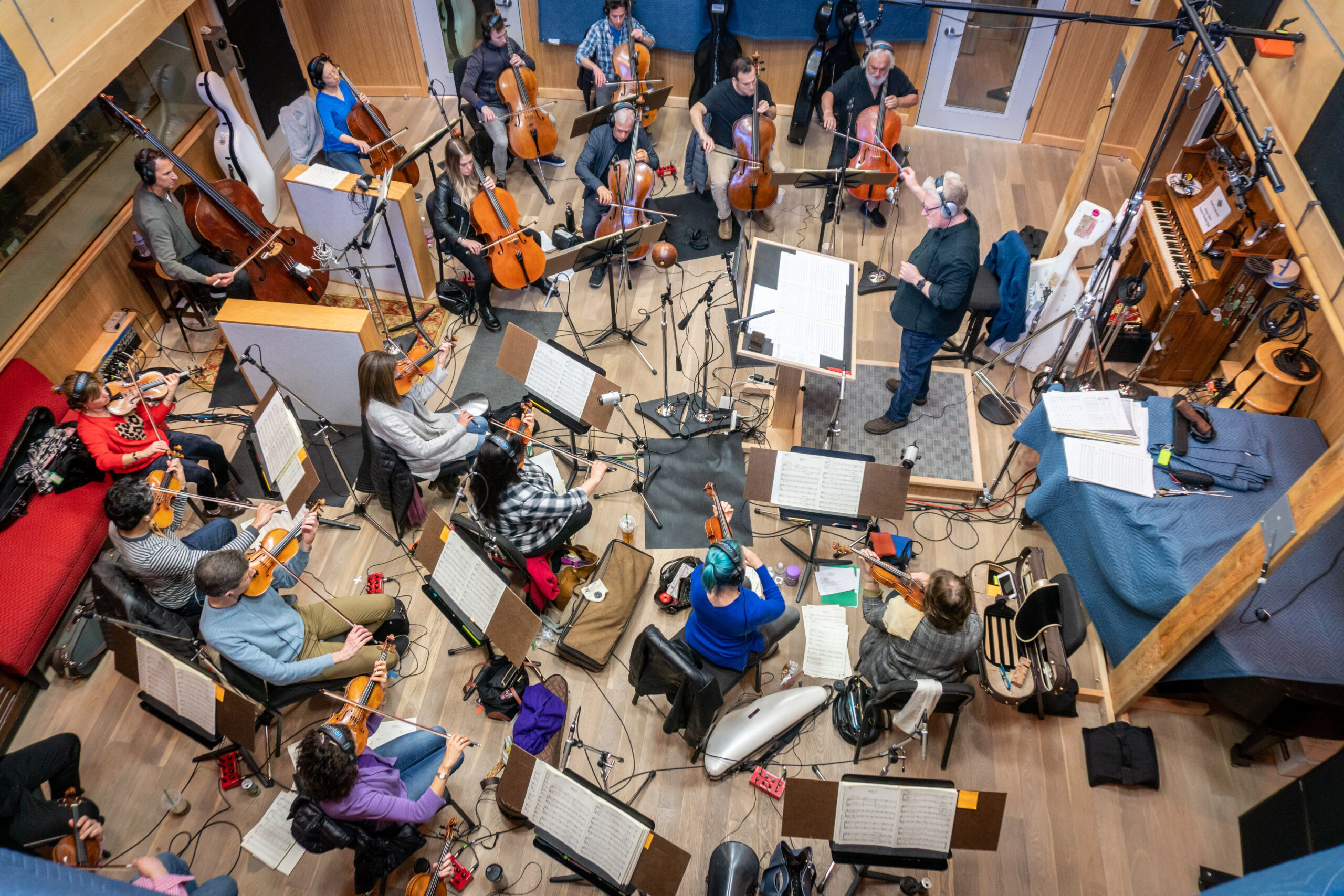
I think about them in three categories or groups. The first is the big full choir that supported the cinematic weight and depth. The second was a mid-sized, more female leaning ensemble that would really expressively “go for it” in some of the lines, almost lamenting at some points. Many times, it’s all blended together compositionally. Performed by the amazing London Voices, Ben Parry hand-picked the singers for this score after listening to my demos and discussing the visions and tone with me. He conducted as well. An extraordinary talent.
Thirdly, our Alaskan Inuit vocalists, Pamyua. Phillip Blanchett wrote lyrics for a few pieces in their native Yup’ik language. Their culture is embedded into the themes of nature and universal awareness. It was the right fit for conveying the spiritual journey James and Odin were on. They brought so much depth to the music and storytelling with such evocative performances. I’m so thankful to them for sharing their artistry and culture with us.
How did you want to play the action in an unconventional way?
The perspective of the music, again, is telling the story from a deeper place. It’s not simply reacting, if that makes sense. Certainly, if a moment is tense, it’s important to elevate those moments as a film score should. But, for instance, when the plane is going down, it’s when we really shift into the Inuit vocals. In that moment – nature, the broad theme of awareness, the majesty and vastness of the wilderness – at once beautiful and now terrifying – and what I’ve often called “the other side” (death, if you want) is all coming forward and literally speaking. Calling out to draw our characters into itself. That’s the mindset. It plays like a third character in the story many times. Percussion plays a huge part in the river sequence. It comes into its full expression of the cascading motif that had started as James first comes out of the lake after the crash. It’s a response to the question, “What does the wind sound like? The water? The Mountains?” And so, as unmeasured as the waves crashing and throwing James about, the percussion and vocals add to that chaos connecting the water and elements to something greater.

If you have a dog, how did that inspire you in capturing the bond between man and “beast?”
I do have a dog. His name is Harry. He’s a Chihuahua Italian Greyhound mix. Love him to pieces. A dog’s loyalty and the unrelenting love they have for you is definitely an inspiration. When I get home from work, my three kids couldn’t be bothered to give dad a hug anymore…but you know who’s the most excited to see me? If you know, you know.
The piano struck me as a unique way of playing James’ struggle to climb the last ridge. Why that instrument there, especially as it doesn’t figure strongly in the score before this scene?
All congrats to the filmmakers for making that creative decision and request. The response to that moment has been very positive. I think that such a drastic shift in the music marks that moment in a special way.
Tell me about capturing James’ transcendence through the Northern Lights
That scene is all about their final moments together. Two loved ones saying goodbye. And with that, James has given his all to give Odin his best chance of a life after he’s gone. The tone also has to hit something transcendent. Whereas in many of the encounters with death that James has fought before, the fight is over and James is embracing the next step.

James’ “will” makes for the tremendously moving end of “Heart of the Beast.” How did you want it to not only capture Odin’s spirit, but the broader nature of the military bond between soldier and dog – and humanity at that?
I actually wrote that piece before I had seen any cut of the picture. The goal was to embody their bond, the life they had lived, and the trials they had endured, capturing the warmth of their relationship. In finding that essence of whom they are, as you mentioned, there’s a nod in tone to the military. I think it’s a tone of honoring and respect but remains humble, human and honest. Across much of the score there is a simplicity that works and it takes being a bit honest with yourself to accept sometimes.
Where would you like to see your own bond with David Ayer take you? And how do you think this film opens up bigger, unexpected possibilities for you both?
This film was a much more vulnerable story for everyone. It has a great team of people behind it and I’m thankful for the trust extended to me to contribute to it. David Ayer especially. I think David hit it out of the park on this one. The world is his oyster as far as I’m concerned. I know, because of who he is, he will continue to challenge himself and push for more great stories to tell. As for me, I certainly hope he continues to extend that trust. I’m optimistic.

Watch “Heart of the Beast” in theaters, with Jared Michael Fry’s score available on Lakeshore Records HERE.
Special thanks to Rebekah Alperin at Costa Communications
Leave a Reply