

Dan Romer is scoring’s child whisperer, a composer who gets the dreams, yearning and discovery with a captivating sense of style. In his breakthrough score with 2012’s “Beasts of the Southern Wild,” Romer imagined a wild child in a Zydeco-spiced wonderland of edge dwellers, then journeyed to the harsh, soul-suppressed rhythms of “Beast of No Nation’s” (co-composed with Benh Zeitlin) African child soldier before recently playing the sweet, comical bond between a Hawaiian girl and catastrophically rambunctious critter in the live action “Lilo and Stitch,” Romer gets a wide-eyed experience of youth entering into brave new worlds, be they with the Ingalls daughters venturing to the 1869 Midwest or the time-lost feudal lands of Westeros with a squire of few words and mighty heart named Egg. The first show “Little House on the Prairie” is racking up a solid foundation on Netflix, while “A Knight of Seven Kingdoms” has gotten Romer an Emmy nomination for original dramatic score. Though their premises seemingly couldn’t be more different, both series are linked by an enchanted, unplugged sound that connotes two wild wests of sorts – one where heartwarming, optimistic music quells potential harsh outcomes – and the other where rustic bar music of sorts leads to unexpected sacrifice and nobility proven. Both reveal the creativity of how Romer sets forth on adventure, as heard through the rustic, lyrical imagination of youth.

Before “Little House on the Prairie,” you already had a long record of scoring children in tonally diverse scores. Why do you think you’re so good at composing for young characters?
There really is a thread there! In “Beasts of the Southern Wild,” the girl is six years old, but we’re not treating her with a “kid” music feeling. We’re treating her with adult music that has this sort of childlike magic. In that way I haven’t played down to child characters. In that way it’s exactly like how I’d score an adult.

Were you familiar with the original “Little House” NBC show before doing the Netflix one?
I’d never watched the show, but my mom read the books to me when I was little. Rebecca told me it was fine that I’d never seen it, because we were starting from scratch. This was going to be an entirely different musical palette. We discovered together how to approach the score.
Tell me about the main theme, which really drives the show.
I had a basic tempo that I knew I wanted, and used a melody for it that could be played a couple times in different spots without feeling repetitive. I wouldn’t say I used “jazz” chords for it, but instead a melody that would not sound traditional, while evoking the kind of sound a score in the 60s and 70s would have had. It’s more of an old school kind of vibe.

The one thing that strikes me about “Little House on the Prairie” and your music is a feeling of optimism, that there is a future for this family and that all of these disparate characters can ultimately get along.
I do think there’s a sense of optimism in the music, for sure. We were specifically trying to stay away from doing an Appalachian / Americana score and made a conscious decision to not do fiddles, mandolins, banjos, that kind of thing.
What did you and show runner Rebecca Sonneshine want the music to accomplish?
We wanted to create these two worlds – the one of the actual show and the world of the score, and not let them get confused. The score comes from inside of the family and the characters and what they’re feeling and hoping for.
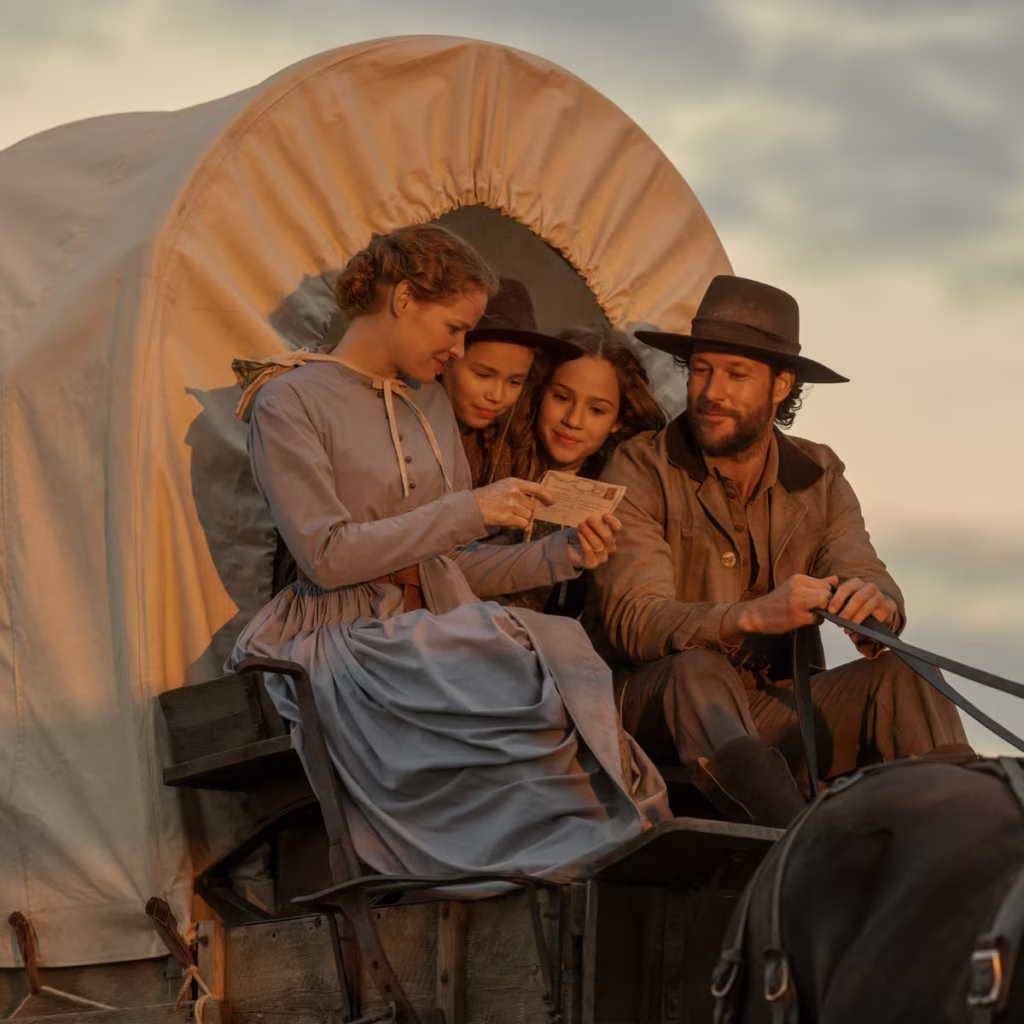
I was really struck by just how beautifully cinematic the show looks and feels. How did that affect your score?
Seeing how beautiful it looked was a huge deal. absolutely. That helped me figure out my approach. There’s also a lot of silence on the show, and scenes with characters singing. It’s about how you play with all of that space.
In “Little House” there are certainly a lot of adult issues going on that Laura and her sister are unaware of, or don’t quite get how serious they are. How did you want to capture that?
I think in any situation, really, you want to think about what the character is feeling and how to musically express that. You don’t want to be inauthentic or leading about it. It’s like in “Beasts of the Southern Wild” where we know they’re going to blow a dam up, and as adults we know this is dangerous and bad. The first time I tried to score it like an action thing tried to sort of do an action thing. But to Hushpuppy, it’s an adventure she’s going on with her do, which sounds fun. For Laura in “Little House on the Prairie,” a lot of situations are the same way.

Like “Beasts of the Southern Wild,” there’s a supernatural aura to “Little House,” especially as Pa encounters his brother’s spirit, and Laura her grandmother at points of crisis.
It comes down to how we can tweak elements that already exist in the real world of the characters and make them more dreamlike, especially because you don’t want to do something that’s completely different for these sequences. I didn’t want to be super psychedelic or use electronic samples and sound design things – which are a totally valid way of scoring them. Instead, I kept those dream sequences very minimalist, while just tweaking very small sounds to be a little bit weird.
What do you think is the difference between scoring a western and a “midwestern” like “Little House?”
It’s interesting that you ask that, because I consider my “A Knight of the Seven Kingdoms” score to be more of a Western. I went into “Little House” right after it.

I thought the show’s treatment of the Osage was particularly haunting and effective. Period movies and shows now always treat Natives Americans as these kind of mystical beings, but here we really get to know them as people have always treated Indians as kind of like this kind of these mystical beings. But in the show, you get to really know them as human beings.
Where the show has its unique sound, the characters here really don’t. I think it would have sounded corny if we musically differentiated. So it’s not like Mr. Edwards, or even the rich family have their own “sound” either. I was just trying to create a score for the whole thing. So everybody has sort of the same harmonic textures and melodies over them because they’re living together in this place.
There’s a few scenes where violence threatens to erupt, but thankfully it’s always stopped. But that being said, how menacing did you want to get here?
I wanted to make the darker stuff more minimalistic. Take the river crossing in the first episode. I tried to figure out how to score it without making it big action music. Instead, I wanted it to feel like tension in the wind. I landed on the idea of the mandolin being the “action instrument and then having strings follow its rhythm.

What was the most challenging episode to score?
Oh, the first one, for sure. That’s because we got our musical palette from it, and Rebecca and I were figuring out how to collaborate together. But once we figured that out, everything else became much easier. I would tell anyone who’s starting a series not to feel bad about how much time you’re spending on your pilot – even if it’s over a month and you’re worrying about the deadline of your other episodes. Obviously you have to meet those deadlines, but the more you work out your the melodies, textures and emotional language of the show the easier the rest of the series becomes.
I really liked was the Christmas episode. It’s kind of like a “bottle” show where it’s all about the holiday that’s so magical to Laura – in the same way we remember “special episodes” like “The Walton Family Christmas.”
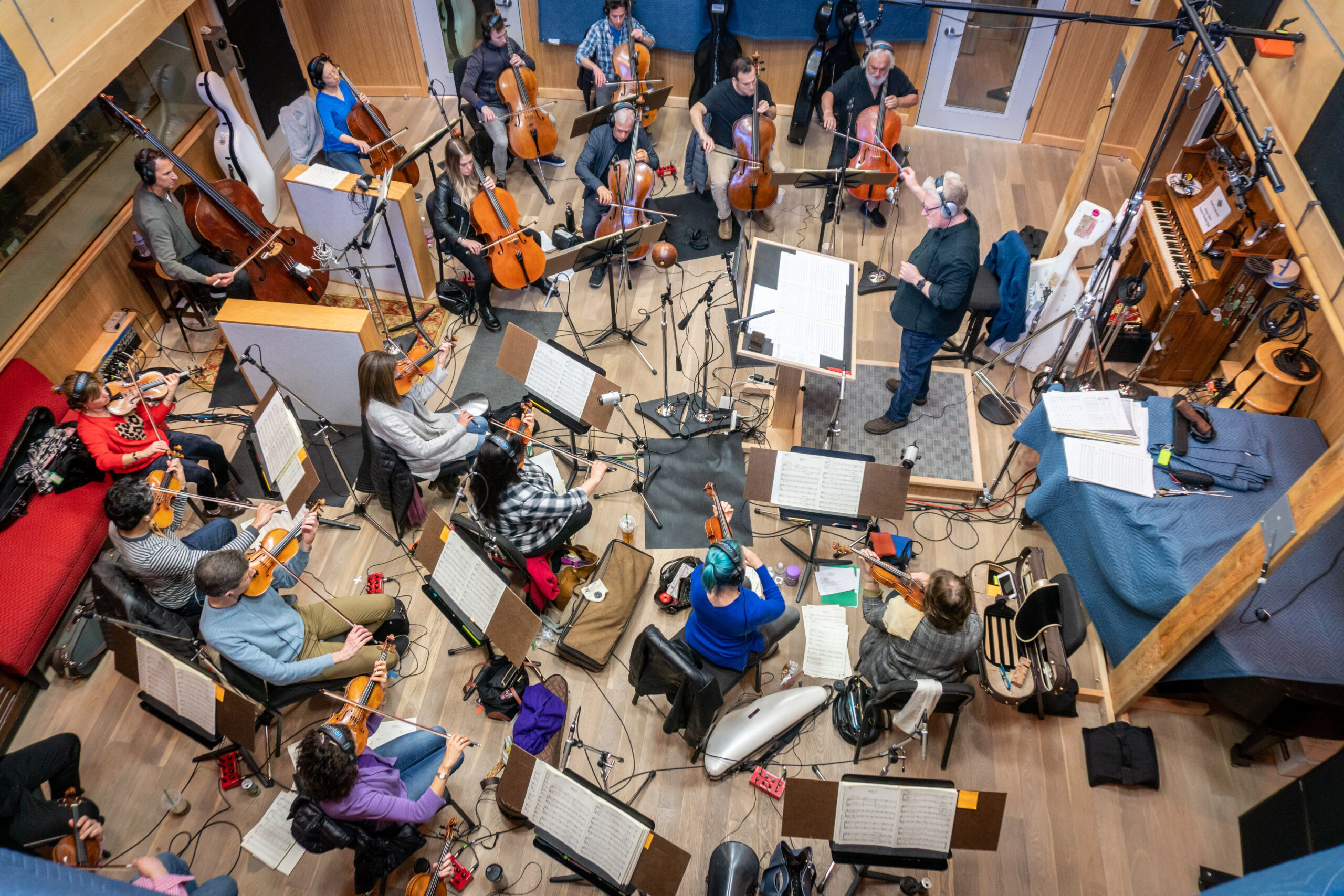
My mom actually texted me and singled out that one. That really made me happy. music that I made. I have to give props to John Zarcone who did a lot of the arranging of the Christmas music on that episode. He’s an incredible composer who also does all the orchestrating on “Knight of the Seven Kingdoms.” The Christmas episode kind of felt like a day where, the substitute teacher was there and brought in a video for us to watch, instead of getting a lesson! We’re were like, “Hey, we’re just making Christmas music with the orchestra,” which was so much fun.
I was surprised by how “Little House” is essentially a prequel to the actual location of Walnut Grove. What can we expect musically when the Ingalls get their in the next season?
All I can say is that I’m very excited for the music, and I’ve already started writing some of it.

Congratulations on your Emmy nomination for “A Knight of the Seven Kingdoms.” I particularly love this show because it’s about “the little guy” as opposed to the awful, backstabbing royals that “Game of Thrones” and “House of the Dragon” concern themselves with. It’s seditious right from the start where the “Thrones” theme cuts to the sound of Dunk’s diarrhea.
With that opening, I was thinking that I wanted to have folk-oriented scoring that doesn’t feel like it’s from a big orchestra. I wanted to use the fiddle, cello and the acoustic guitar right after that moment. And then, bring in rain drum and more handheld percussion type stuff and less giant percussion stuff. There’s a natural whimsy to that. But I also didn’t want to tip my hand too far in that direction. So I think gave the show serious music for the vast majority, but also made sure to have little moments of fun in the music, I think, is what made my approach work the best.
The show is “Game of Thrones” unplugged because, at least for a while, the stakes of the entire world isn’t all riding on Dunk How did you come up with a theme to announce that, especially following the iconic one that Ramin Djawdi created?
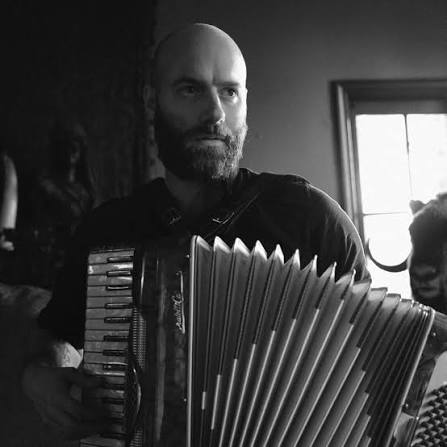
Ramin’s music is just incredible and I could never hope to match it, so I just did a completely different thing. When I composed the “Knight” theme I was on the run from the fires in Los Angeles, and went to Joshua Tree. I had brought a bunch of different mandolins, guitars an accordion and a bunch of stuff out there. I sat on Zoom the show runner Ira Parker and came up with the theme, which he loved. But even then he didn’t want to me to take the weirdest path with it in a way that would jump rhythmically. He didn’t want to music to let us know what it would do next.

In a way, the scoring for “A Knight of the Seven Kingdoms” is like the “bar music” of Westeros.
Yes, it plays like the “source music” of this world. So much the work I did on the show is just fiddlers and a couple guitar players, with percussion playing during puppet shows. It’s about handheld instruments and much less gigantic orchestral things.
“Knight” eventually does segue into bloodier jeapordy. How did you want to handle that twist?
Again, it’s about minimalism. For me it doesn’t work to overplay violence and drama. One instrument can be more effective than a huge orchestra in conveying that.

Like “Little House,” you’re again playing a child who aims to impress an adult who’s in command.
I think Laura and Egg have a lot more in common than not. Both are very noble, know what they believe in, and are very optimistic. The Ingles are trying to create a whole new world for themselves where Dunk wants his seat to the table, to be a real knight.
What do you think it was about “Knights of the Seven Kingdoms” that got you an Emmy nomination?
It’s a good question, but a very hard one for me to answer. For me, it’s about sitting down every day and trying to make the best music I possibly can. So much of the award stuff is based on the popularity of a show and how the music is perceived in it.

What’s it like for you to be part of two shows that look like they’ll be around for quite a while?
You can’t count your chickens before they’re hatched. You can go into something thinking that there’s only going to be one season, and then it ends up being seven or ten. Or it can work the other way around. I look at a season of television as one film. Because it gets more difficult to think of them as one giant thing. So I can only think of “Little House on the Prairie” and “Knight of the Seven Kingdoms” as stories that musically progress with elements from the past season ending up in the new one. Of course there will be differences. But I enjoy that challenge of a new way of looking at something. You ask what the situation now? What’s different about this season? How are you going to do it differently? The one thing that’s so important is having communication with the show runner, to know what they like and what they don’t like

If Dunk runs into Laura Ingles on the prairie of Westeros, what kind of teaming do you think that would be?
I think Laura Engels would make an incredible squire to Dunk. I would be happy to march into battle with her!

Watch “Little House on the Prairie” on Netflix, and “A Knight of the Seven Kingdoms” on HBO/Max. Listen to Dan Romer’s “Little House” and “Knight” soundtracks HERE and HERE. Visit Dan’s website HERE
Special thanks to Christian Endicio at White Bear PR