


Tell us about your composing path. Was an offbeat approach always in your musical DNA?
I had quite a formal musical background in a lot of ways: piano and violin lessons from age 5, studying at the Royal College of Music. But I blame jazz for sowing the seeds of that offbeat approach I think. I loved improvising, or more importantly playing with and listening to people who were way better at it than me. I’ve always liked the approach of knowing the rules, absorbing the past as much as possible, then working out where you can push things outside of the norm without everything falling apart!
You’ve scored kids and students before with the Nepalese “Children of the Snow Land” and a kid threatening to out a teacher in “Blue Jean.” How do you think these put you in good stead for “Bad Apples?”
I hadn’t thought about that link before but you’re right! Children have an honesty which can be terrifying. I actually used to teach a composition class and would go into primary schools and try and get them excited about writing a new piece – standing up in front of a room of children with no filter is a quick way of knowing whether you’re doing a good job or not!

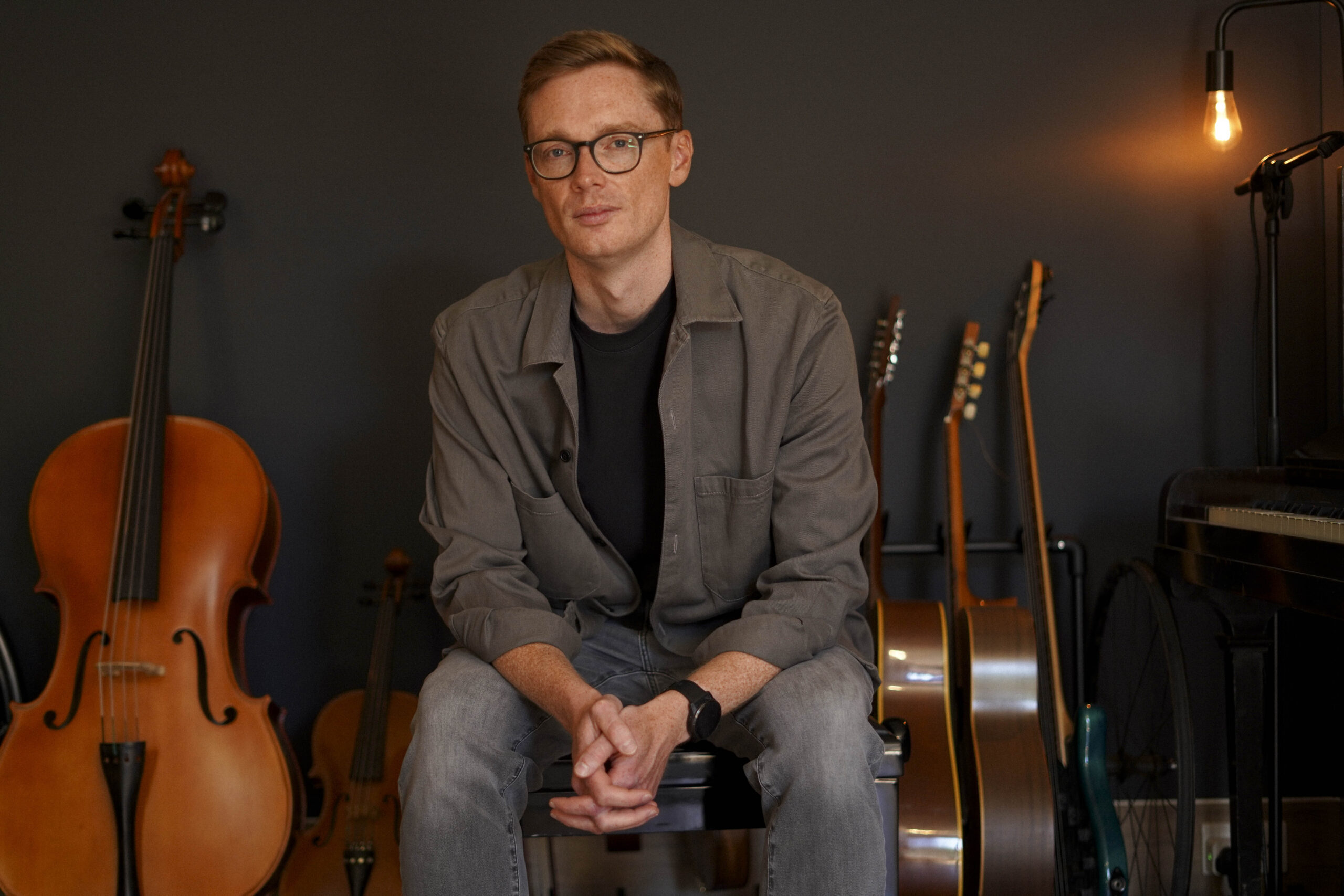
Chris Roe photo by Alex Kozobolis
“Bad Apples” is one of the crazier, percussively quirky scores I’ve heard in a while. How did you hit upon its sound?
Thanks! That percussive drive to the score really came from an early conversation with Jonatan, who referenced a lot of composers outside of film music like Bartok and Stravinsky, and the way the string playing had a kind of brutal energy to it. We wanted a kind of mechanical sound to the score as the film is about the school system, but just like the school system not knowing what to do with someone who doesn’t fit the mold, we thought what would it sound like if that machine started to malfunction. So my mind went to the idea of a school orchestra: a system with a lot of moving parts, but one that’s usually got too many flutes, some misfits that can’t quite follow the beat or play their saxophone too loud… I should say that we had some of the best London musicians playing on this including virtuoso recorder player Sarah Jeffery, but we experimented with a rougher, breathier way of playing, particularly on the flutes to get that percussive energy and also a sense of panic in Maria.
How did you want to interplay the high range of the winds with the lower depths of the brass here to add to the unsettled effect?
We had everything from the smallest recorder all the way down to a Tubax saxophone (I think only played by two people in London!). So there’s something about these extremes that puts us on edge a bit and adds to the tension in the film. And it goes back to that bigger idea of a system not quite working as it should, with some of the instruments sticking out at times and not quite blending.

What were your own schooldays like? Did you ever have a “crazy” kid in class or notice that a teacher was barely keeping it together. And if so, how did that play into the score?
I do remember having a substitute science teacher once, and it was like a feeding frenzy, poor guy! Any slip or hesitation and the mouthy kids in the class would sense the fear and twist the knife further. I was probably more similar to Pauline’s character at school though to be honest, the quiet one who just watched the chaos unfold!
What instruments in particular evoke the idea of children?
I think the recorder goes hand in hand with school and childhood for a lot of people, so I liked the idea of playing on that connection. It also has an innocence and purity to its sound which plays against the darkness that we’re seeing onscreen.

The surreal, “grind-y” percussive quality of “Bad Apples” deliciously reminded me of the work of composer Michael Nyman, while some of its rhythms also brought to mind Rachel Portman’s wackier work in “The Road to Wellville” and Rolfe Kent’s in the school-set “Election” – let alone Philip Glass’ “Koyaanisqatsi.”
All amazing scores! Jonatan and I definitely spoke a lot about Minimalism and mechanical music, and how we wanted the score to have a constant pulse running through it. I imagined it like a machine that Maria was stuck in, or a train that she can’t get off once she’s made that first mistake.
How did you want the opening titles of a fouled cider machine to immediately set the mood for the picture – particularly in its machine-like rhythmic quality?
Yeah, that opening cue was originally called “March Of The Apples” I think, and there’s a kind of innocent marching rhythm that gradually turns more menacing as we see that Danny has thrown his shoe into the machine. We wanted to keep it light and whimsical at the start to put the audience in the right frame of mind that this was a satire, and to almost give them permission to laugh.

A lot of the music around Maria involves tension – like her going through machine-like motions as a cog in the school system, her fear of failing as a teacher or getting caught in a ticking time bomb arrest waiting to blow. How do you think that got into her character?
Yes, as she goes back to school for the first time after kidnapping Danny, there’s so much tension in that moment and I wanted the score to feel really disorientating, like the floor was shifting beneath Maria’s feet. Then as she digs a bigger and bigger metaphorical hole, the score becomes more and more claustrophobic and tense, like the walls are closing in on Maria.
Another quality of Maria that I liked was that she was a gamer, with the kind of blank focus that goes into that. It’s essentially the only thing she has in common with Danny. Did you want to get the idea of that pastime into the score?
You’re right, that’s really the thing that they start to bond over. There are some really sweet moments between them which catch you by surprise, and there’s a cue called “The Top of the Stairs” where the pulse drops out of the score and it’s like a gentle lullaby, but still with a hint of uneasiness as you’re never quite sure what Danny might do next.

Another interesting student is Pauline, who in the end might be more twisted in her way than Danny. How did you want to capture how she essentially goes from prey to predator?
Pauline was one of my favorite characters to score, with her transformation into the villain of the film in lots of ways! She is scored quite lightly at the start, but by the end we reserved the timpani just for her theme. There’s something I found really funny about pairing the goody-two-shoes of the class with one of the most ominous instruments in classical music!
I particularly enjoyed how the score led into the “Children of Ashbrook” school song and undermined its message – particularly when Maria’s class is audited. Tell us about that contrast?
That was a tricky technical moment but a really fun challenge. I played around with putting the cue in a different key and seeing if that kind of clash would work, but it felt too messy and like an accident in the wrong way. So I ended up writing the cue in the same key as the song, but reharmonizing the song with more minor chord progressions, so, as you say, it undercuts a happy moment with a layer of “This isn’t going to turn out well!”

Given that “Bad Apples” is a subversively eccentric black comedy, in no small part with the score amping that element, how “funny” did you want the score to get, especially with its detours into bell sweetness? And given that there’s emotional heart here as well, how did you want to tune the musical approach to that?
The comedy in this film comes from contrast, and that was what I was always aiming for with the score. The “’A’ Is For ‘Apple’” montage in the middle is a good example, as we start to see months going by with Danny locked away, and against that darkness the score is merrily chirping along. But then this sweetness starts to make you relate to Maria and feel that maybe this is the best thing for everyone involved, although I think Saoirse is doing that so brilliantly already we didn’t need much help from the score there.
What were the recording sessions like for “Bad Apples?” Did the players find it at all difficult?
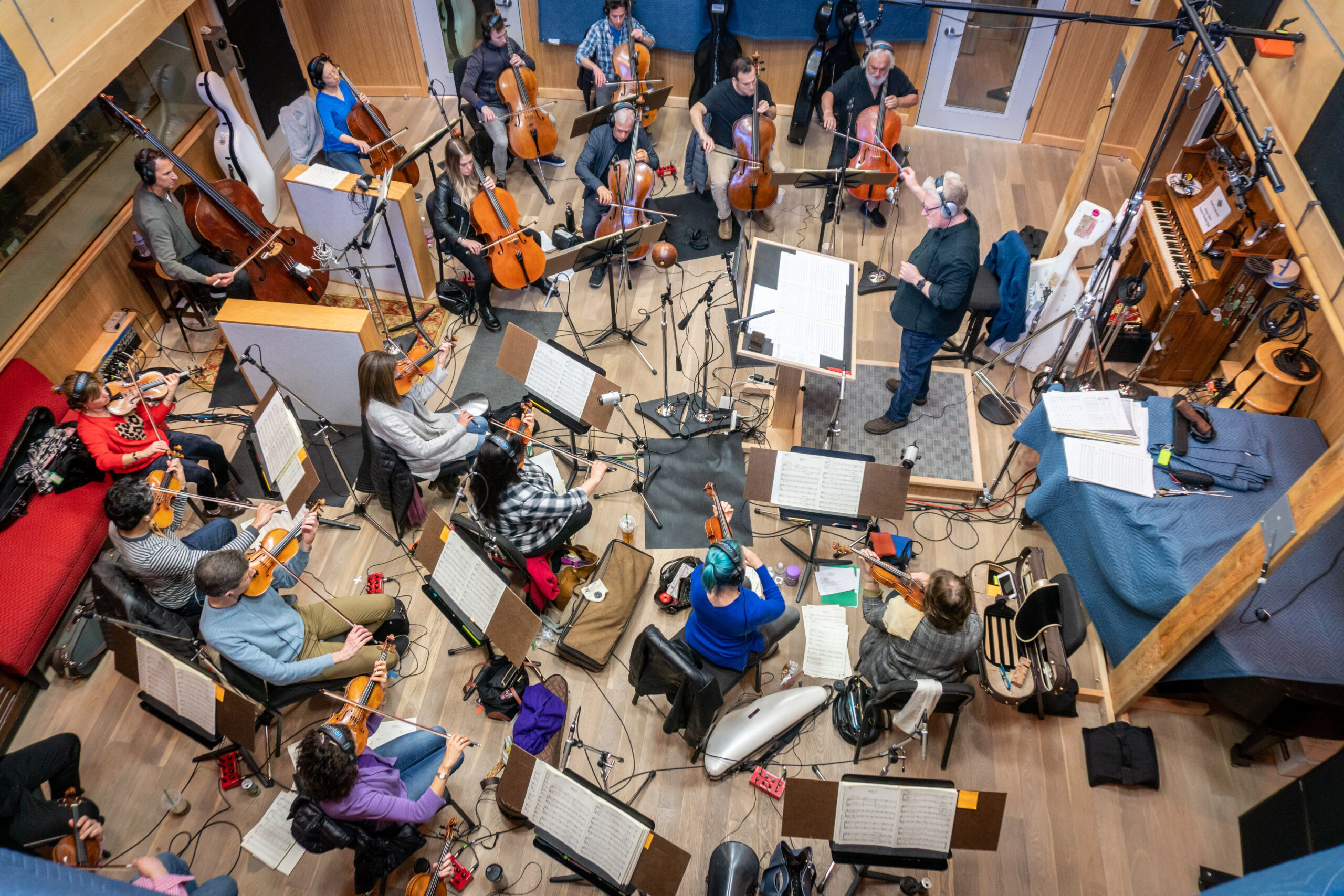
We recorded the score at Masterchord Studios, which is actually in a basement so that seemed to fit! We had the Chamber Orchestra of London who are the crème de la crème of London session players, so I’m not sure they find anything difficult. But they were really up for experimenting, getting some weird guttural sounds out of their instruments to create an almost shamanic drone as Maria is in shock after it dawns on her what she’s done.
I admired how “Bad Apples” in the end never quite goes where you expect it to. How important was the music to keeping that element of surprise?
It’s all there in Jess’s script already, but I think the way that Jonatan wanted to use music as a bold character in the story creates moments that keep the audience on its toes. You don’t sit back and settle into it, that’s for sure!
In the end, do you think the score captures the idea of kids as being little monsters or victims? And what do you think it says about the triangular relationship of parents, teachers and students, especially when driven to extremes?
I think the kids are definitely the victims here, but it’s less about any individual being a monster, and more about what a system makes people do when it puts them under extreme pressure. With the score, I almost imagined it as that system or machine, dialing up the pressure so that none of the characters have any choice but to act the way they do.

Chris Roe photo by Alex Kozobolis
It’s great that “Bad Apples” is getting a release in America. Would you like to get to score movies in Hollywood, especially given how alternative scores are flourishing here?
I’m so excited to see the film finally out there, and yes, sign me up Hollywood! I love how diverse the whole landscape is becoming in film now in general. Maybe it’s been brewing for a while, but I remember seeing “Obsession” and “Backrooms” recently in packed-out theatres, both so different from each other but so innovative and bringing audiences along for the ride. And in TV with shows like “Pluribus” or “Widow’s Bay.” It’s great to see that appetite for something bold and different, but still with an emotional heart.
See “Bad Apples” in theaters, with Chris Roe’s soundtrack on Invada Records available HERE
Special thanks to Sarah Roche at White Bear PR
Leave a Reply