
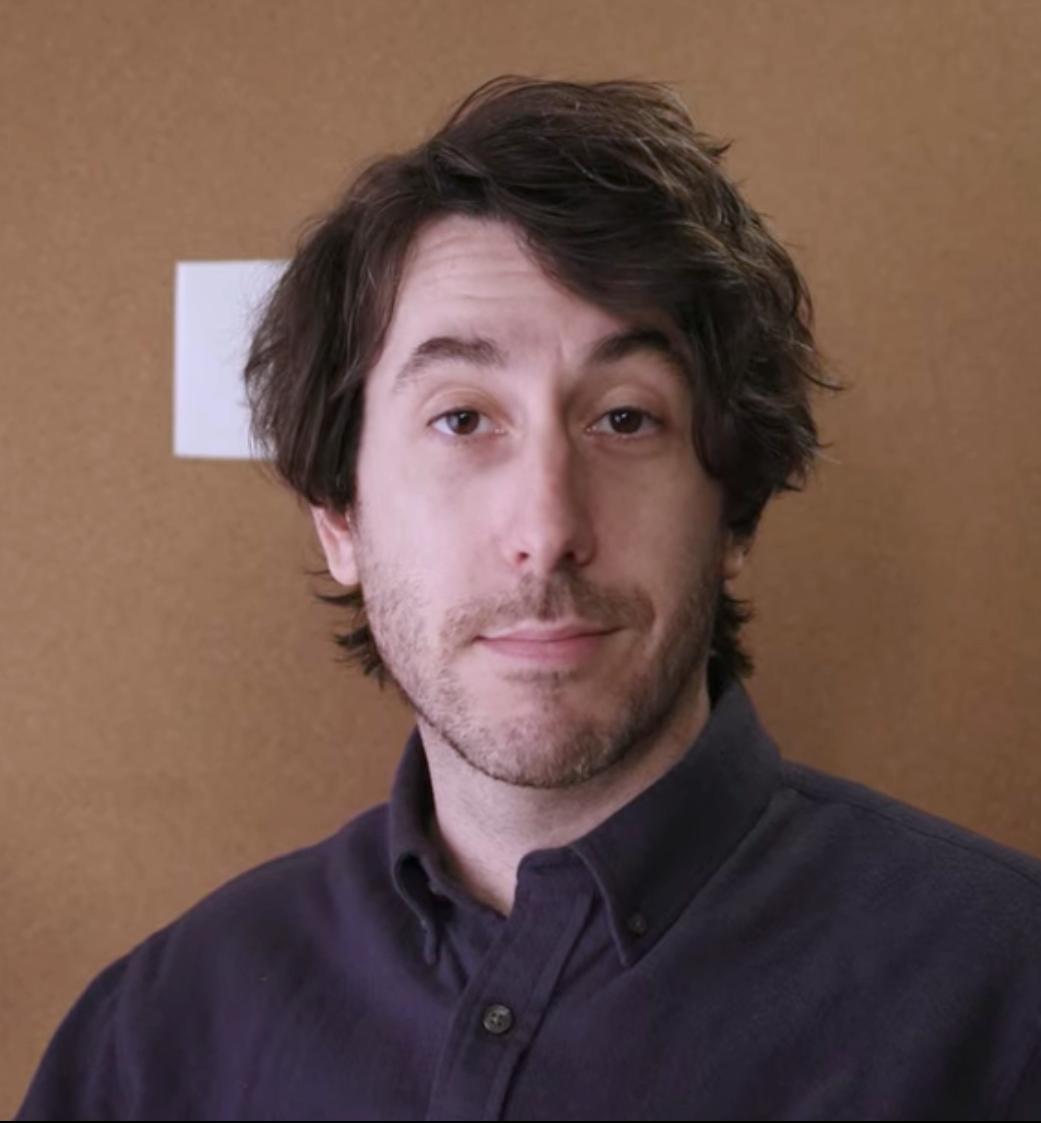

The definition of having no idea what you’re getting into if a fun, offbeat trailer didn’t encourage you to use up a slot in your week’s four AMC Stubs A-List allotment, “Nirvanna the Band the Show the Movie” ends up being one of the aborning year’s most delightful TV show you’ve never seen to big screen movie surprises. Well, at least to me, as I wasn’t remotely familiar with Jay McCarrol or Matt Johnson. With a thin straight man / burly doofus energy reminiscent of Oliver and Hardy, Abbott and Costello and Penn and Teller, the two are a Gen Z comedy team via a Spinal Tap of sorts as two hapless musicians getting into a series of surreally droll adventures. Behind their onscreen namesake characters, McCarrol is the composing muse to Johnson’s direction in such pictures as the bullying revenge film “The Dirties,” the moon landing conspiracy of “Operation Avalanche” the true life primitive social media platform called “BlackBerry” and an upcoming biopic of the brilliant outcast chef Anthony Bourdain. On his own, McCarroll’s scoring work specializes in the meta, including zero-to-sci-fi heroes in “Space Riders: Division Earth,” the burned out manchild who used to be “The Kid Detective” and “Stranger Things” co-star Finn Wolfhard’s co-writing / directing slasher spoof “Hell of a Summer.”

However, when it comes to beyond spot-on homage scoring that still manages to have its own wonderfully fun voice, then that 1.21 Gigawatts, Flux Capacitor award goes to just how well McCarrol has captured Alan Silvestri’s iconic “Back to the Future” energy for “Nirvanna the Band the Show’s” journey that adds a self-descriptive title to the end. All the while also written and co-scored by McCarroll, “Nirvana” has travelled from the 2007 internet to TV on Viceland in 2017, the concept of two hapless musician’s quest for success now turns into a giant love letter to Bob Zemeckis’ 1985, distinctly American masterpiece. Except here it’s set in 2008 Toronto as the bubble-floating drink Orbitz’s unexpected power propels the had-it-to-here Jay and obnoxious idea man Matt into 2025 where Matt has been left in the dust by a now-superstar partner. And Jay has no intention of turning back the clock to their going nowhere days, no matter how much Matt begs him to.
Uniquely satirizing “Back to the Future” (no more so than with the CN Tower as The Clocktower) and the time travel genre in decidedly non-world-changing terms, McCarrol’s brilliant channeling of one-step from the actual score creates the idea of comedy coming from a score that’s way bigger than the material. Silvestri’s nobly thematic brass, military percussion suspense and lush, mysterioso strings are more than apparent to even the most neophyte of score fans. McCarrol also manages to get Bernard Herrmann’s “Vertigo” into the mix as well. It’s the epitome of the idea of playing comedy straight, which Elmer Bernstein defined in such spoofs as “Airplane!” and “Three Amigos!” that’s the driving idea here. Yet it’s the way that McCarrol brings his own epic chorus and playfully plotting drama into the Silvestri salute that gives the score its own identity. But perhaps the biggest surprise is the actual emotion that the score generates in a way that taps into the bond of the unlikely duo of Marty McFly and Doc Brown via Jay and Matt, which likely accounts above all for “Back to the Future’s” iconic endurance. When Silvestri’s actual score briefly shows up here it’s the payoff to just how well McCarrol has riffed on it, all with a sense of truly unique comedy that ironically defines a wannabe two-man band that’s all Canuck team spirit.

What’s your own composing background?
I started playing the piano as early as I can remember. One of my earliest memories was striking A, C and E on the piano and being struck with a feeling of knowing they go together. I made up songs all the time and I didn’t know it was “composing.” It was just fun.
When you first teamed with Matt, what struck you about his approach to underscore?
Contrary to other directors I’ve worked with, Matt has always given me a great deal of space to choose how something is underscored. He won’t give direction on what he wants, or provide any music to say, “Something like this.” He has a lot of trust in me, and he will let me score how I’m seeing a film, and he’ll react to it, often positively, and sometimes with some simple re-direction adjectives.

Some of your first scores were for movies that had a self-referential aspect to them like “Operation Avalanche,” “The Kid Detective” and “Space Riders: Division Earth.”
They have three entirely different styles. “Operation Avalanche” was evoking a smoky room with a jazz band underscoring a clandestine government conspiracy. “Space Riders” was a call back to a Power Rangers style show so that was easy in terms of knowing exactly what the mission was. “Kid Detective” was the deepest collaboration I had with the director Evan Morgan. He never spoke musically, but he would react to my cues with a lot to say in the language of his filmmaking and storytelling. We tried to strike the balance between noir and Idiosyncratic, classic and modern, but we indulged in so much nuance along the way. It was one of the most challenging scores, as it was my first score that needed to really create a tapestry of tone that was present the whole film. I’m very proud of it.

I really enjoyed “BlackBerry,” which was a “first” for you in terms of playing a true-life movie that signaled the start of how portable social media would screw up a generation. What were the challenges of scoring an atypical film for Matt?
It helped that I worked on this film very intimately across many departments. I helped write it, shoot it, storyboard it and watched every scene being shot at the monitor with Matt. Our whole team at Zapruder were in lockstep with how we wanted to take our mockumentary style filmmaking into a more conventional “real movie” style and we discussed at length all the tools and tricks to do so. I abstained from writing or conceiving anything until I saw the first round of dailies. One of the most powerful positions a film composer finds themselves in is being the last creative force to influence the movie. Often there is a vision that starts in pre-production, then you shoot that vision, then the editors edit to that vision – everyone tries to respect the vision. BUT in the end you need to be honest about the sum of all parts. We set out to go here… but what we made has us “here.” I want to score where we are and not where we set out to be. In the case of “BlackBerry,” I discovered immediately that the score needed to sound panicked, and I used only sounds that for whatever reason reminded me of the 90’s.

Right before “Nirvanna,” you scored another “tribute” movie for the slasher spoof “Hell of a Summer.” What was it like channeling that throwback genre fonr co-writer and director Finn Wolfhard, who’d found his own success with the throwback show “Stranger Things?”
It was great. Finn and Billy knew exactly what they were going for and gave me a lot to do in that film. I especially loved being able to get so “musical” with the cues, finding such sensitivity in the films charm. It was just a cool vibe the whole time.
As a moviegoer, when did you become aware of Alan Silvestri’s music, and what do you think his music brought to the films he scored?
Alan is one of The Goats, what can I say? “Back to the Future” would be the first of course. His scores are among the few that defined the heights of the golden age of 80’s and 90’s blockbusters.

“Back to the Future” composer Alan Silvestri
Orchestrationally, what makes an Alan Silvestri score an Alan Silvestri score? And did you do a deep dive before scoring “Nirvanna” in that respect?
I spent a lot of time looking at how his “Back to the Future” score worked. It’s insane. I looked at other scores too, from John Williams, Bernard Hermann. What’s so rewarding is figuring them out and learning how certain clusters of notes work or how jumping around chords in the octatonic scale sounds. As crazy as it sounds, you uncover some of the code and think, oh, these guys are human after all.
Was there ever the idea of scoring “Nirvanna” in a different way, or was the “Back to the Future” approach obvious from the start?
We knew that “Back to the Future” was going to be the overarching parody but we didn’t lean on it the whole time. When I spotted the film I knew where I needed my motifs and it wasn’t always obvious where I could just “parody” and paint by numbers. It actually became beneficial to crest over the hill of parody and into my own sound once I found it. At that point I was just using some tools of orchestration that evoked the classic adventure movies, and again, the octatonic scale.

Do you think Alan’s sound makes this way more epically dramatic, and adds to the humor in that way?
When The Simpsons hired Alf Clausen to score the show, he said “I don’t want to score the comedy, I’ll score the drama.” Providing an underscore that only lifts and supports the characters emotions gives the comedy its place to shine. It’s the straight man. You can’t have a class clown without a teacher trying to work.
I also enjoyed your reference to Bernard Herrmann, particularly in your orchestration and riff on “Vertigo.” Where did the idea to salute his music as well come from?
We have a lot of fun with Bernard Hermann because Matt and I just love how funny it works with our comedy. We used it, either parody versions or fair using the real thing in our TV show all the time. In this case I parodied him but also wove in one of the main motifs of the movie.
Watching “Nirvana” you two struck me like Laurel and Hardy. How would you describe your onscreen chemistry, and how that plays into your scoring?
We’re channeling a lot of classic duos I guess, but they are never top of mind when we’re improvising. The music plays into what the characters are feeling and that can be hilarious when it is done so sincerely. Sometimes it’s like the score that one of our characters might aspirationally think they’re hearing in their head.

What’s it like scoring “yourself,” and what motivations do you think your music brough to “Jay” that you weren’t thinking of on camera?
Funnily enough, I was thinking about music while I acted some scenes. Not knowing exactly what I was going to do but I would take my time with an emotional moment knowing I’d score it sensitively or look up at Matt on the CN Tower and take a step towards camera knowing I’d amp up the score on that moment. I can just say it was So. Much. Fun.
How close could you get to “Back to the Future” here, and were there any points where you had to pull back?
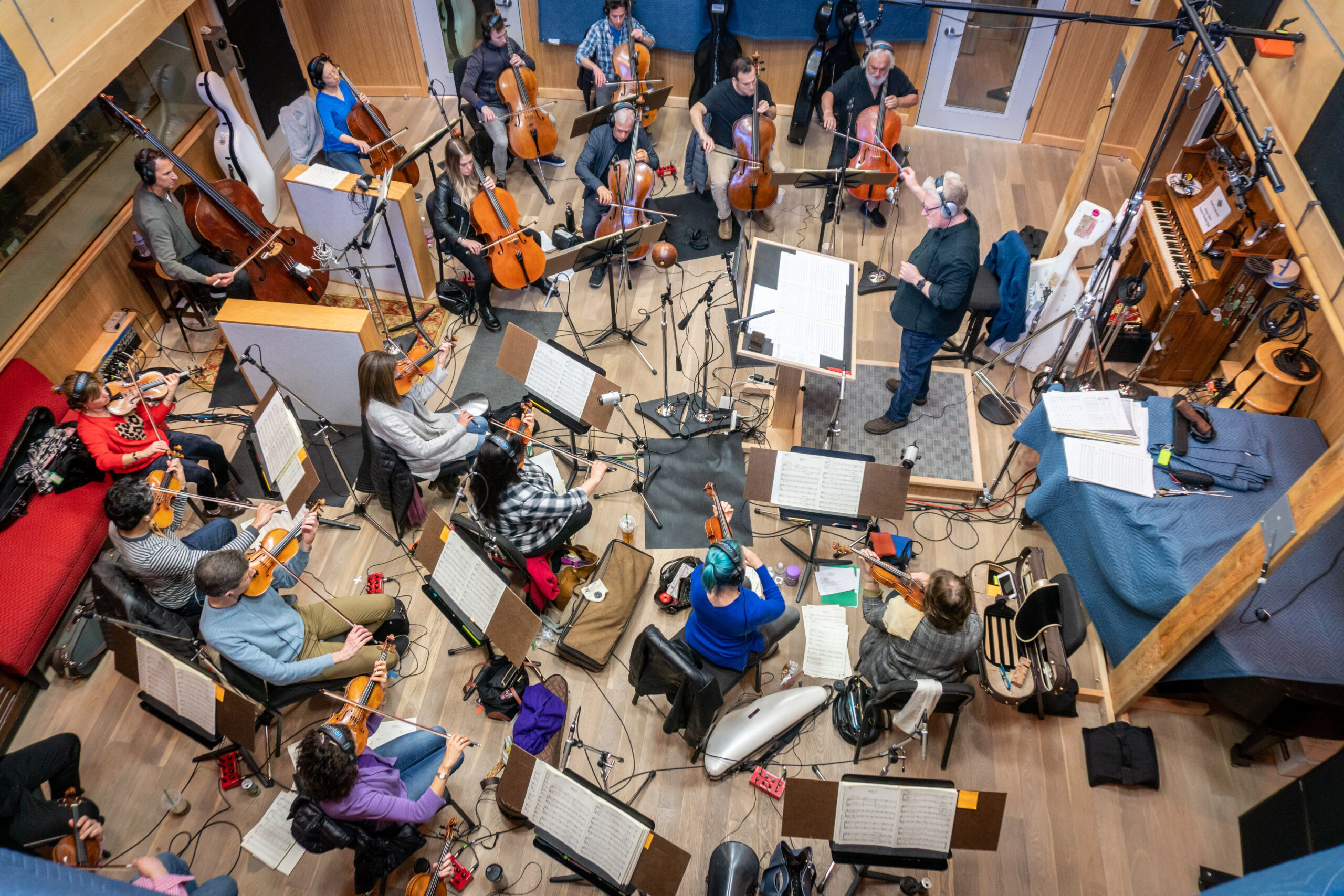
In the past I’ve done soundalikes that get so close and I’ve gotten away with it. But I didn’t want to do that here – I wanted to just have enough to make you feel like you were watching a “Back to the Future” movie but still have the freedom to custom score the movie properly, and to set up my themes that have payoffs all on their own.
How did you want to combine that segue from that “Future” sound to your own material?
It’s like when you learn a song on a guitar that teaches you a new chord. Then you know that chord, and you can slide your hand up and down the fret and play it everywhere and then move your finger here and that one there and suddenly you’re writing your own song. That’s how everyone learns to play and compose. In this case I was unpacking a lot of traditional orchestration techniques and getting braver with things like dissonance.

Where this could have been a rock and roll score, how do you think the orchestra dramatically grounds the jeopardy that Jay and Matt find themselves in, and ultimately the selfless sacrifice that Matt makes to redeem himself?
No, I wanted to feel it. Orchestra music is something we all can feel so deeply if done right. I want to get better at it.
As an Anthony Bourdain fan, I’m looking forward to Matt’s biopic on him. What can we expect from your score?
It’s smaller, it’s contemplative. I think we can all see in that man a beautiful darkness, I’m trying to honor that.
What kind of genre would you like to encourage Matt to riff on next, and is there a particular composer you’d like to pay tribute to?
I love writing orchestrally, and I’m hoping to return to that on another Matt film and continue to find my own voice as a composer.

What do you hope Alan thinks of the movie, and your score?
I would just hope he hears how much I love and respect his music. It has deepened my journey as a musician.
Watch “Nirvanna the Band the Show the Movie” on streaming HERE, with Jay McCarrol’s score on Lakeshore Records HERE
Special thanks to Kurt Nishimura at Lakeshore Records