
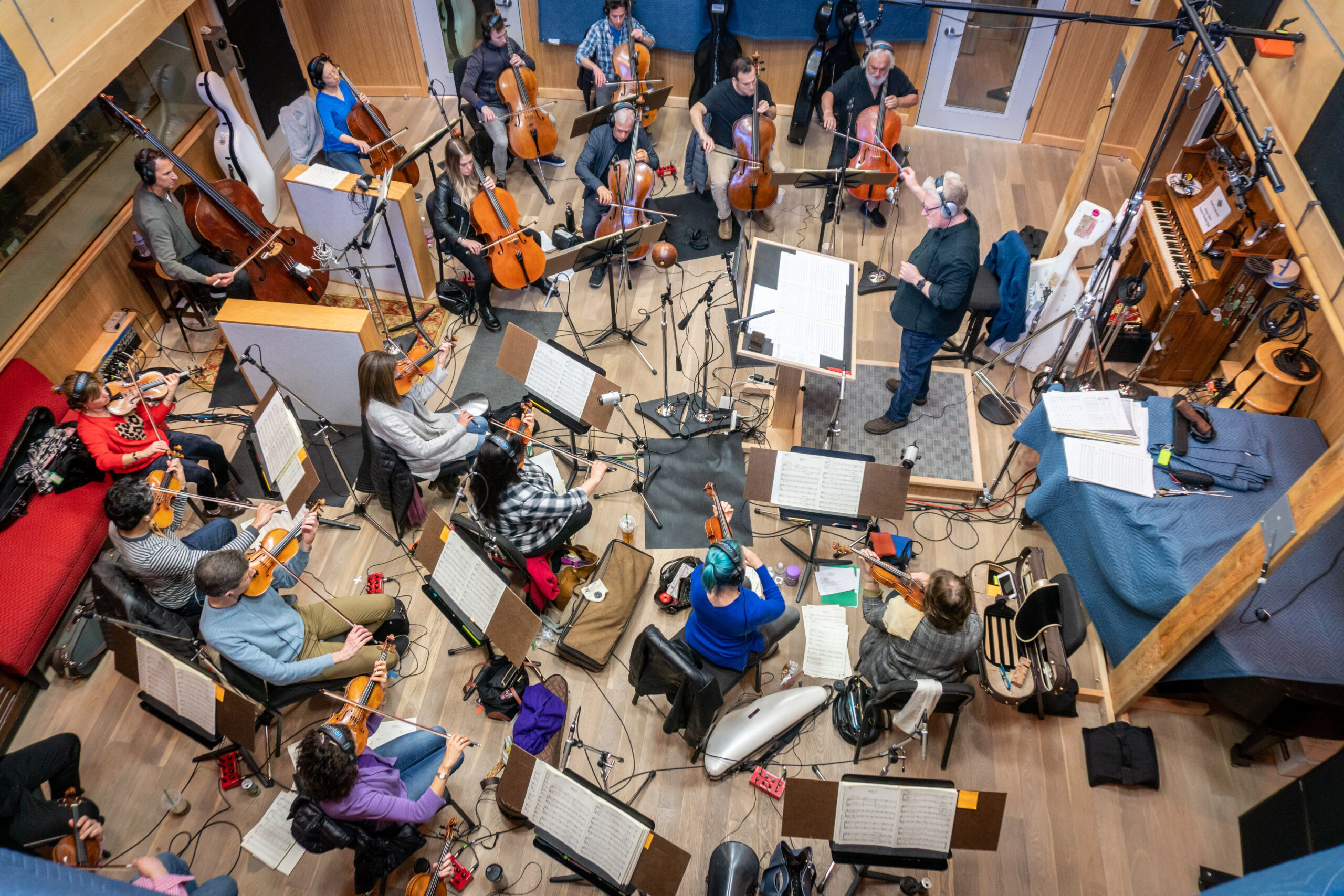
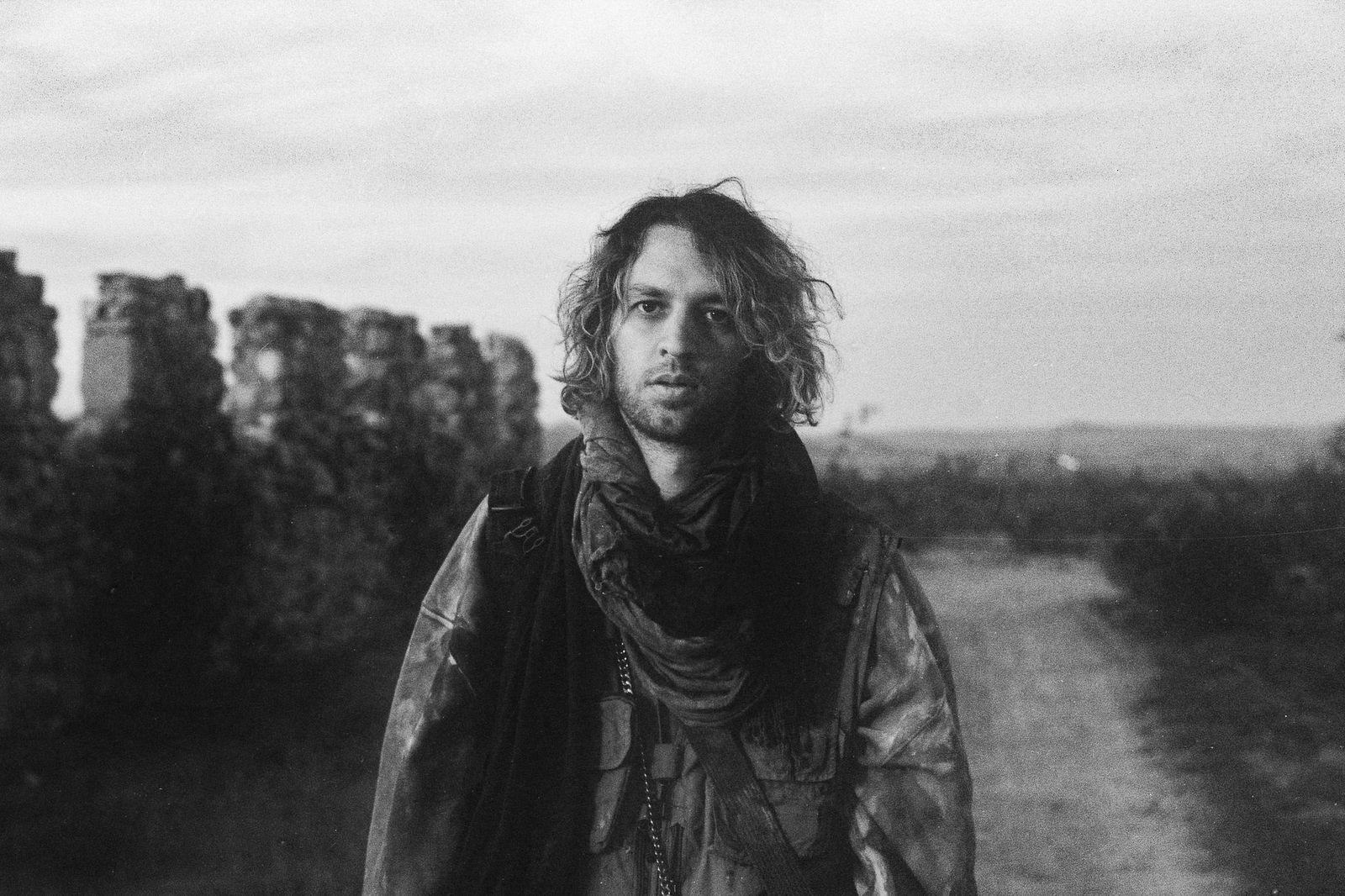

Both the definition of a brilliantly WTF score and a beyond triggering movie if you had the ruthlessly bullied educational upbringing that I did, “The Plague” is a full-on submersion into peer pressure body and mental horror that honors the angst tradition of “Welcome to the Dollhouse” while making the peer pressure of “Eighth Grade” look like “Rebecca of Sunnybrook Farm.” And if memories of an entire eleventh grade class jeering at me flooded back into me, then no small part is due to the taunting voice-based soundtrack. “The Plague” is an unnerving, yet bleakly funny indie studio debut on both counts for filmmaker Charlie Polinger and composer Johan Lenox.

A covid lockdown in his Polinger’s bedroom inspired him to flash back to his adolescent days at a water volleyball camp, personifying himself as a wanna-be-liked Ben (Everett Blunck) who swings between trying to satisfy the toadies of smug bully Jake (Kayo Martin) and sympathizing with weird skin condition kid Eli (Kenny Rasmussen). Yet there’s no right move, or any way Ben can escape drowning in the escalating, awful pranks or what Eli might be capable of as increasing Cronenbergian rashes repel everyone around him.
It’s a relatable situation (with or without water volleyball) that could have been scored in any number of styles be it expectedly discordant horror strings or warped electronics. Yet the striking, rat pack taunting and retro Giallo approach by Johan Lenox was likely not on anyone’s Bingo card, all of which when combined with Polinger’s Kubrick-like sense of cruelty makes “The Plague” punishingly and hypnotically unique. A kid prodigy and Yale graduate who’d go on to work with alternative artists, the mind-bending possibility of vocals have seemingly possessed Lenox to make this an obviously choice for his major scoring debut.
But where non-lyrical “vocalese” has been used to eerily dreamlike and classically ironic effect in such scores as “Rosemary’s Baby” to “The Royal Tenenbaums,” they’ve rarely been used in such a diabolically innovative way to capturing adolescent cruelty. With most of the voices emanating from Lenox to bleakly funny effect at first, then joined by other instruments as the situation becomes more punishingly dire, Lenox’s breathy “Plague” turns an organic instrument of communication into a literally viral hive mind like no soundtrack before it – capturing an awful, yet utterly expected rite of passage for Polinger’s acclaimed picture that’s most definitely the start of something unholily unique for him and Lenox.
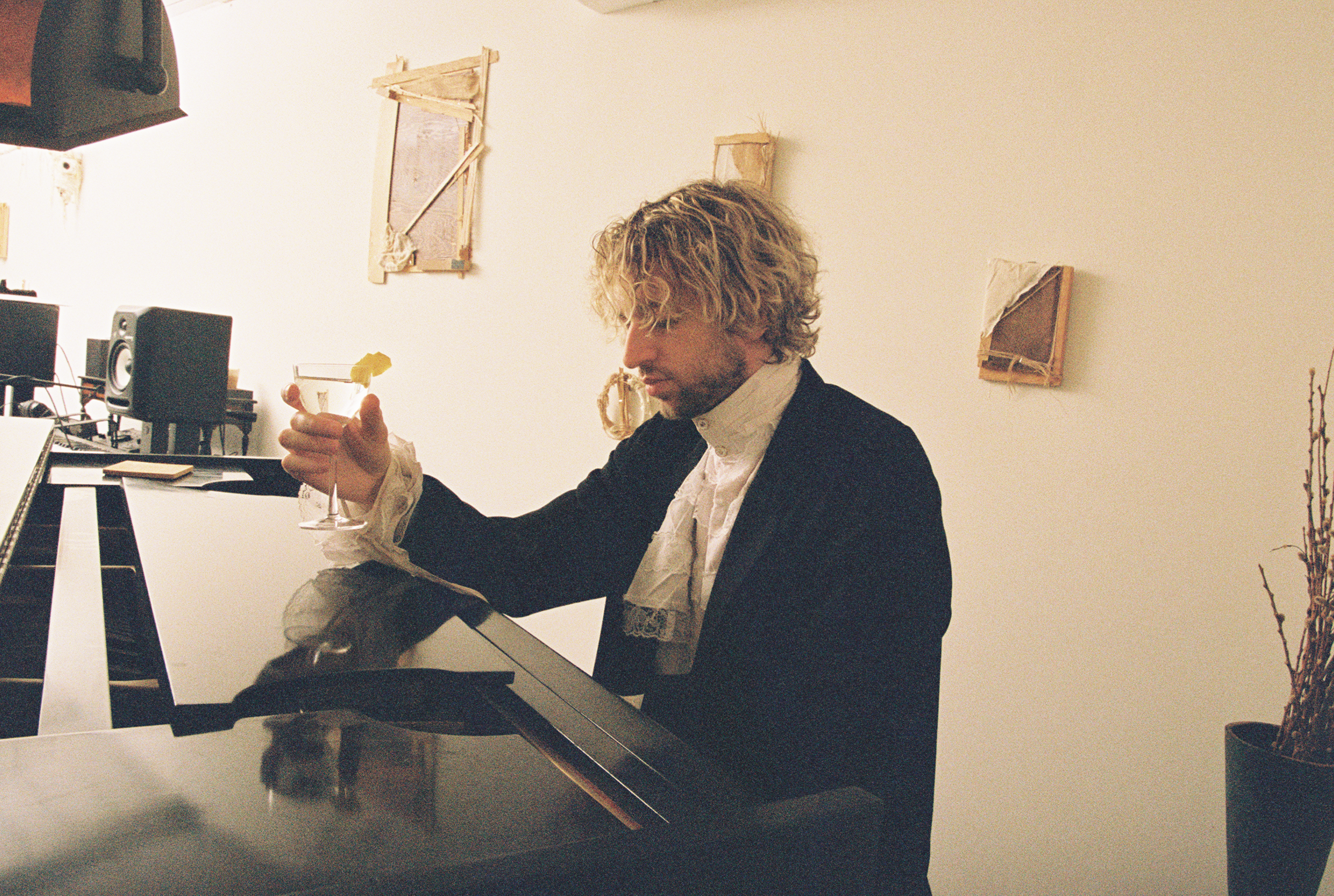
Tell us about your musical background, and what led you to scoring?
I started out teaching myself piano around 1st and 2nd grade. Then I was drawn into the music of John Williams, which made me want to study composition formally. That led me into years of being a contemporary classical composer that really started in early high school and continued through the end of grad school and to today. Along the way I also got into writing musicals and producing records and performing as a solo artist. I basically did everything under the sun except film scoring but when Charlie mentioned he was working on his first feature I jumped at the chance to do one with someone I’ve known and trusted a long time.
What are your pre-teen school memories, and are they tormented?
I tend to remember everything with a pretty rosy filter on it, but I think I was more likely to just get sad than terrified at that age. I think my version of social terror was more of a younger thing, like in elementary school I remember avoiding going up to the big, scary 5th grade class to deliver a message to their teacher from my 1st grade teacher. I instead just hid in the hallway for 15 minutes and came back and lied about having gone up there. She was really mad.

Tell us about your experiences with the sung and spoken word before “The Plague.”
Basically I just sang in a ton of choirs and A Capella groups and composed/arranged for pretty much all of them, starting in 5th grade when I composed and conducted our 5th grade graduation song. Later I was in the Yale Whiffenpoofs. Tons of classical choir too, both performing and singing, church choirs, synagogue choirs, everything. And musical theater as a singer, conductor and composer too, all throughout high school and college.
How did working with such artists as Teyana Taylor and Lauryn Hill influence your approach?
Most of that work was as a producer so I’d say more just preparing me to be really good at producing music in software and recording stuff. When I had studied classical music originally it was really just the sheet music composition and the live aspect that I learned. So I had a pretty uphill climb in the digital and recorded world and I learned that stuff mostly producing for other artists and my own solo records. Some of that stuff applies more directly though, Teyana’s song “3way” starts out with my vocals stacked in exactly the way I still do them all over my records and on “The Plague” soundtrack. That was the first song I think I ever did that on.

Charlie Polinger (L) and composer Johan Lenox (R)
How did you hit upon this musical approach for “The Plague?” And what did Charlie think of it?
Kind of trial and error. The vocals really just remind me of a bunch of kids stomping around and yelling, very ritualistic, even animalistic. So “The Lord of the Flies” image was a big part of it. Charlie said they felt like the voices in his head. I think this was also just a really good way to approach a lower budget score because I could demo near infinite variations of ideas just by walking into my studio, without needing to rely on expensive instrumental or choral recording sessions for everything. My voice has always been one of my fav ways to make music, so this just made the whole process that much more fun.
What kind of quality do you think vocalese has as an “instrument” that other non-human instruments don’t have?
Hmm, I guess the timbral variation you can get is just very wide. Like I can scream one layer of vocals, groan another, whisper another, shriek another in falsetto, all on the same track, each one in harmony. I think if you tried to do that on a cello it would sound more uniform
Were you ever worried that the score might be so strange that it would pull people out of the film? Or did you want that kind of “What is this?” shock?
I mean definitely the latter. Part of why I wanted this as a first project was that I knew Charlie wanted to make some bold choices and music could be a big part of that. I think we were occasionally concerned that it would be too recognizably voices, even through all the production effects and stuff, and might distract from the dialogue or feel too song-like or like an actual a cappella group. It’s been interesting to see some people on the internet describing the score as consisting largely of organs or synths or something, when neither of those instruments appear at any point in it.

If you were bullied, how do you think that experience reflects in the score? And do you think there’s a particularly taunting quality about voice here?
Yeah, I like that last interpretation the best honestly. I think we wanted it to be kind of funny and insane to help bridge the gap between how funny some of the dialogue is and how scary the protagonist’s situation becomes. It was also just a way to keep the movie fun and quirky and not just “unhappy” I guess. But I mentioned my contemporary classical background. I spent years of my life around music that was mostly wildly atonal or bordered on pure noise at times, so I think I have an unusually high tolerance for what some people might call “challenging” music. So stuff that I guess scares the shit out of other people might sound pretty nice to me, or in this case was actually kind of fun. I’ve posted clips of the recording process itself, which I think comes across more goofy than anything else, so you have to remember that’s the zone I was in when I was making it, even though I obviously understood the end goal we were all pushing towards wouldn’t be quite as light as that.
I personally found the first half of “The Plague” to be ironically funny and very dry, much in the way of a Stanley Kubrick movie. Do you agree with that, and if so, how do you think the music adds to that dark drollness?
Definitely. One thing that kind of happened was that I didn’t totally realize until we were done was that the goofier, vocal-driven music dominates the first half of the movie, whereas the scary strings and percussion stuff take over more later on. We had tried a lot of different approaches but that was the way that worked best. I think when things get really dark we just found that vocal stuff was a bit too cute to really help the audience get there, with a couple of exceptions maybe.
What kind of manipulation did you do for the voices? And were you the only singer here?
There’s a child soprano who sings on that very romantic track early in the movie called “Bonfire” which returns over the end credits. Other than that I’m the only singer on this. So lots of manipulation to kind of create the alien vocal texture you hear in the final stuff. Sometimes extreme slowing down the audio to create these endless drones, almost always some degree of pitching notes up or down, and just insane amounts of layering and stacking these vocal takes up.
How do you see the character of Ben?
For me he’s just supposed to stand in for the viewer. I thought it was important that you watch him and really believe he could make either choice. Like if these were adults and the stakes were way lower a normal person ought to be able to be like, “Wow Eli is cool and quirky,” or “Ok, Jake is kind of a dick, but he can be funny and a good hang. Clearly he’s going through some shit at home or whatever, so can’t we just all hang out together and get along?” Like he’s just trying to do right by everybody but Jake and really the rest of the group are the ones forcing it apart and pushing him into this terrible predicament.

Tell us about Eli, a kid who seems to silently like creating himself as an unapproachable weirdo, and perhaps something far darker?
I love him! I love when he goes “That’s evil.” I really just read him as like your average weirdo kid who probably really likes comic books or grows up to do fight choreography for Broadway musicals or something. I feel like I knew tons of those kids. Maybe this is just Ben’s first time encountering someone like that so there’s a scariness and a curiosity about it from his perspective.

Joel Edgerton basically plays the only adult we see. How do you think the music reflects his kind, if hapless “toughen up” attitude that comes to naught?
I think the music really comes entirely from Ben’s inner monologue in this film. Joel absolutely nailed that character but as it becomes clear, he really has no control over what these kids are going to do. So honestly, I didn’t think we needed to feel his side of it as much. You can understand his frustration obviously, but I think from Ben’s perspective he’s just like an alien who has no understanding of what Ben’s going through. He causes some things to happen in the story, but the music comes from the kids,’ and especially Ben’s reaction to those things.
At what point did you want to go beyond voices for the score and bring in instruments like the piano and strings – and cues where there are no voices at all?
Honestly, I pushed to keep the percentage of vocal-only music as high as I could. I’m a big student of minimalistic classical music and just overall think sonic coherence/limitations are incredibly important to me. So I would say “very sparingly.” Occasionally we’d reference existing pieces of music that we liked and I would go out of my way to re-imagine them vocally and not mimic the textures we had already heard out in the world. But yeah, as I mentioned the grinding of the strings and the percussion and stuff definitely come in handy when you want just pure terror later on.
Tell us about your main, neo-classical theme. I particularly liked the version with harpsichord and high voices that has a great retro neo-classical 60’s “Giallo” feel to it – like music you might hear in Ennio Morricone’s “Bird with the Crystal Plumage.”
Yes you nailed that. Giallo for sure, all of that stuff. To me that music is actually pretty distinct from classical, it’s got a much more theatrical, European pop sensibility to me. Although the initial piano maybe is a bit more reminiscent of straight classical music. But we just wanted something bizarrely out of step with the rest of the score to grab your attention for that early moment where the boys are the closest they’ll ever be. Then the theme kind of worms its way into the other, murkier, sound worlds and gets swallowed up completely by the end.

Do you think there’s something naturally tribal about voice, especially when you put percussion behind it?
Yea basically that. Voice and percussion was the base for the initial sound-world of the entire movie. The rest of the stuff all exists as a departure from that home.
How did you want to capture the idea of “the plague” itself? Do you think it’s actually real when it comes to the skin condition that Ben develops, or do you think that’s in his head?
I think it’s in his head personally, but the film doesn’t really weigh in either way. It’s just about a feeling, and what’s happening in real life is kind of immaterial. I sort of read the skin stuff as just him massively exaggerating some small acne or eczema breakout in his head. I didn’t wanna be too direct about assigning a “theme” to various events in this so occasionally you hear it scored with more of the vocal stuff. Other times it’s with the creepy strings. For me it was much more just about this overall musical world which has its own internal logic and syncs up with the movie really well and goes against it at other times.

There are a lot of gorgeously shot scenes underwater. How did you want the music to reflect that element?
The smooth flowy stuff I did for Ben’s interaction with the female synchronized swimmers were a fun part of this that’s really hard to imagine having anywhere near a similar effect on instruments. Just like endless, oozing, sliding, barely ever lining up with anything you can call a “chord.” But there are also moments of violent splashing and fighting and stuff so you end up doing quite a range of music under the water in a movie where so much happens there.
I particularly liked the combination of dark sustaining strings and child-like percussion as the kids observe Jake being taken away after being kicked out, which is played by silence from everyone. How did you want to play that as opposed to a moment of “I beat the bully?” Or even giving some weird measure of sympathy for Jake?
That was probably the most hard-earned moment musically. We tried a lot of stuff. That’s the same “Italian” theme played on this gamelan-type digital instrument, layered over a combination of stretched out strings and voices. I hear you on “child-like” but for me it was just kind of a sadder, deflated version of that original theme, maybe just the last dying gasp of any friendship between Ben and Jake, but also among the entire group. Like the death of whatever was going well when they were having the bonfire. That’s maybe as close as we got to real symbolic usage of leitmotif.
The tone of the movie becomes far more menacing in its second half. How did you want to score to reflect that intensity – especially when the music sounds like an air raid siren?
I love that one. That one’s just a call to war. Like a big horn fanfare, although also composed entirely from my voice! I have a decent idea of how I made it but I think it would be almost impossible to recreate. Jake and Ben are fully enemies at that point and it’s just a matter of who will snap first.

In the end, would you describe this as a horror score, and a horror movie?
Personally, not really. I feel like for me the movie is tonally closer to something like “Uncut Gems” than a horror movie, so just like this never-ending misery and stress punctuated with moments of humor. And the music I’d say is an equal blend of that stress and the humor, or I tried for it to be that. But I know it’s a horror movie for some people. I just feel like most horror movies have more people getting their heads chopped off and shit.
Do you think being bullied can inadvertently fuel a young kid’s creativity?
Yes. I mean everyone knows the stereotype about people who were too popular too early and peaked in high school. On the other hand lots of kids don’t make it through that gauntlet so hard to really say it’s ever worth it.
Other scores have used vocalese before, but in the end how do you think “The Plague” takes that concept to the next level? And what do you think about how experimental movie scoring can get now when it comes to confronting the listener with what a “score” is in the first place?
I’d honestly love to know which scores really do that because we didn’t really reference stuff like that. And I’d love to hear how they did it. The closest sonic references for me were maybe the group Roomful of Teeth, or maybe like the all-vocal Bjork album. I definitely think it allowed me to make something that felt original to my ears, if only because no one else is going to have access to my voice and what that sounds like. I think it’s much harder to get a completely new sound out of a string instrument or something at this point, it’s almost certainly been done a million times. But I want to try.

Given that “The Plague” is your first major score, what kind of path and expectations do you think you’ve laid out for yourself?
I don’t totally know. I have a few projects coming up this year and obviously you want to work on higher profile projects as you go along, but so many of those seem to not want any kind of originality in their music. I really only want to be on projects where they want me to do something insane and instantly recognizable, where the music calls a huge amount of attention to itself and is almost distractingly new. I think like 95% of films would probably be made worse by that approach, which is a big part of the reason I waited too long to get into it at all. But I found one that seems to have worked and I’m working on finding some more to work on.
See “The Plague” in theaters, with Johan Lenox’s score available on Waxwork Records HERE.
Special thanks to Chandler Poling at White Bear PR