
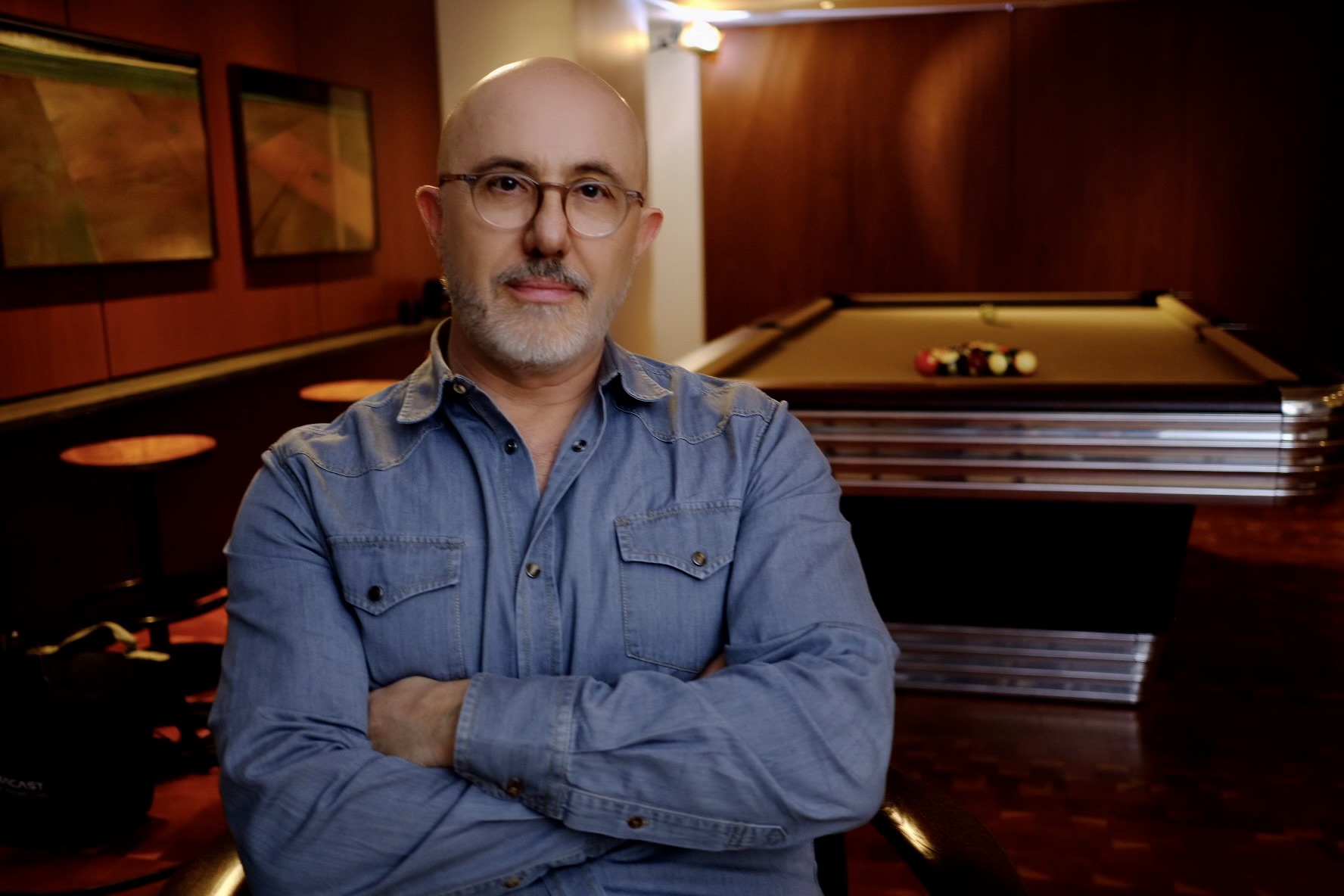

While we live in a geek culture where boutique titles run over with extra features documenting every nook and cranny about the art of filmmaking, it’s almost impossible to think back to an analogue time where nascent VHS, DVD and Laserdisc markets were as bare bones as an unlucky shark chaser off of Amity Island. That was before Frenchman Laurent Bouzereau landed on Hollywood’s shores to create a landmark making of documentary for 1995’s great white-sized Universal Signature Edition laserdisc box release of “Jaws.” Telling the story of the game changing picture in a way that was anything but dry, his vastly entertaining style showed Bouzereau was in Dutch with Bruce, Steven and John in creating the first real splash of the extras market. Documentaries on any number of landmark pictures like “Psycho,” “Lawrence of Arabia,” “The Exorcist,” “Close Encounters,” “Dracula” and “Scarface” followed, with the best always sure to feature Bouzereau’s conversational style that made the watcher not so much feel as a film geek as a regular guest at the coolest movie buff dinner ever – even when that guest happened to be Faye Dunaway.

Now Bouzereau gets a Grammy nomination bite, and very likely swallow alongside his friend who wrote the most iconically “simple” movie theme ever, whose two notes convey water-avoiding terror to anyone the world over. But that’s just part of the moveable feast that makes up the astonishing life and repertoire of the Mozart of Film Scoring, a composer whose innate gift for mainly melodic scores touches the listener’s very soul. Bouzereau’s “Music by John Williams” is an exploration featuring any number of the talents that he’s run into in his travels relatable, particularly Williams’ number one fan Steven Spielberg on an incredible fifty year and counting collaboration. All convey John Williams’ gift to musical emotion and global pop culture at large for a film that not only properly lionizes the composer, but takes Bouzereau’s documentary craft to new heights in summing up the career of Hollywood’s top composer and his art of creation down to earth.

DS: What brought you from France to the United States to document films and their music?
LB: I was super young when “Star Wars” had changed my life, not only in terms of movies and music, but the whole atmosphere of discovering a culture. I felt that I had been born in the wrong place in France. I swore to myself that I would move to America did during the summer when “E.T.” was released. I was already a Spielberg fanatic and bought the “E.T.” soundtrack on a cassette, which I played on my first Walkman ever. I braved the streets of New York listening to “E.T.” while feeling like E.T.!
It was also the summer that “Poltergeist” was released, and I loved its score by Jerry Goldsmith. I kept flipping between both scores.
Eventually I moved to LA with a passion for the cinema of Spielberg, DePalma and Lucas – those iconic 70s directors. When this whole industry of home entertainment started, I was very lucky to find myself at its beginning. of beginning. I was given opportunities that I am forever grateful for to meet Mr. Spielberg and everybody else. I did a documentary on Scorsese, De Palma. Suddenly, I was documenting the films of all of these people I worshipped, and in a way that had never been done before. When I met John Williams for the 1st time over 30 years ago, I was equally as intimidated about it as I was about meeting Steven, because John had literally scored my entire life to that point. But I found John to be so accessible, humble and relatable. Discussing music can be a very difficult conversation. But just like Steven, John made it very human and dare I say fun?

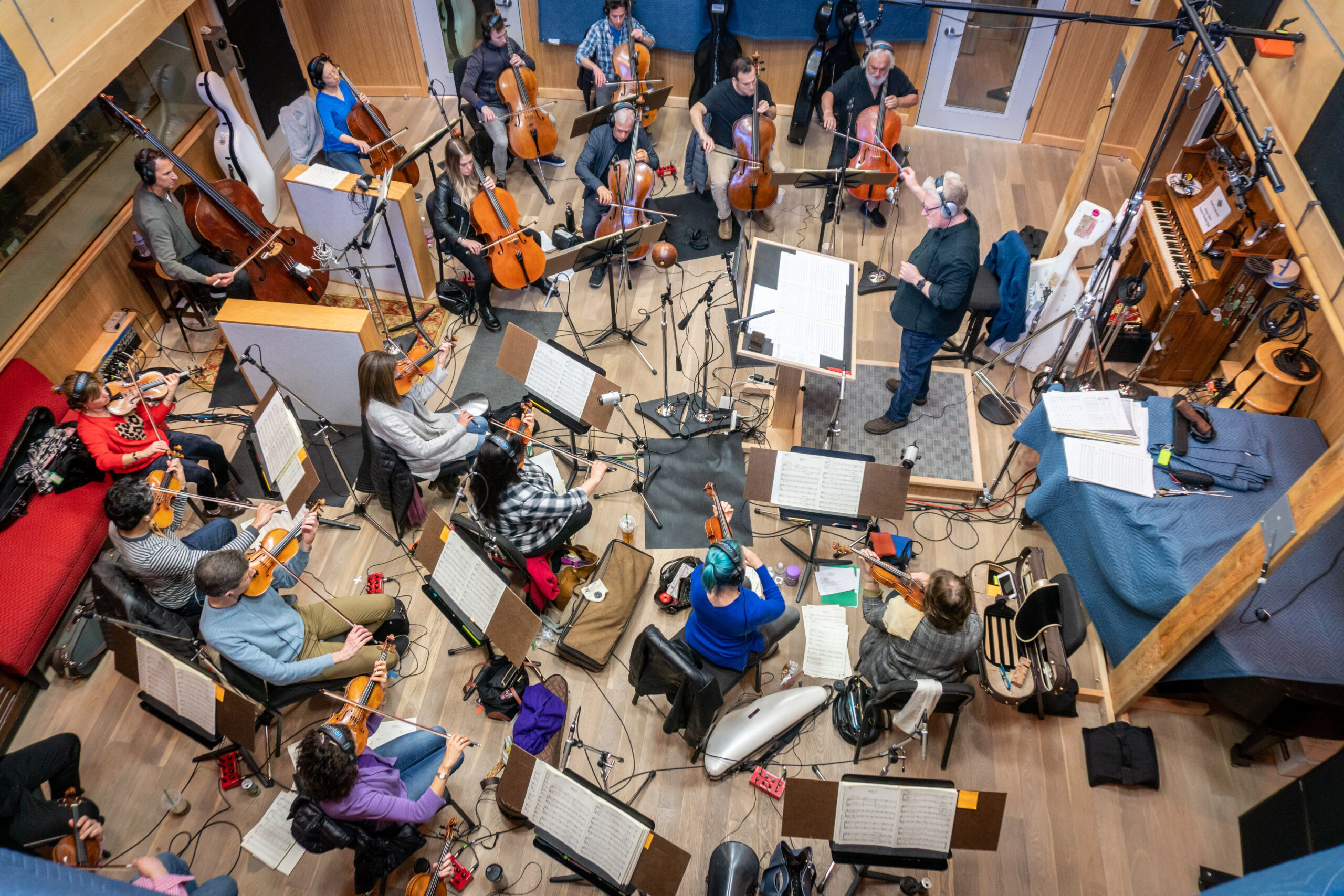
A star-studded lineup of guests honored composer John Williams, right, at the Kennedy Center for his 90th birthday. Photo by Scott Suchman — courtesy National Symphony Orchestra.
A couple of years ago when John turned 90, I was asked to do interviews with filmmakers who had worked with him for his Kennedy Center honor. The goal was to just get people to say, “Happy Birthday.” I told Steven that it was crazy that there’d been no major documentary done on John. I knew he was very private and didn’t like to look back. But this was so important. Steven agreed with me and he asked John about the possibility of doing a feature documentary. At first, he said “Yes,” and then he said, “No.” He was shying away purely because of his humble side. He said, “This can’t be about me.” And I said, “Don’t worry, it’s not about you. It’s about your music.” That was the beginning of an incredible journey with him from Tanglewood to Washington and San Francisco.
Then I followed him backstage at the Hollywood Ball, which has never really been seen that way. It was not only bathing in his music, but in his life routine, which is nothing short of exhausting because the man never stops. That was a gift to me and hopefully to the people who’ve watched this film.
I didn’t want “Music by John Williams” to be a vanity project or a hit parade, though that’s a little bit inevitable because you have to cover the obvious. Yet I want it to be really unpredictable and that’s why we start with “Jaws” when Steven came into the bungalow where John composes his music. He literally crashed our interview! And suddenly I had the beginning I was looking for. I worked really hard on the structure that was unfolding and unpredictable to some degree. I really tried to capture John’s spirit and his life. I just wish the film could have been 4 hours long because there’s only so much you can fit in. But as a filmmaker you want to give yourself a, a very strong structure.

Producer Markus Keith of Nedland Media
John’s real fans terrified me much more than the average audience because I knew some people would say, “Well, how come you don’t mention this movie or that score? I did my best, and this film came from the heart. The feedback I got was so positive that it made me feel good, that I had done something special. But that’s no thanks to me. That’s thanks to John, his family and the filmmakers who came on board and produced this with me from Lucasfilm to Amblin, and my producer, Markus Keith. They helped promote it to now where we have the honor of being nominated for a Grammy in the Best Music Film category, which is truly something I didn’t expect.

John Williams’ music editor and composer Kenneth Wannberg (photo by Michael Stadler)
John doesn’t have the troubled life of so many mega-popular musicians. With that being said, how “deep” did you hope he’d open up about his personal life?
It’s always a bit of a balance. I don’t conduct interviews. I do conversations that are well prepared. I have a kind of a roadmap in front of me and work with a music stand during my conversations, where I’ll put a rough script. So, I’m prepared if the subject takes me in another direction. The beauty is that John has known me for a long time, and I, I’ve hung out with him. He had a music editor named Ken Wannberg who was also a very good friend of mine. I would just go hang out in their bungalows and Ken would play me his “Changeling” score. Steven also trusted me and so on. So, there was a familiarity. Previously I’d only interviewed John about a specific film for respective documentaries about “Jaws” and “E.T.” But it was never about his entire body of work. I realized that John relates only in terms of music. So, when I wanted to talk about his personal life, particularly the loss of his wife, I asked him to tell me about his first violin concerto, which he composed after she passed away. That how he got into that conversation. It was not like “Tell me about your wife.” The answer came through his music and was edited in a way that it sounded like he was responding to a direct question.
I also wasn’t aware that he had walked away from The Boston Pops. That was really surprising. We also talked about the composer Bernard Herrmann and how difficult he was. They were very close friends and John had played in his orchestra. John talked about how the dynamics between Herman and his musicians had gotten really tough at times. Then I asked if he ever had that kind of experience, at which point he opened up about Boston, and how some of the players were against film music.

“Fahrenheit 451,” as first presented on LP as a suite on “The Fantasy Film Worlds of Bernard Herrmann”
I personally think that film music is the new classical music, which is why traditionalists are so jealous and snobby about it.
My own awakening towards film music was when I saw Francois Truffaut’s “Fahrenheit 451” as a young boy. It had a score by Bernard Hermann, and unconventional opening credits because they’re dictated without writing over this beautiful music. The movie itself is somewhat average because Truffaut was anything but a science fiction director. But the music elevated the film to another level that made it completely unique and almost like a musical. I remember buying a Herrmann album that had a suite from it. The score itself wasn’t completely put out until years later. I’d listen to the selections from “Fahrenheit 451” over and over, trying to understand the mystery of why this music was so powerful. When Alfred Hitchcock died, they re-released all of his movies in France and I went to see every one of them and discovered his relationship with Herrmann. John Williams scored Hitchcock’s last film “Family Plot.” It was crazy that full score didn’t come out until recently.
For example, I’d buy Hollywood soundtrack albums in France before their movies ever were released here. I got “Monsignor,” and then I saw the film and I’m like “What the F?” The movie sucked and the music was so extraordinary! I had imagined this masterpiece with Christopher Reeve and Genevieve Bujold, especially with this incredible poster. But to this day it’s in my top five John Williams scores ever.

I find it frustrating that at the John Williams Hollywood Bowl concerts that it’s always the same scores that never dig into his incredible repertoire. Why can’t we hear his tribute to Bernard Herrmann with “The Fury,” or his incredible suspense score to “Black Sunday” as opposed to the “Raiders” march over and over?
I think the problem is that people are just unfamiliar with the dearth of his work. There are so many great scores like “The Fury,” “Black Sunday“ and “Dracula.” But they’re a little more challenging. for an audience. I did talk to John about, like why he couldn’t play a suite from “Jaws 2.” He told me that first of all it was very hard to find pieces to play for an audience without the films themselves. They needed to be appropriate for a concert hall, which The Hollywood Bowl is. Personally, I never get tired of listening to “Star Wars” the “Superman” March or “Close Encounters” there. But the thousands and thousands of people who come to those concerts there would be potentially disconnecting if you were playing something that doesn’t tap into their own nostalgia. “The Fury” and “Black Sunday” were not successful movies. “Dracula” is forgotten. So I don’t think people would relate to those as much. What you’re looking for in those concerts is relatability and a sort of communal kind of atmosphere. The audience at The Bowl want’s something they can relate to that taps into their own childhood, music that they can introduce the child they’ve brought with them to. So you have to look at the purpose of those concerts. Of course I would give anything to hear “Monsignor” there with a with a chorus. I said that to John and he responded “That’s only for Easter, you know?” Maybe we should ask John to do a special concert just for us fans!

How do you think your pioneering work with the Jaws laserdisc documentary and the many DVD extras that followed have influenced the popularity of people wanting to go behind the scenes with their movie information?
You know, I don’t remember the first film I ever saw, but I remember the first time I went to a movie theater. I never looked at the screen. I kept looking back at the beams of light that were coming from somewhere up there. My dad arranged for me to go to the projection booth after the movie. I opened the door. And it was like going to see The Wizard of Oz. The room was dingy and ugly and overheated and the guy looked creepy. But he explained to me the Xenon lights and how you would switch one projector to the next when you saw the little dot on the top right-hand corner. From that day on I wanted to know the behind the scenes, to know about the magic that puts an image on the screen. What is it like to film it? I found myself on the set of “Moonraker” a few years later. The the image is perfect and everything around it is was total chaos! Then I went to see the Scorsese movie “New York, New York.” I loved it and I came out to see there were all these lobby cards of scenes that weren’t in the movie. And I was just like, “What?” “How did I see a different movie?” I started realizing there were such things as deleted scenes. And so all of that had a mythology to it which was fascinating to me. When I got into the field it was way before the days of Google Search. I found myself literally in the belly of Universal Archives in Burbank. It was in the dark with all of these file boxes, like something out of the end of “Raiders of the Lost Ark!” I was literally piecing old Hollywood stories together, which was really exciting time with all of those iconic films.
When I did the documentaries, it was for the most part the first time that the cast and filmmakers had talked about the films in detail since it came out. So there was something truly historical, especially since so many of the people I talked to are no longer with us. There was a responsibility when it came to “Close Encounters” talking to the special effects artist like Douglas Trumbull and Greg Jein, who built the miniatures. But some of them were tough like Robert Boyle, who was Hitchcock’s production designer. He didn’t want to reveal what he did until I told him that there would be “Matrix” without “The Birds.” And he said, “Okay. When do I come over?” It was really great to meet those people who had worked on these great films.

Now, as I’m older now, I am far less interested in the making-of’s. I’m more interested about the significance of cinema. When you say “Psycho,” so many young people don’t know who Hitchcock, Anthony Perkins or Janet Leigh were. People aren’t in tune with the history of film, and therefore, you’re wasting your time by trying to explain to them why those are great artists. What you have to tell them is why this movie is worthy of looking at. You know, it’s a little bit like if you go to the Louvre and you look at Mona Lisa, who cares about how it was made? Just appreciate it for and make it your own. I challenged myself to rewatch great classics like “Psycho” for example to discover the subtexts that I had never noticed before – to appreciate those films for their timeless nature, really. You need to know how they’re framed to describe a language that young people can relate to, and that’s a language of images.

What do you think about the future of special edition material, especially when it comes to what the studio labels are putting out as opposed to the collector labels?
It’s all based on economics. Special features started off as a niche market and it’s going to end as a niche market. I’m worried about the future of art in general. Do you know, why? Because it’s no longer tactile. People are not buying books. Therefore, they’re not reading. People are not buying DVDs, therefore they’re not watching them. It’s based on what’s “hot” in the moment. And I think it’s really the duty of people who still care to try and excite young people about, the art form. It’s reassuring when there are certain movies that seem to be breaking through. People have a kind of cultish approach to them. They want to own them.
In my film, John Williams says that it’s a difficult time for music and a difficult time for movies because of the technology of how you consume art. You read books on Kindle and can download movies on your phone the same day they open in a theater. So therefore, you don’t have that relationship with a record store or CD store. All of this is growing faster than our ability to consume it. So the technology is here, but it’s to the detriment of the experience. That’s why I think someone like John Williams, who has created a culture of concert music, is a hero in the context of this. Each time I go to Europe, I get reassured because I’ll see there’s a line around the block to get into The Louvre. It’s all a very diverse crowd. It’s not just older people. It’s super young people from all over the world. So there is a love of, of recognizing culture. And I think it’s our job to try and make sure that it’s preserved and presented in a way that feels modern and timeless.

When a lot of movie scores are now abstract, do you think John Williams remains popular because of how he mainly used memorable themes and melody?
I love scores that identify a character with music. What John does with his music goes beyond that. The music is actually a character. I think the world embraced “Jaws” because they embraced a musical rendition of the shark, not the shark itself. Music is the universe language of the world in that way. So with that in mind, the power of John Williams is unique. As much as I love Jerry Goldsmith, I don’t think any other composer has ever accomplished what John has. It’s also because of the cinematic marriage between him and Steven Spielberg. He’s also a genius who understands that the two of them need to live together as separate pieces of the same storytelling. There isn’t a day that goes by without me listening to a John Williams score. Not one day. This morning I even listened to “Black Sunday” again.

What’s up ahead for you?
I’m developing some pretty exciting projects in the non-scripted realm, one that was announced a couple of weeks ago is a documentary on the Louvre heist, which is a very different genre for me. I have a couple of other non-scripted documentary films that are super exciting. In the scripted world, I have twenty-two potential films and two potential books. I’m coming off of making give films in a row and writing two books in the past two years., So it’s a lot! I didn’t take a break because I’ve kept on writing and pitching. If I do win the Grammy, I don’t want it to be for myself. I wanted it to be for John, because he deserves it, you know. I only want only to acknowledge the courage that he had to let me make this film.
Watch “Music by John Williams” on Disney Plus HERE
Visit Laurent Bouzereau’s website for Nedland Films HERE
Special thanks to Chandler Poling at White Bear PR